

Messages posted by : J2SkiNews
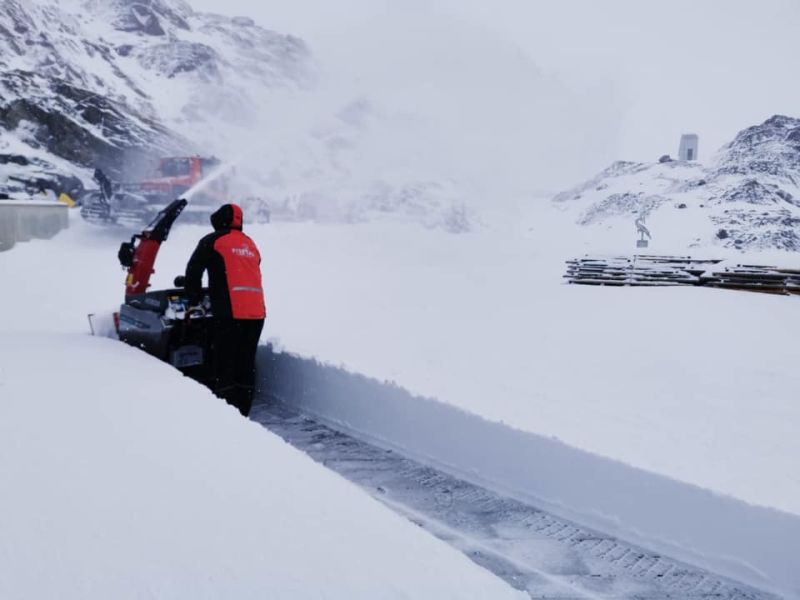
Snow has kept falling over the latter half of this week on slopes in Australia and New Zealand in the southern hemisphere, where ski areas are winding down or have already closed for winter 2020 there; and in Europe and North America where the 20-21 season is just getting started. As of Saturday morning the most snow reported in Europe so far is believed to be on the Pitztal glacier, which opened for its eight-month 20-21 season last weekend, and reports 50cm of snowfall – boosting its base which had been only 20cm last week. In the southern hemisphere ski areas in Australia have reported up to 45cm of snowfall so far. Only Perisher is still open of the country's major ski areas. A large snowstorm is getting underway in New Zealand. In Europe there's been snowfall on ski slopes across the continent with reports of up to 25cm of Snowfall in the Pyrenees, 15cm in the Dolomites and 25cm in Scandinavia over the past few days. Two more glacier areas have opened in Austria this weekend (taking the total there to four) and Kvitfjell in Norway has also opened a run for race training thanks to snowfarming so we are now back in to double-figures for the number of areas open in Europe - 12. The Kitzsteinhorn, Molltal and Stubai glaciers are due to open next weekend in Austria along with the Titlis at Engelberg in Switzerland. Ski areas in Alberta and BC in Canada are also getting some snowfall up high, with snow expected further south down to Colorado through the weekend. |
|
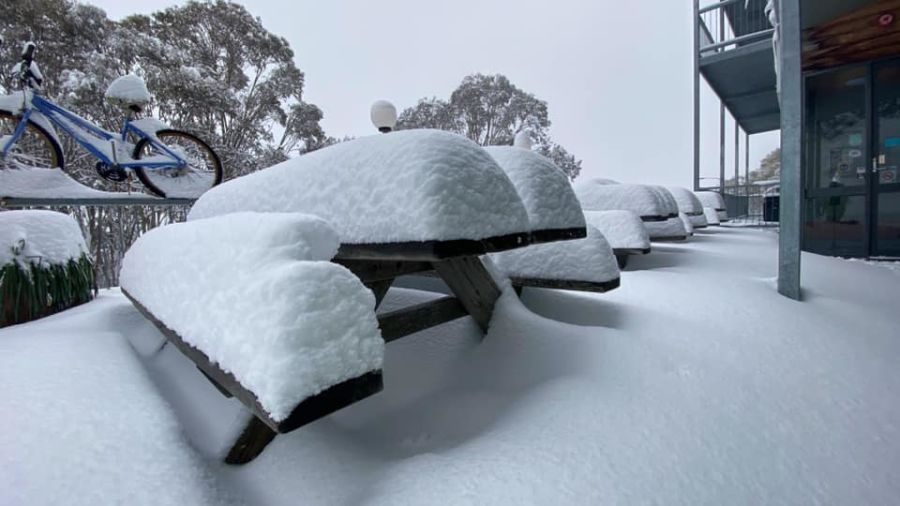
It's one of those rare 24 hour periods hat happens once or twice each year (often in May and September), when snow falls on ski slopes on almost every continent. It's the start of autumn in the northern hemisphere so all eyes are on the start of the 20-21 season, whereas in the southern hemisphere spring is here and the season is winding down. This weekend will see about a dozen areas open in the northern hemisphere (the majority in Austria where three more glaciers are scheduled to open) and a similar number in the southern hemisphere, where in contrast resorts are now closing - most of them in New Zealand. Pictured above is Falls Creek in Australia which, thanks to the virus, is closed and has only been open for three days in the 2020 season. It reports 30cm of snowfall. Perisher is the only large ski area still open in Australia this season. Below is Val Thorens, which aims to open in November. Both pictures are from earlier today. 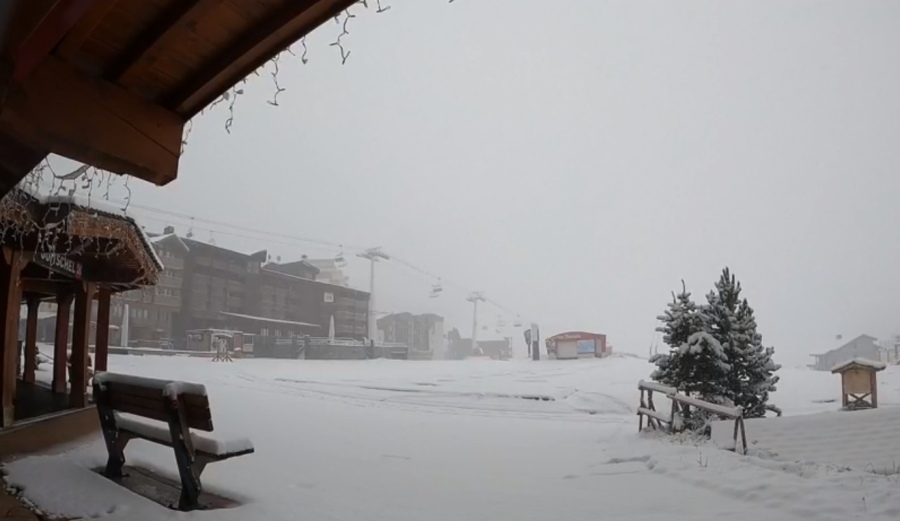
The snowfall in Europe is widespread. Baqueira Beret in Spain has posted pictures of snowfall there this morning, as has the open Galdhoppigen glacier in Norway. Across the Atlantic resorts in BC Canada have posted pics of fresh snow up high including Kicking Horse, below. The snow in Europe is expected to continue through the weekend and in New Zealand, where most resorts are still open and operating without masks or social distancing required once more, heavy snow is forecast over the next few days. 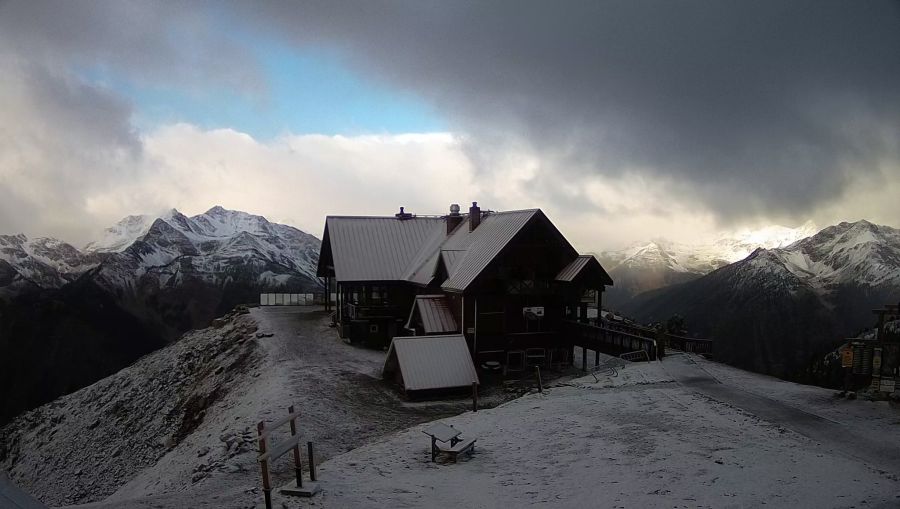 |
|
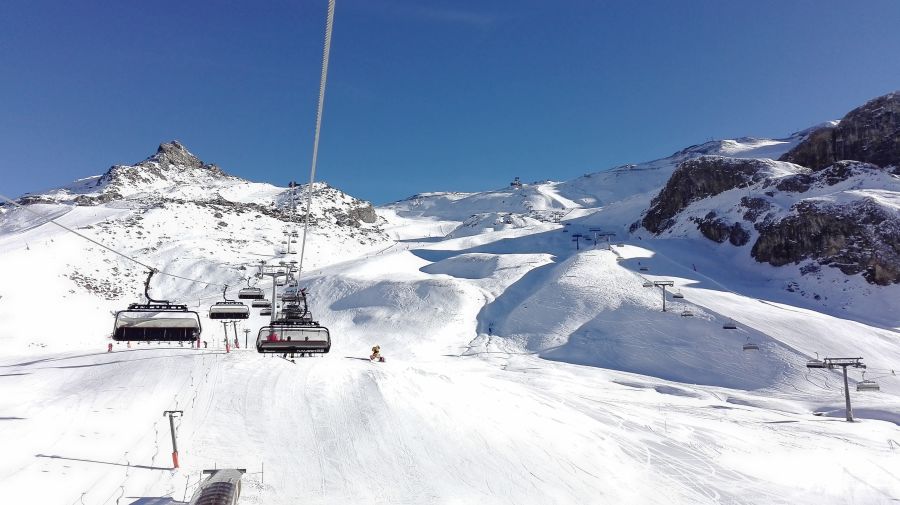
Austria's Chancellor Sebastian Kurz has outlined the country's plan for ski resort operations this winter at a winter tourism press conference earlier today. Several Austrian glacier ski areas are already open with three more due to join them this weekend, and there were no surprises in the announced measures which were in line with what the country's ski areas had already outlined, and broadly in line with other European ski nations, in so far as they have announced their plans. That is: 1 metre social distancing, lots of cleaning and sanitising, masks worn, a maximum of 10 students in a ski school class and free corona tests for ski instructors under Austria's 'Safe Hospitality' initiative. There will be no limits on the numbers using lifts or total numbers on the mountain however. Although Austrian leaders said the top priority was to push infection rates down, there was also a strong onus on jobs and the economy.
Austria's famously "lively" apres ski scene came under particular scrutiny, particular with the Austrian government and other bodies being sued by consumer groups in mass class actions following the alleged 'super spreading' of the virus to dozens of countries around the world from Ischgl last winter. The government response is no lively apres ski this winter, but very toned-down socially-distanced gatherings.
Minister of Tourism Elisabeth Köstinger focussed on the employment issues surrounding winter sports,
|
|
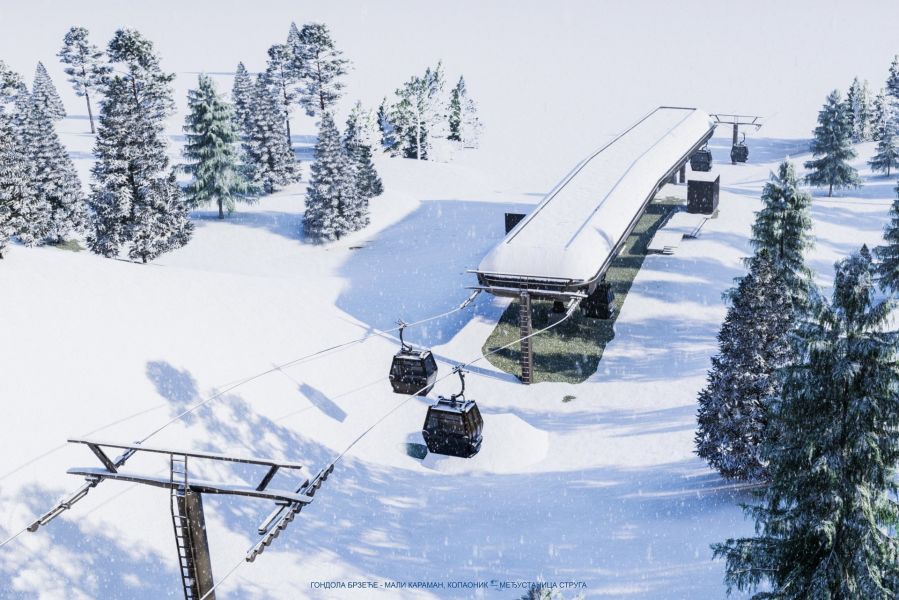
A new gondola lift with 10-passenger cabins is due to go in to service this winter, forming a direct connection between the resort development at Brzeće up to Mali Karaman in the mountains of Kopaonik ski resort. He new lift, built by Leitner, is an upgrade on a route previously served by two successive double chairlifts. The new lift brings greater speed and capacity to the route, ascending four kilometres with a vertical rise of over 843 meters and can carry 2,400 visitors per hour in is 110 cabins. One of these will be a VIP version which offers, "additional exclusive comfort" Leitner say. Mali Karaman will become the new mountain hub of the ski resort, which has 55 kilometres of slopes serves by 24 lifts, the highest ascending to the peak of Kopaonik's highest mountain, the 2,017 m high Pančićev Vrh. Several new runs are being created thanks to the new lift and the resort is already home to Europe's longest year-round dry ski slope at more than 700 metres in length. Kopaonik used to feature in the brochures (as they were then) of the UK's largest tour operator, Crystal as well as the former tui ski brand Thomson, and Neilson, but it was dropped by British companies some years ago after problems with local providers at the time. The resort has however been constantly upgrading its facilities over the past decade and now has one of the most impressive modern uplift facilities in Eastern Europe. |
|
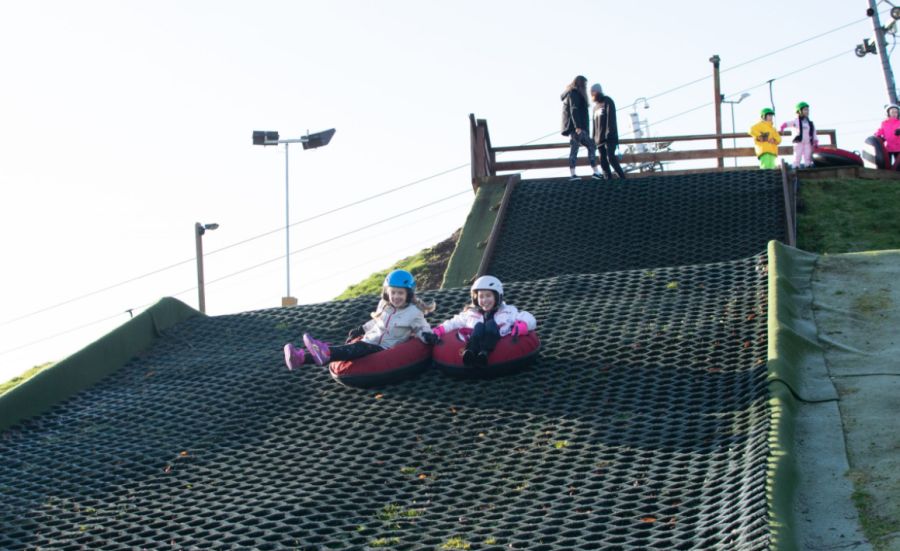
One of the UK's most northerly dry ski slopes, at Aberdeen in Scotland, has been re-named Tubey McTubeface. The dry ski slopes at the Adventure Aberdeen Snowsports centre enjoyed some restoration and upgrading work whilst the complex was closed during its six-month closure during lockdown, and the centre's managers decided to launch a competition to rename the slopes upon re-opening this week. Tubey McTubeface, was the winning name chosen for the centre's tubing run, with the nursery slope christened Little Dee, the green Dendix slope 'Emerald'; the white Dendix slope "Blizzard" and the white Snowflex slope 'Great White'. Although the name Boaty McBoatface was famously voted the most popular in a competition to name a new scientific research vessel it wasn't chosen as the ship's name. The people who suggested the winning names for the five slopes each received a free family ski session. |
|
|
Very true comments. I have asked the tourist office in the past and they say (unofficially) its graded black because it goes a long way from the main ski slopes and they fear a novice skier might tackle it if graded blue or red and get in to difficulty because of the length of it and no alternatives for most of it if they lose confidence/get tired in poor conditions. It's also great marketing of course but that's by the by ;) Personally I love cruising down it when it's not too busy, great long run and a few nice cafes at the bottom in the trees.
|
|
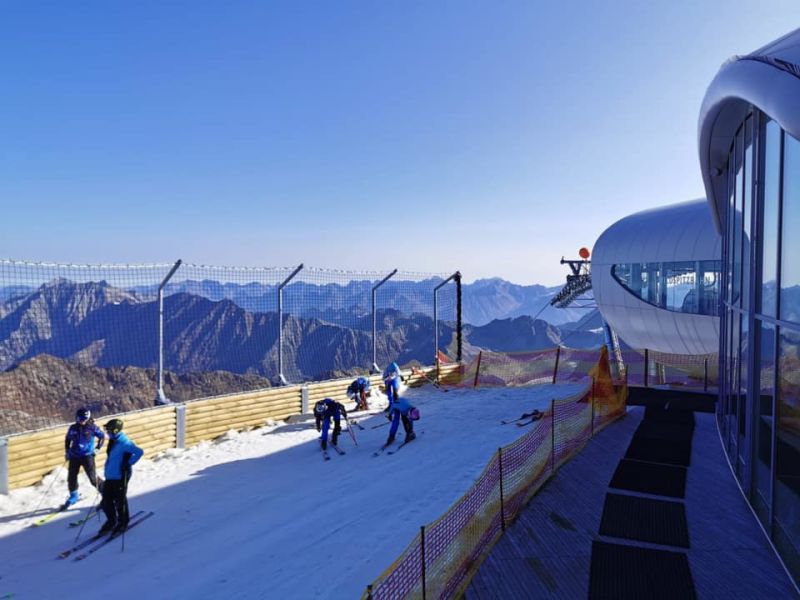
After a largely sunny few months, the start of astronomical autumn this week looks set to be accompanied by a week (so far) of snowfall for mountain peaks, and glacier slopes in the Alps. Forecasting is always a little hit and miss at these altitudes and at this time of year but the most optimistic forecasts call for potentially 60cm (two feet) of snowfall in total over the next seven days. Six glacier areas are currently open in Austria, Italy and Switzerland with two of these – Austria's highest slopes at Pitztal (pictured above on Saturday) and Italy's Val Senales opening this past weekend. Saas Fee and Zermatt in Switzerland, Passo Stelvio in Italy and Hintertux in Austria are all already open. However other areas that typically open around now have been delaying their planned season start dates by a week or so as the hot weather has left snow cover thin on many glaciers. Solden, which is due to host the opening World Cup Alpine races of 20-21 in less than four weeks' time was expected to open last weekend but will now do so next weekend. The Stubai, due to open next weekend, has delayed to October 3rd to be a littler more certain. Also opening soon – hopefully under a blanket of fresh snow cover by then - are the Kaunertal (next weekend), the Kitzsteinhorn, Molltal, Dachstein (to downhill skier, already open for cross country) and the Titlis glacier at Engelberg. Tignes hopes to kick start the French 20-21 season on October 10th. So far all ski areas are opening as they normally would but with pandemic spread prevention measures in place. There are not expected to be any restrictions on the numbers on the mountain or using lifts in Europe, although masks must be worn and windows in cabins kept open, and lots of cleaning and sanitising will be taking place. |
|
Thanks to the virus hitting the bottom line of ski areas around the world, and impacting construction work even where they do have the finance, we're seeing less new lifts being announced for the coming winter than usual. But the small ski centre of Sainte Foy in the Tarentaise Valley, with 43km of runs and located between the giant ski regions of Les Arcs/La Plagne, La Rosiere/La Thuile and Tignes/Val d'Isere, has announced some significant improvements for the coming winter. The biggest development is the upgrading of the key Arpettaz chairlift to a new 6-seater detachable model designed to carry up to 3000 people/hour. In addition capacity on the Grand Plan chairlift is being increased with 14 new additional seats bringing the maximum skier flow to 2000 people / hour. Other initiatives include slope widening, more snowmaking and initiatives to increase slope safety from avalanches after heavy snowfall and to preserve the snowpack for longer. |
|