

Messages posted by : J2SkiNews
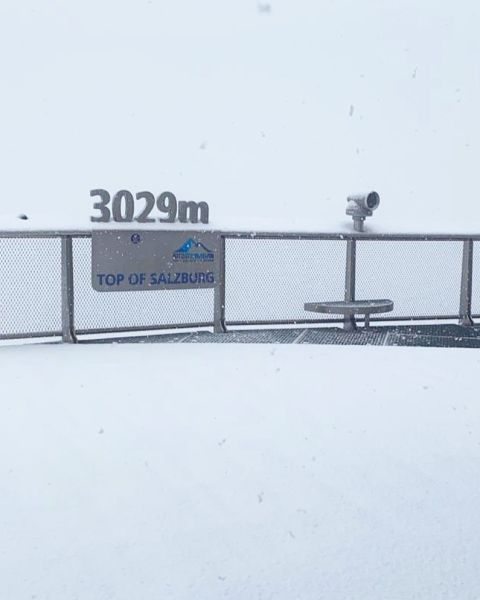
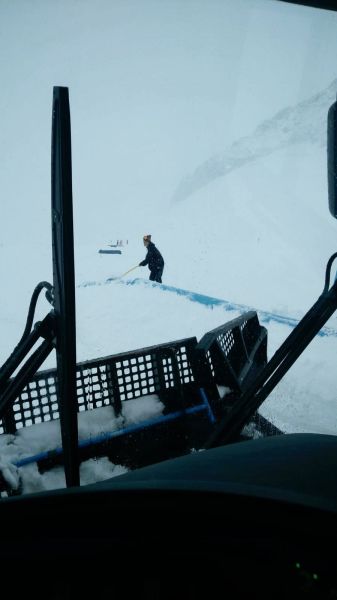
The Kitzsteinhorn glacier above Kaprun in Salzburgerlad in Austria reported a dusting of fresh snow this morning, a fortnight before it is due to open for its 20-21 ski season. The Kitzsteinhorn is set to be one of the last of eight glacier ski areas in Austria set to open, all being well, over the next three weekends. Currently only year-round Hintertux is open in the country, but it's due to be joined by the Pitztal, Solden and re-opening Molltal glaciers this weekend. So far only the Pitztal seems to be sure it is re-opening, in its case for the first time since lockdown in March. Despite the occasional light snowfalls reported over the past month it has been mostly warm up on the glaciers and snow cover has been getting quite thin. At Solden, which is due to stage the opening World Cup Alpine races of the 20-21 season next month, the depth is around 30cm. The Molltal glacier re-opened in May but closed in mid-August to preserve the snow. It had hoped to re-open this Saturday but that's currently unconfirmed. They published this pic of slopes being prepped earlier in September and the image bottom after a dusting of snow on the 3rd. 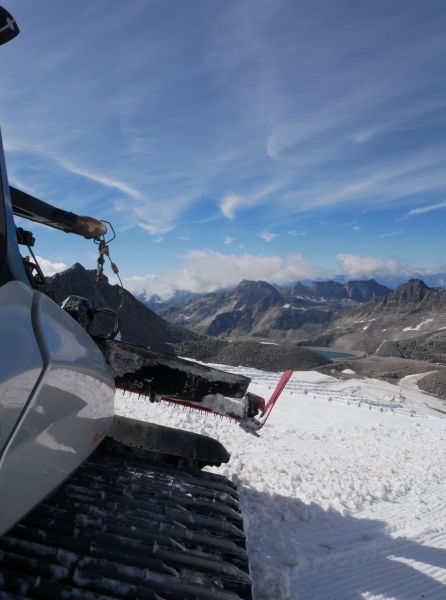
However Val Senales in Italy says it will open tomorrow (Friday 18th) for its 20-21 season, Italian racers have been training on the slopes there already. It joins Passo Stelvio as the second Italian option. Saas Fee and Zermatt are open in Switzerland but there's nowhere currently open in France. Two more Austrian glaciers, Stubai and Kaunertal, aim to open the last weekend of the month with the Dachstein opening to downhill skiers (its already open for cross-country), the first weekend of October, as the Kitzsteinhorn also opens. Engelberg in Switzerland also plans to open in a fortnight on October 3rd, Tignes in France on the 10th and the Diavolezza Glacier near St Moritz in a month's time on October 17th. 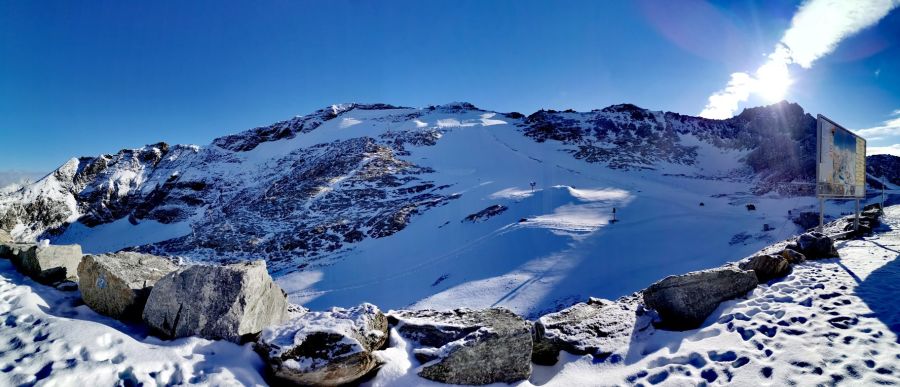 |
|
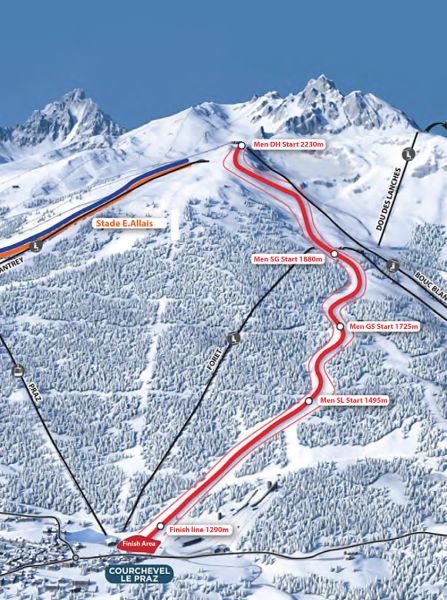
Courchevel say they have finished building their new downhill race-course ahead of the 2023 Alpine World Ski Championships which they are due to stage with Meribel, and that the run will also be open for anyone to ski from this winter onwards. Keen to come up with a name for the run so that it can have the reputation to match the Streif at Kitzbuhel and other famous downhill race pistes they've also just announced a name for the new run: The Eclipse.
The new black is nearly 3.2km (two miles) long and descends 866 vertical metres wih an average pitch of 30% from the summit of the Col de la Loze (2,234m) down to the finish line in the heart of the picturesque village of Praz (1,300m). |
|
Although the news is not universally good, and sometimes careful quoting of some statistics can hide less positive numbers, two Swiss ski areas have just posted apparently good trading stats whilst another has not. The Andermatt Swiss Alps Group say that despite the impact of the virus in spring, other factors offset the negative impact for the first six months of the year overall. Gstasad has issued a similar report, saying their figures – after tax, depreciation and the rest were taken into account – were 34% above costs, one percent better than the same time last year. Among the reasons given for what might be considered better than expected results by Andermatt and Gstaad were reduced costs during the lockdown and increased summer business as Swiss guests holidayed in their own country. Andermatt found that after domestic tourism was allowed to resume in Switzerland in May the number of summer guests had increased by 35 percent by the end of July compared to the previous year. Group bookings were down but bookings by individuals more than compensated for this loss. Green fees on the Andermatt Golf course also saw a 50% jump in sales. The Andermatt Swiss Alps Group, which is also heavily involved in property construction and sales in the resort said that sales were currently "at a high level" and building work currently going ahead at maximum pace. In contrast however, Engelberg's main lift company, Titlis, said they have had a bad year that has been unprecedented in is challenges. They say the downturn in international bookings began as early as January, months before lockdown, and that with 80% of their summer business normally arriving from overseas, the upturn in summer domestic visitors did not come anywhere near compensating for the loss of international business. Whilst they say they are confident they'll get through the challenges, they're temporarily halting investment plans and cutting back on working hours/payments at all levels of the company too. |
|
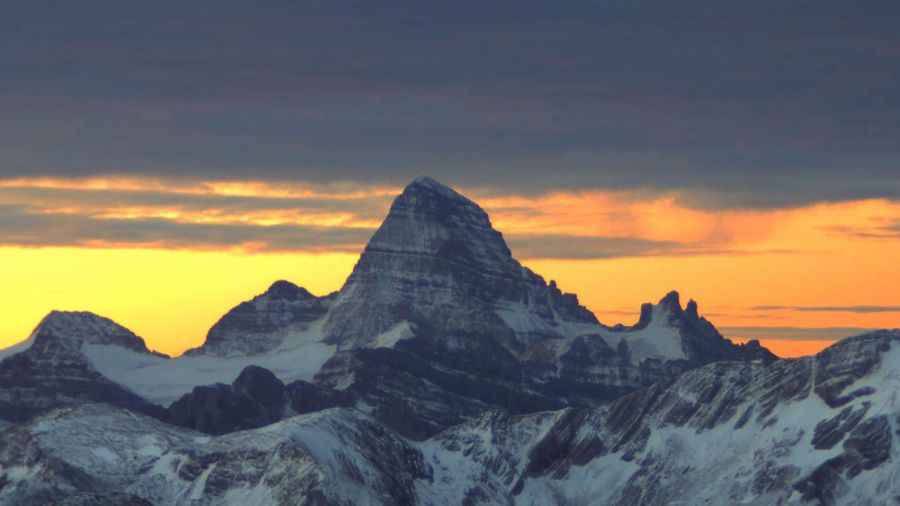
Fresh snowfall has been reported on ski slopes from Alberta to Colorado over the past 48 hours. The snowfall was mostly light, but reached down to resort level at some higher ski areas. It's the second snowfall in a week a some resorts in Colorado, and came after a dramatic 50 degree Fahrenheit drop in temperature in a little over 24 hours in the state, from the 80s to the 30s. Ski areas in Alberta, BC, Colorado, Utah and Wyoming were amongst those excitedly posting snowy images and snowfall video in social media. The most snow appeared to be on the mountains at Aspen (below) from the pictures posted. There's no ski areas open in North America at present for snowsports and in fact several, including Mammoth in California, are closed to all tourists due to high temperatures and fire danger. However the ski season is expected to get started in the latter half of next month at resorts like Arapahoe Basin and Loveland in Colorado and Nakiska in Calgary. 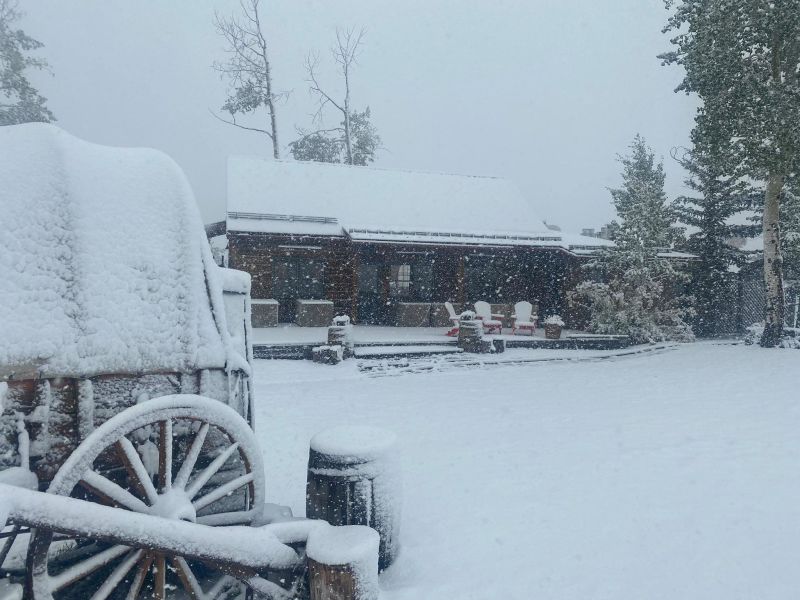 |
|
The Hintertux glacier has reported another 15cm (6 inches) of snowfall in the past 24 hours after several snowfalls in August. Hintertux is currently the only ski area open in the Austrian alps but it's due to be joined by half a dozen Austrian glacier areas planning to open over the next four weeks, the first three the weekend after next. The Pitztal and Solden ski areas will open for their eight month 2020-21 season a week on Saturday, September 19th, the first time they will have operated in just over six months, since the country's pandemic lockdown began in March. The Molltal glacier is also scheduled to re-open that day, it had already been open from June to mid-August. Six days later the Stubai Glacier will re-open on Friday 25th, another that has not been open since March, and due to stay open for nearer 10 months to late spring/early summer, 2021, all being well. The Kaunertal Glacier, which opened for just over a week only in spring when allowed to do so, re-opens for its equally long season the next day, Saturday 26th. Two more Austrian glacier areas, the Dachstein near Schladming and the Kitzsteinhorn above Kaprun are expected to open the first Saturday of October, on the 3rd taking the number of areas open in the country to eight – likely to be around half the total open in the northern hemisphere at that point. The Dachstein is already open for cross-country skiers. Many of the resorts plan toned-down 'opening weekend' events with new-season gear testing to celebrate and launch the new season. Kitzbühel plans to open three weeks later on the 24th using snow saved from the previous winter to build a few runs. Austrian ski areas have been announcing in recent days and weeks that they'll operate without social distancing in lifts, which will be regularly deep cleaned through the ski day. Skiers will have to wear masks in them and in queues. The only other areas open in the alps at present are Saas Fee and Zermat in Switzerland (the latter's glacier ski area also accessible from Cervinia for much of Sepember), and Passo Stelvio in Italy. A second Italian area, Val Senales, normally opens for its season in September too. Otherwise glacier areas at Tignes, Engelberg and the Diavolezza Glacier near St Moritz will be opening in early October. |
|
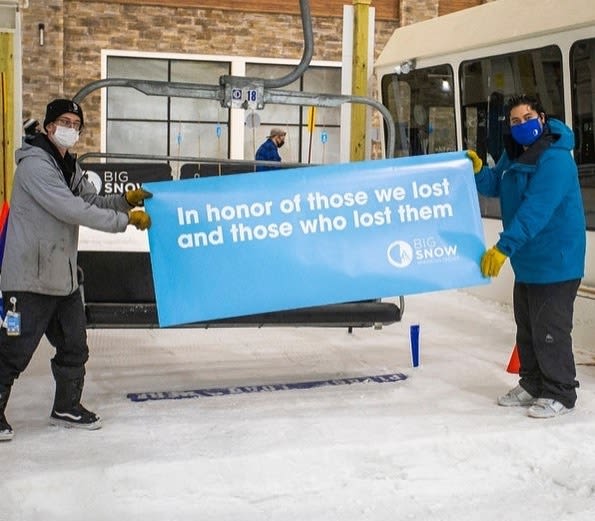
The Big SNOW indoor snow centre within the American Dream Mall in New Jersey, USA, re-opened on September 1st, sending the first of its quad chairlifts up empty in honour, they say, of those who have died from COVID-19.
Big SNOW was built in 2008 but due to finance problems for the vast American dram mall complex of which it is part, only opened 11 years later in December last year. With its opening North America finally became the sixth continent to offer indoor year-round snowsports, more than 30 years after the first centres were proposed there and after dozens of failed projects in the intervening decades. Initial reports at the start of this year were that the facility was very popular when it finally opened, attracting tens of thousands of skiers and boarders, but it was forced to close again within three months, and for almost six months, by the pandemic lockdown. Most of the world's indoor now 110+ snow centres have now re-opened. In the UK the five facilities in England are open but Snow Factor near Glasgow in Scotland in due to re-open on October 1st. |
|
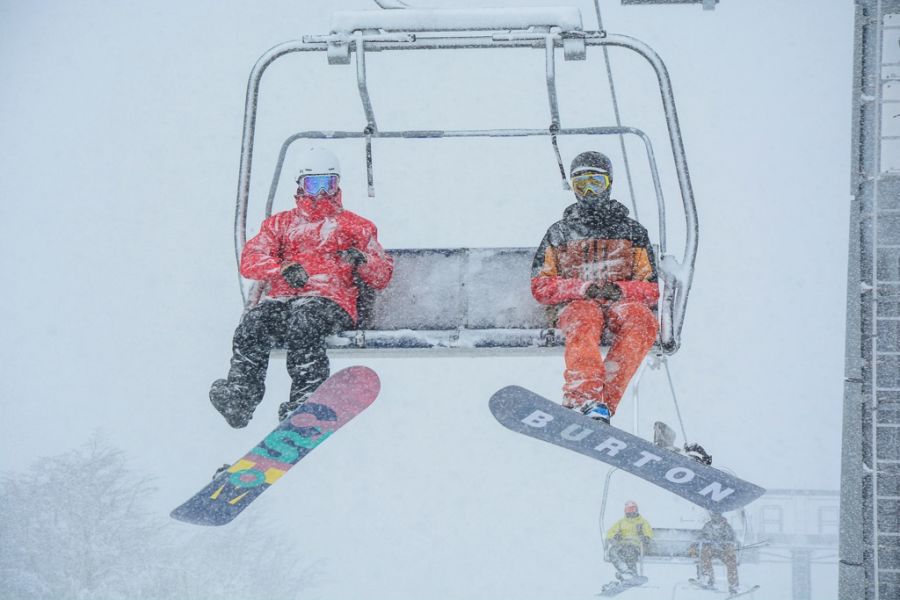
Although the situation remains uncertain for the winter ahead, and rules vary to some extent between individual countries, it does seem to be becoming increasingly clear that most and possibly all leading ski resorts in Europe will be running their lifts at capacity when demand is high, whereas in North America the norm looks like it will be limited numbers on individual chairs and in gondola cabins – unless the people boarding are already a group together. Ski areas on both side of the Atlantic have similar plans for compulsory mask-wearing, social-distancing in lift queues, hand sanitiser stations, contactless-access where possible and almost constant cleaning of lifts often "using cold fogging or micro-dry steam processes," as one resort puts it. Windows will also be kept open on gondola cabins. But whilst in North America resorts are preparing to open with limited numbers allowed on the mountain (typically 50% of the normal season) and limited numbers allowed on lifts, that doesn't appear to be the case in Europe. The North American approach follows the model set by resorts operating during the current southern hemisphere 2020 ski season in the Andes and Australia as well as resorts that re-opened in spring in Scandinavia and the US.
In Europe though such limits don't look like they'll be applied.
The same approach appears to be being taken by large resorts in the other major European skiing nations, although the picture is not yet entirely consistent or clear. Courchevel in France, for example, says, "Our teams welcome you and ensure safety precautions are taken: limiting the number of people per cabin/chair, regular disinfection of spaces, hand sanitiser to be offered at each ski lift..." and also say a 1 metre (40 inch) social distance will be required on resort shuttle busses. Most glacier ski areas operating in the Alps this summer are also believed to have largely stopped any limit on the number of people on a chair or in a cabin, so long as everyone is wearing a mask. Another factor that does seem to be consistent on both sides of the Atlantic though is that resorts are asking skiers themselves to abide by whatever restrictions are in place …essentially saying don't forget the pandemic rules just because you are on holiday. |
|
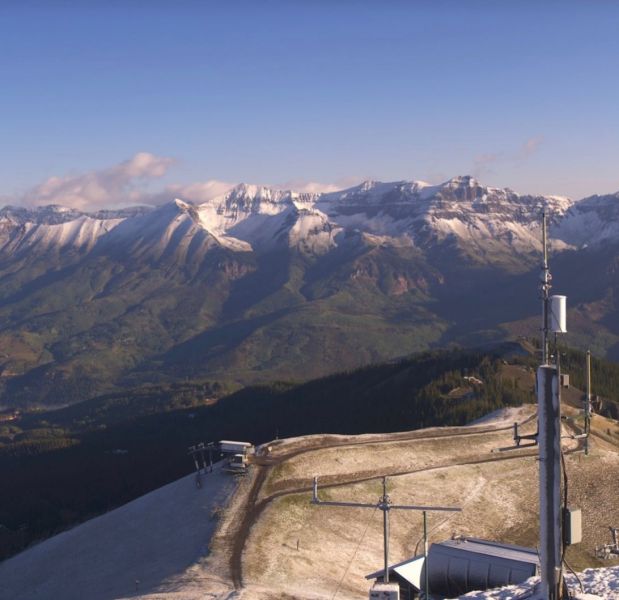
Ski areas in the US have been excitedly reporting on the first snowfalls of autumn, spotted on high peaks across the west of the country. Ski areas in Colorado, Wyoming and Montana were among those posting images of snow-covered peaks and in some cases a thin and reportedly short-lived dusting of snow on their ski runs. 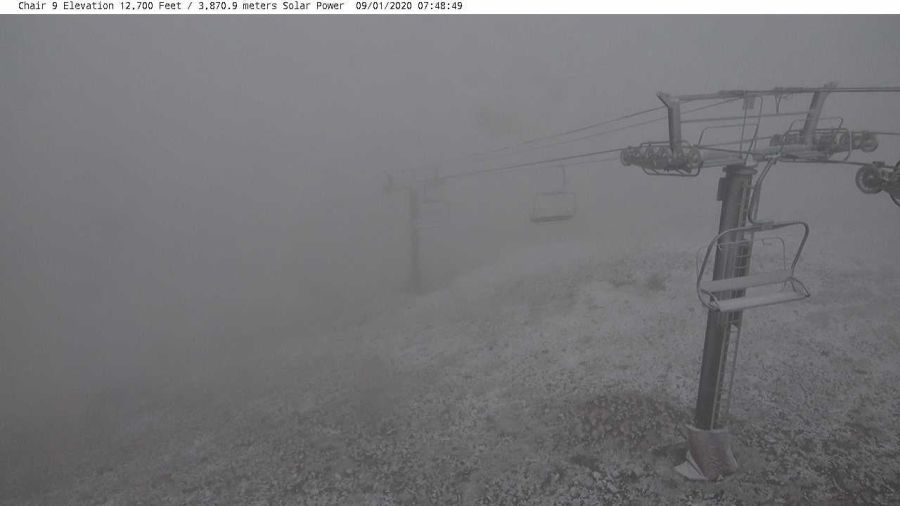
With Timberline in Oregon the last to end is 2019-0 season last weekend, there are no ski areas currently open in North America. However higher resorts in Colorado including Arapahoe Basin, Copper Mountain, Keystone and Loveland (pictured above yesterday, Telluride top) normally begin snowmaking in late September or early October, as soon as it is cold enough, aiming for October to early-November openings. Although the snow is he first for the 2020-21 season build-up in the US, it's not for the continent as a whole. The first reported snowfall in North America covered the slopes of Marmot Basin near Jasper in Alberta, Canada, one of the continent's most northerly ski areas, in mid-August (Pictured below on August 12th). 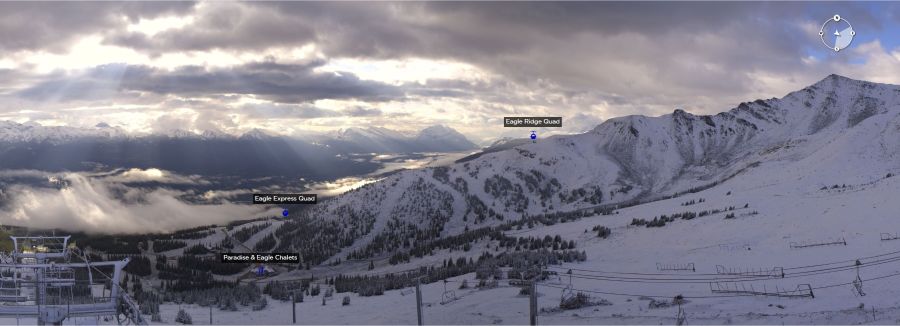 |
|