

Messages posted by : admin
|
As detailed in other posts, last week I was invited along to get a feel for the courses run by Phil Smith and his Snoworks school out in Tignes, France.
This was a "Press Trip" and, as such, was supported by Snoworks, Mark Warner (hotel), Snowlinx (private transfers) and Tignes. I was encouraged to participate to whatever degree I wished, and to feedback and report whatever I found; so what follows is my own opinion and as objective as I can make it. TL;DR - If you've hit that intermediate plateau, want to tackle your first Black run, struggle off-piste, want to learn to ski the whole mountain or just want to ski at a level beyond your usual buddies - Snoworks delivers! If you're already a strong all-mountain skier, Snoworks can take you forward. Last week I skied further, higher, steeper and way more powder than many of my previous trips combined - with very little time spent on pistes. And I learnt loads. Brilliant! Read more below on The Snoworks Philosophy (Go Open, Baby!), how I found the individual courses, and some great commentary from a Snoworks regular. 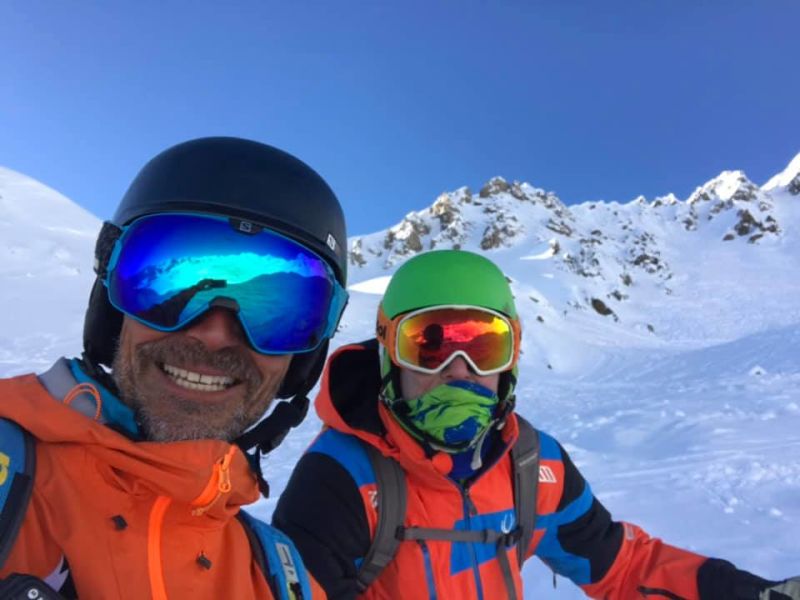
It's always a good sign when your instructor's constantly grinning... picture (c) Snoworks Snoworks "Minimum Requirements" and Introduction Snoworks do not take a traditional, "structured" approach due to their "Open" philosophy (more on that below) and they're very much focused on the desires of skiers wanting to spend more time, and ski better, across the whole mountain. You'll need to be at least a confident Blue and Red run skier (a Level 3 Skier in Snoworks parlance). Previous experience away from the pistes is not required for the entry-level Snoworks courses. You can check your Snoworks Ski Level here. Ultimately, they aim to advance you as an all-mountain skier and to take you - as soon as you're ready - away from the marked runs to places you couldn't (and shouldn't) go on your own. If you're more experienced, they've got you covered with courses and tours right up to pro-skier levels. About me I've been imagining I'm still in my twenties for a couple of decades now, and have been skiing regularly throughout that time. Family-focused ski trips and old ski buddies falling by the wayside (and becoming "more sensible") have limited recent off-piste excursions. Having heard nothing but good things about Snoworks I jumped at this opportunity. Courses Available The three courses running last week represent the core of Snoworks offers, being All Terrain (AT), Off-Piste (OP) and Off-Piste Safety (OPS - a new addition). There were several groups of the AT and OP, for different Levels of skier. A Snoworks course generally consists of 5 x 3-hour sessions (morning or afternoon) on five successive days, so I elected to follow the full Off-Piste Safety course and as much of a Level 5 Off-Piste group as I could. Snoworks Philosophy You'll hear a lot about this initially, as it is what makes them different. "Open Skills for an Open Environment" sounds a little glib until you get your head round it, but it boils down to this :- - Piste skiing is a relatively Closed environment; lifts and pistes follow clearly defined lines, there are few surprises and a defined set of ski techniques. - All-mountain skiing is Open; the routes, the snow, the terrain are all massively variable, as is the approach you need to take. The "Intermediate Plateau" can be seen as being at the transition from skiing Closed to skiing Open. Intriguingly, for anyone used to the familiar structure of group ski school lessons, the Snoworks Open approach extends to the curriculum; there isn't one! A Snoworks course has no set program; rather, each session will be spent on the most appropriate (or fun) terrain in the most suitable (or enjoyable) conditions for the individual group on that specific day. The Open approach is about using whatever is there, whether it's a powder day or hard-pack, and going places. Skiers are moved between groups, especially in the first couple of days, with the overriding aim being a consistent "speed of travel" - that everyone's comfortable with - across the likely terrain. The instructors take account of ability, confidence, fitness and preferences and this blurs the lines between the content of the different courses considerably. One thing that is consistent, is the keenness of the instructors. 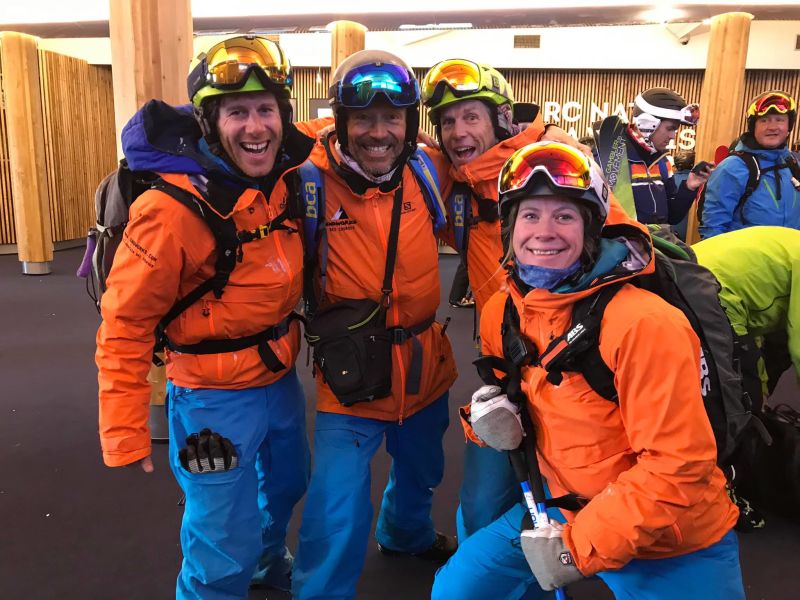
Yep, really, you should go ride with this crew! Photo (c) Snoworks If you get Phil a beer and get him talking, you'll end up so enthused about your skiing that you'll have your skis and be half way to the nearest lift before you realise it's actually dark and everything's shut... So, about those courses... I've written a little about what we did each day in a series of earlier posts, but it's important to note that this Open approach means that no two courses will run the same way. The content of each week, each day even, will be the best match between the Group and the conditions. Each day's skiing is preceded by the Snoworks staff meeting where they plan provisional routes for the day (taking account of weather and avalanche forecasts, and group capabilities) with safety a key input. Throughout the day, the various groups stay in radio contact so each knows where the others are - and they exchange info about the snow, other groups in off-piste sectors and so on. Off-Piste Safety (OPS) Course 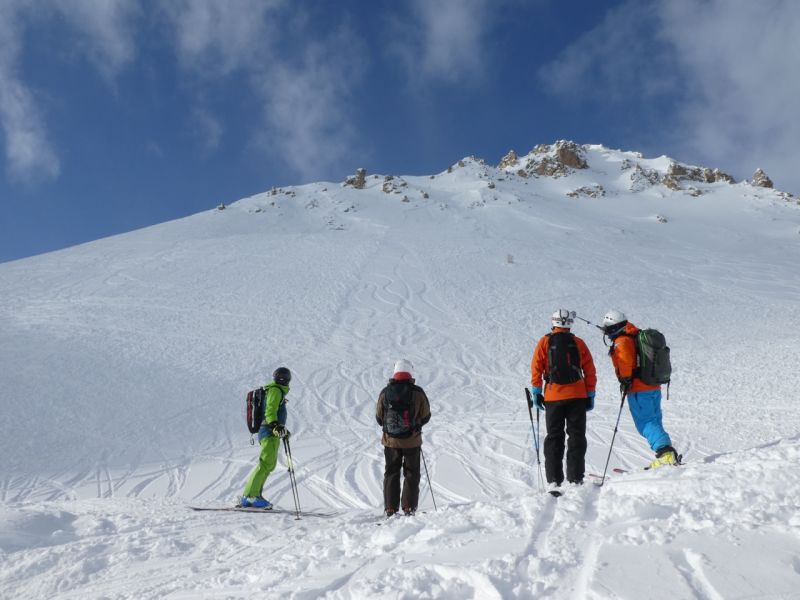
I chose to do this course in full as it was an opportunity to apply much of the off-piste "theory" I've read about for years but rarely get the chance to practice. The timing was just about perfect, with a big snow-storm chucking it down on the first day and the snow-pack then evolving through the week. As noted in my "Diary" posts (see links below), we started the week with powder skiing and transceiver search practice in a howling blizzard. Subsequent days had clearer weather and allowed us to observe initial avalanche activity (on slopes predicted by the avalanche information available) and stabilizing and transforming snow as time passed. Every route we took was preceded with a quick discussion of why we were going that way (or, usually, why we were not going some other way). The terrain features - threats from above, terrain traps - and the likely exit were all noted. The terminology was familiar, but I found the constant reinforcement and observation very useful and "habit-forming". For most descents, Nick would ski ahead to a visible and safe collection point and we'd then proceed either singly or with good spacing between us, as appropriate to the slope. Again, good practices being reinforced by repetition. In addition to our excellent instructor, Nick Quinn, we were lucky to have Ric Potter, a full mountain guide, along with us for the week and his inputs were precise and very informative. Did it work for me? Yes, fabulously. We did a lot of skiing - more than I expected - with all of it being informed and educated along the way. Most importantly, I learnt a huge amount and got lots of practice at applying the theory I already knew. What could be improved? I'd have liked to do a little more transceiver search practice (even in a blizzard!), and newcomers to off-piste might benefit from a short pre-course briefing so the terminology is familiar - but those would just be tweaks to an excellent format. You can read posts from each day of the Course(s) here :- Day 1, Day 2, Day 3, Day 4 and Day 5. Off-Piste (OP) Course 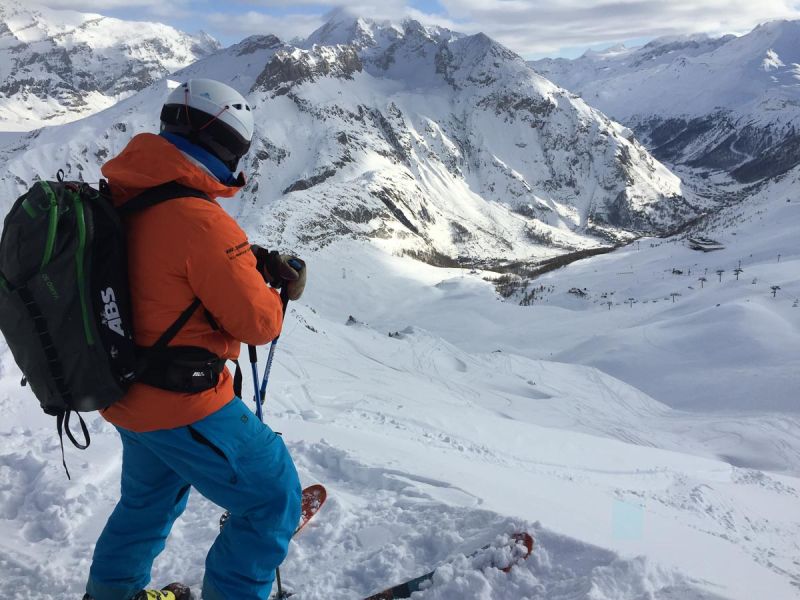
I joined what was provisionally a Level 4/5 Group led by Lee. This turned out to be quite a strong Group and for most of the week was the full complement of 6 skiers, spending almost all the course time off-piste. Transceiver checks and a quick summary of snow conditions started every session, and Lee set a good pace throughout the week! He was adept at pushing us, according to our capabilities, and I think we all felt we had to occasionally "dig deep" - and as a result the confidence in the Group grew throughout the week. The great snow conditions meant we were in powder much of the time but there were occasional "drills and skills" thrown in when the opportunity arose; twist-and-skid on some bumpy moguls, and synchronized short turns on a steep and hard piece of piste... and the occasional stop just to breathe in the view. You can read more about what we did each day in the Diary posts referenced above, but keep in mind that each day will be different and tuned to the conditions on the day. Did it work for me? Absolutely. The combination of occasional, very specific feedback and lots of off-piste skiing that required just about every skill at some point has lifted my ability and confidence. What could be improved? Perhaps a few pre-course tips on fitness, carrying snacks and water would be good - each session is a solid 3 hours with very little standing around and might be a bit of a shock to someone used to more traditional ski school... but, again, just little tweaks to a great approach. To finish off, I've included below some great commentary from Alex, a regular client of Snoworks, who was doing the Off-Piste Safety course with us :-
In conclusion, I went to Tignes expecting good things and the reality exceeded those expectations. The Snoworks crew are a great team; I skied loads, learned much and loved it. I've Levelled Up and I'll be going back! Until the next time... |
|
After the climb up, I was just glad to be letting gravity do the work again! :lol: |
|
|
Tignes, France, December 2018.
This was the last day of the two courses I was doing and - fair to say - my legs were feeling it by mid-day. It had been an intense week but still, some four clear days after the snow storm, we were off to make fresh tracks.. Off-Piste Safety Morning 5 (with Nick) After the now familiar chat about the latest avalanche information, and a transceiver check, we were straight up the Palafour chair and heading for the Chardonnay bowl. This meant a short but fairly steep climb, carrying our skis, up to access the bowl. After a minute or two to get our (ok, my) breath back, access to the bowl was via a couloir... steep but full of snow... 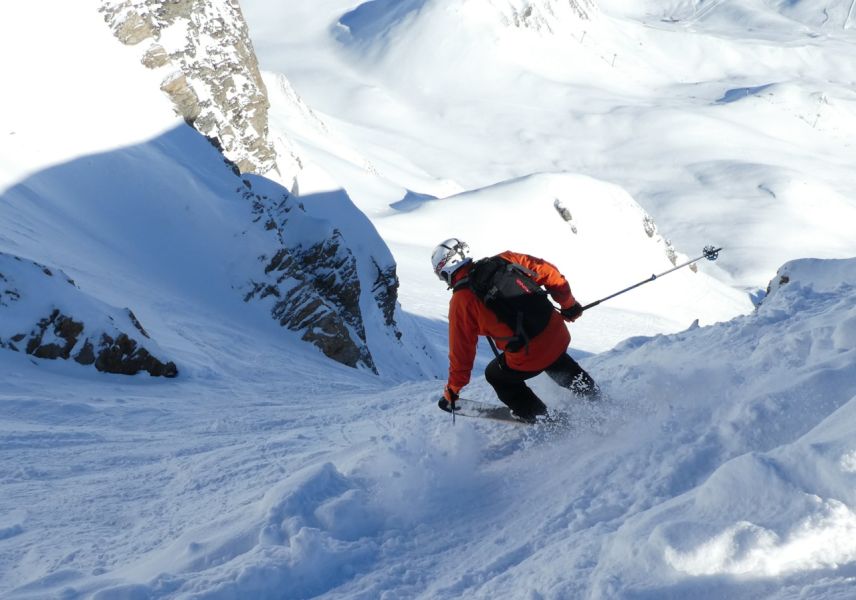
Pic by Ric Porter, Mountain Guide and all-round top dude! ...followed by a bit of a traverse skier's left to get the goods... 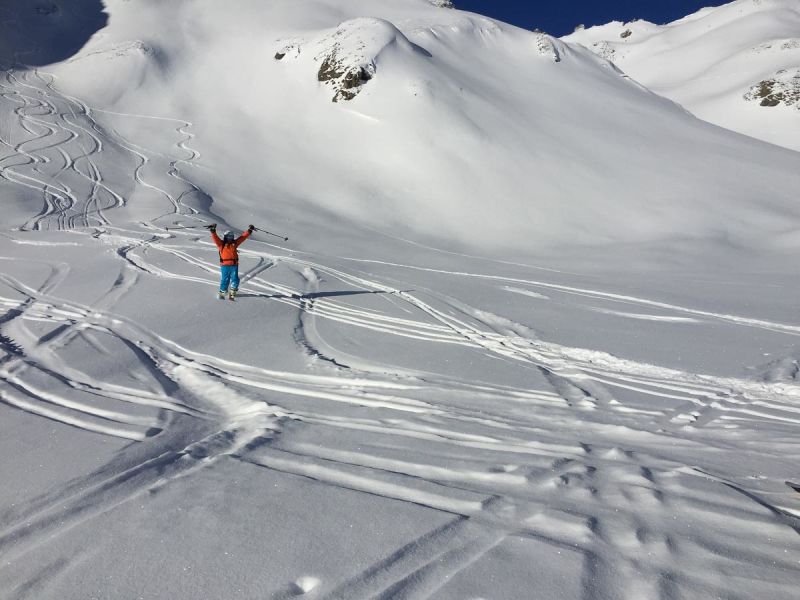
Nick the instructor, enjoying himself... A couple of fabulous powder runs ensued, followed by a walk out past the lake and a descent through the Golf off-piste area (a golf course in the summer!), finding yet more powder, down to catch the bus up to Val Claret. We finished the morning by taking the Lanches chair and then traversing above the cliffs into the off-piste run known as Telegraph, taking a breather for an introduction to rope belays and a cool (very warm, in fact) 2-man survival blanket/bivvy that Nick found in his pack... 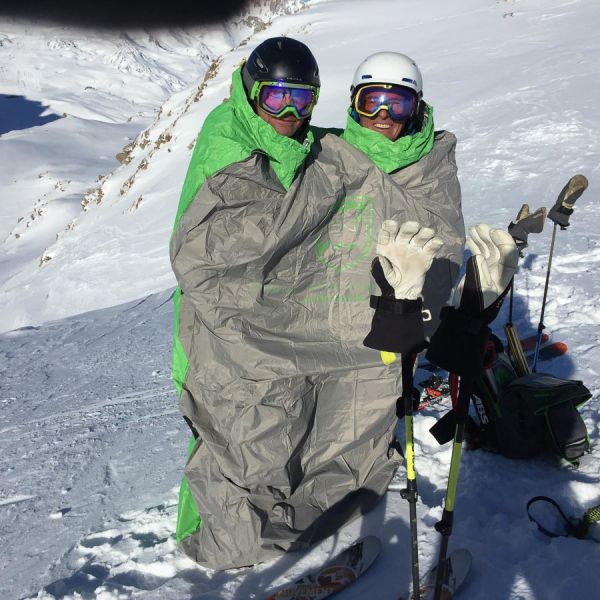
2-man survival blanket, modelled here by Alex and Nick... Off-Piste Course Afternoon 5 (with Lee) 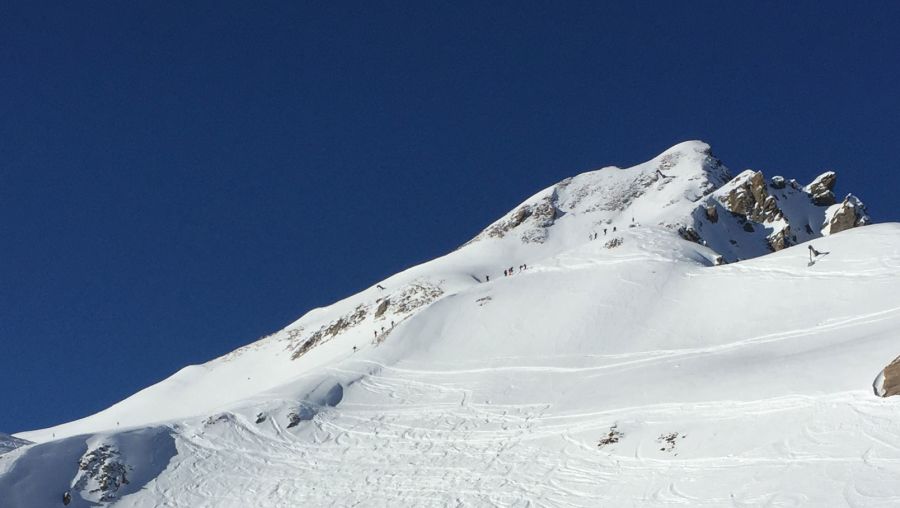
The hike up, to drop in to the Chardonnay bowl More fun away from the pistes, including a further run in the Chardonnay bowl (which I missed), another different route down and through Golf and then over to Val d'Isere to finish off with a hurried Vin Chaud at the Folie Douce before heading back to Tignes Le Lac. What a week! |
|
Ha, funnily enough - for such a simple technique - I couldn't find a simple video, so here goes... You're first aiming to make an equilateral triangle with each side the length of a ski pole. Plant one pole on the slope (this will be the uphill pole) -> | Making sure the tip stays in the same place, lay the pole down along the fall-line (i.e. down the slope). Your pole is now flat to the snow, with the tip uphill where you originally planted it. Plant your second pole (downhill) where the handle of your first pole extends to, and lift the uphill pole back to vertical. Your two poles are now planted at a distance of one pole apart -> | | Without relocating the tips, tilt the poles toward each other so the handles touch. Et voila, an equilateral triangle. We know the internal angle at each corner is 60 degrees, so you can now easily tell if the slope is greater or shallower than a common avalanche tipping point (beyond which slides become much more likely) of 30 degrees. If your downhill pole is vertical (handles still touching) then the slope is 30 degrees; if it's sloping in then the slope is less than 30 degrees, and if it's sloping out then the slope angle is > 30 degrees. To estimate the actual angle, keep the tips in place (one pole apart on the slope) and set either the downhill pole vertical OR the uphill pole horizontal - whichever is required so that the poles cross. Very roughly, an offset of 10cm (from one pole handle to where it crosses the other pole) implies about 4 degrees difference (assuming a 140cm pole length, and that my math is right!). A rough and ready method of estimating slope that you can use in bad visibility (you can always "find" vertical by dangling a pole from the strap). Do we have any graphic art/design folk who could draw that for us??? :lol: |
|
Most people, including myself, were on Snoworks' "standard issue" hire ski; Salomon QST99. I couldn't fault the ski in the conditions last week. Just a little bit scratchy when skidding short turns on bumpy hard-pack, which you'd expect from the width, but great fun everywhere else. Fab in powder and the occasionally variable surfaces we were finding later in the week, and will carve fast and smooth on piste as well. If I was buying an all-mountain ski they'd definitely be on the shortlist. 174cm length was spot-on for me (180cm tall, 85kg). 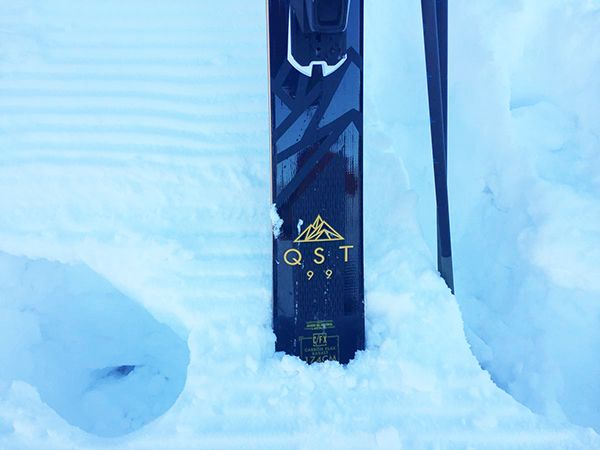 |
|
I don't think things will ever shift completely from one system to another; each has their pros and cons. Control charges can be placed very precisely in places you wouldn't want to be approaching with a helicopter. The "350 specific locations" was news to me; guess I had a mental image of gnarly dudes with a snowmobile full of dynamite driving around blowing stuff up if it looks suspect... :lol: ... gnarly dudes they certainly are, but very organised and professional with it. There are quite a few Gazex units across the Espace Killy but there must be many places where they'd be difficult to install and/or they're not required often enough to justify. |
|
|
Tignes, France, December 2018
Off-Piste Safety Morning 4 (with Nick) Once more, we kicked off with a discussion of the Avalanche information and noted that the general Risk Level had now dropped to Level 2 at lower altitudes and Level 3 locally and higher. On each of the previous 2 days, at some point, we'd observed the bowls that stretch out below the Toviere ridge - clearly viewed from the chair up from La Daille (Tommeuses?). Sensibly, pretty much nobody had gone near them on the Tuesday, with a few more tracks appearing on the Wednesday but - crucially - virtually no sign of avalanche activity. So, with two days of settling now between us and Monday's storm, it was time to climb (a little)... 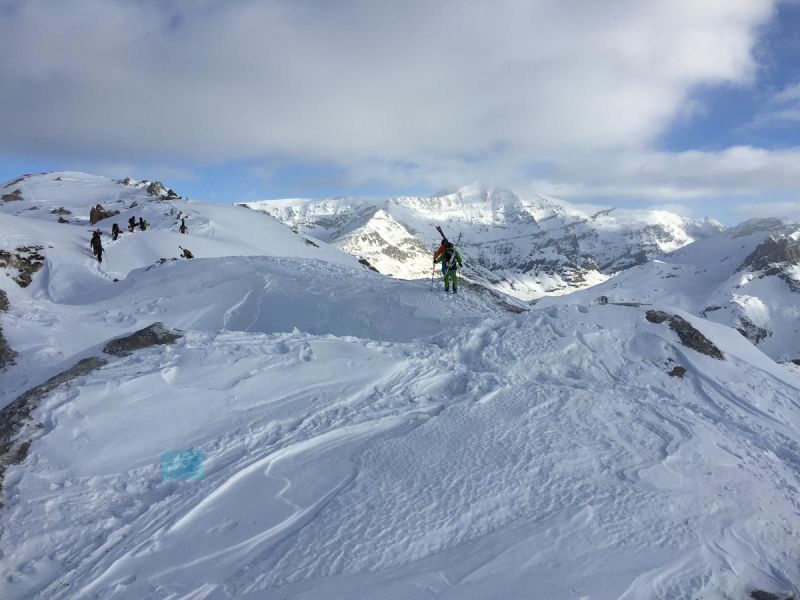 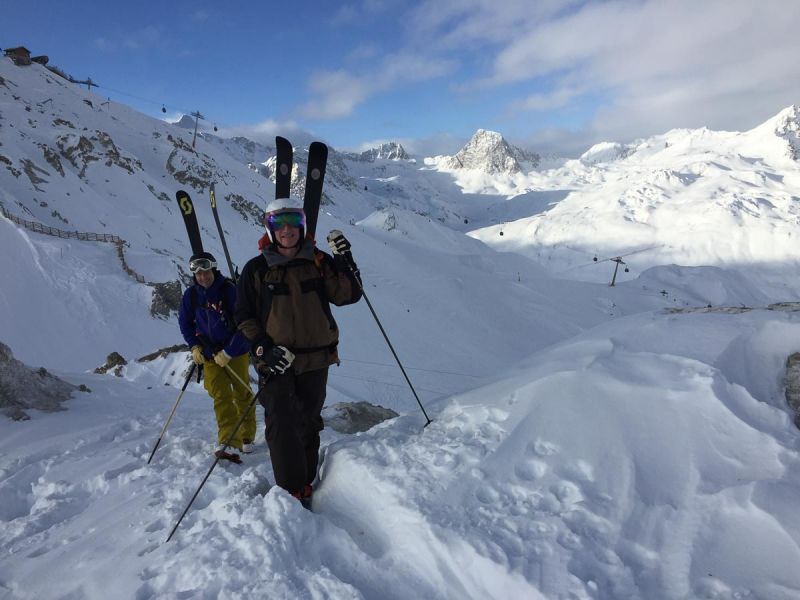
After booting up a short steep section, five minutes walk took us to a choice of bowls. We were able to observe, a little further along the ridge, another group drop in and - in text-book best practice - run one-by-one down their chosen section to collect at a clear "island of safety" lower in the bowl, before moving on. 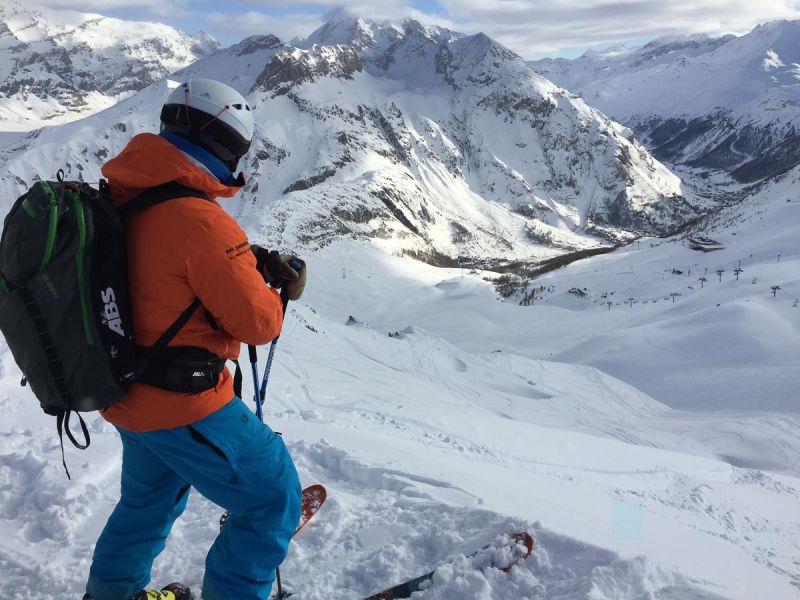
After more discussion of the snow pack, and terrain, Nick dropped in first and rode down to our next collection point, and we followed in-turn into un-tracked, stable powder... 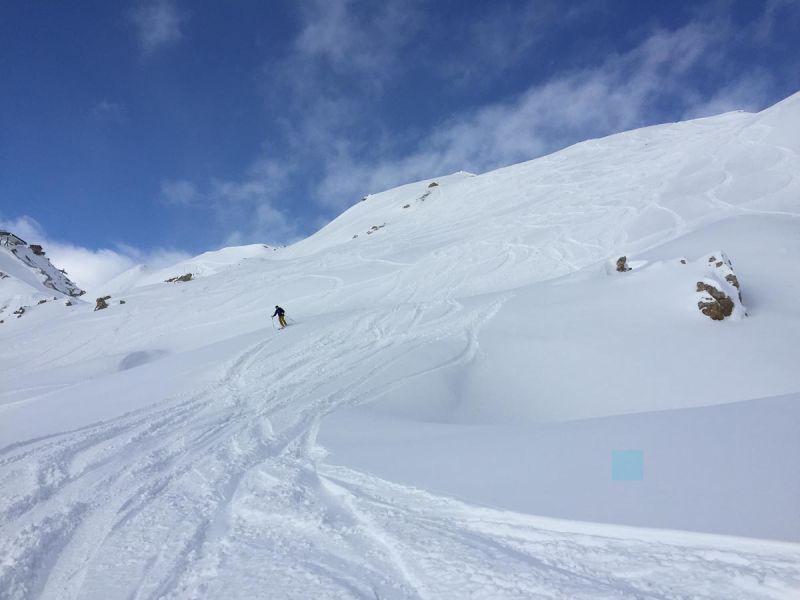 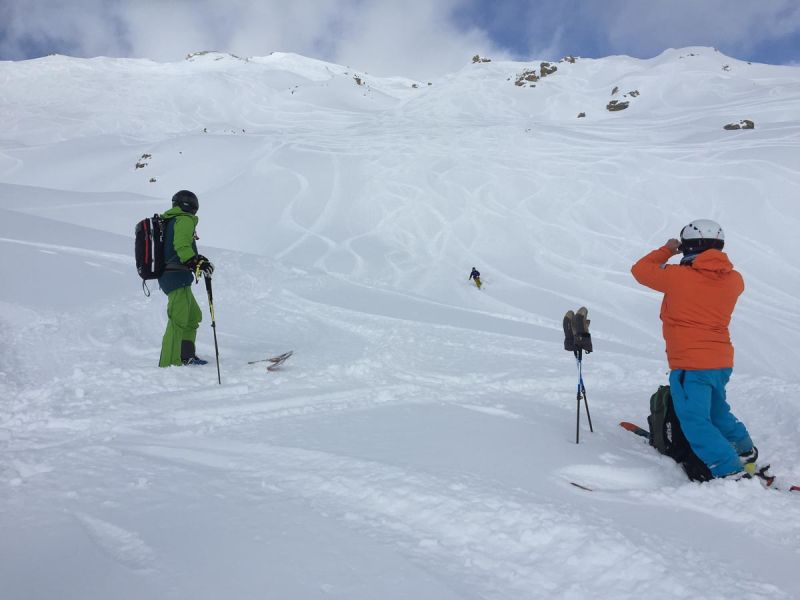
...and there was much more where that came from! This morning was particularly satisfying as it was the culmination of careful choice not just of route but also of timing, waiting for the snows from the storm earlier in the week to stabilize. After 3 days, we were still making first tracks. Off-Piste Course Afternoon 4 (with Lee) We kicked off this afternoon with a trip to the farthest (from Tignes) point of Val d'Isere to run through the mellow off-piste known as the Pays Desert, punctuated by a brief stop to "listen to the silence". Some "short turn" and speed control exercises followed when back on the piste as we made our way down. By now (Day 4 of the course), confidence was growing in the group and Lee led us to a break in the cliffs above the Foret itinerary (I think!) and got our attention by telling us to stay "switched on" for a short but exposed traverse, as there was a brief "no fall" section... followed by a short steep into the forest. 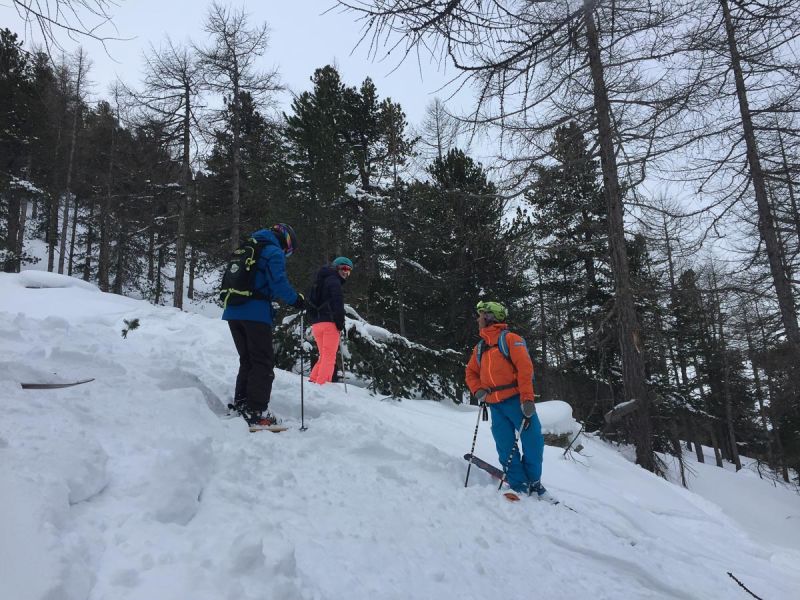
This section of the forest was less dense than the route I'd taken the day before and much more enjoyable; with masses of powder and fairly mellow slopes on which to pick our way down through the trees to Le Fornet once again. Everything had come together again to make a brilliant day; the wide open powder fields we'd been waiting for, some mellow terrain away from all signs of anyone and some properly powdery tree skiing. Sweet! |
|
|
Tignes, France, December 2018
Off-Piste Safety Session 3 (with Nick) The previous day (Tuesday), we'd seen (the remains of) a number of small avalanches from high and steep slopes and had heard later that two of them had caught people - without serious injury. So the first topic of conversation, as every day on this course, was the latest avalanche information. It appeared, on first news, that those caught by the avalanches had most likely triggered them themselves. And it also seemed clear that these slides (in addition to the ones we'd observed) had also occurred on precisely those slopes pointed out (e.g. by Henry's Avalanche) as being most dangerous early in the week - above 2,400m and steeper than 30 degrees. Lesson Learned - Read the Avalanche Bulletin! With that in mind, Nick led us to the Pisteurs hut at the top of Toviere for the latest information. We did note, with a little disappointment, that the Meteo France avalanche bulletin pinned below the Piste Board was out of date and - indeed - there was no avalanche risk flag flying! Early season symptoms, no doubt, but less than optimal... 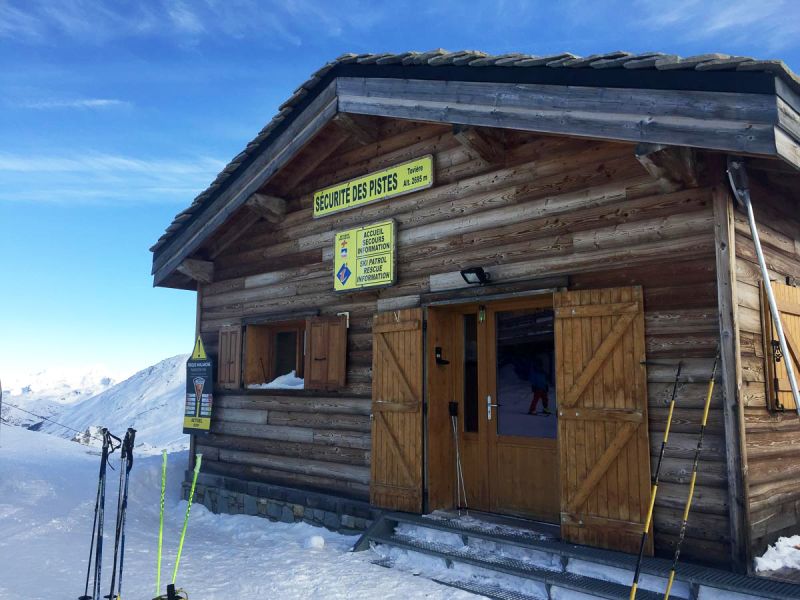
Here be knowledgeable, helpful folk! The pisteurs, however, could not have been more accommodating and we were invited in for a quick introduction to their work and one of their most important colleagues... 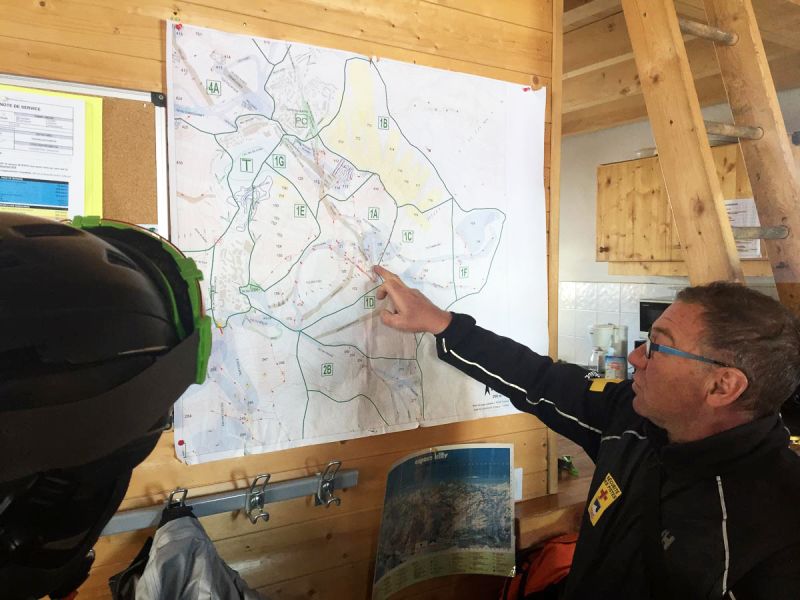
Several detailed maps show areas liable to avalanche, blast points, and "safest routes" through off-piste sectors. Amongst other interesting facts, we learnt that the avalanche control charges are set at 350 specific locations - and that, on a busy morning such as the day before, the piste safety team can work through around 200 of them! If you're waiting for the lifts to open on a blasting day, spare a thought for these guys working hard in dangerous places, to keep you safe. It was emphasised that the avalanche control (blasting) is done only to protect pistes and marked itinerary runs; off-piste areas are not generally controlled (exceptions being for the likes of freeride competitions). 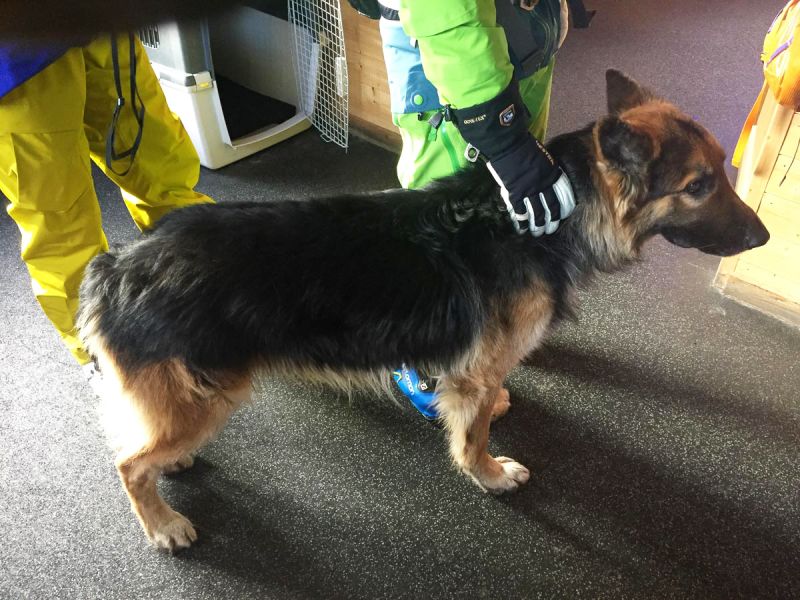
Lesson Learned :- Introducing yourself to Monsieur Avalanche Dog will familiarise him with your scent so he digs you out first... maybe! The rest of the session was spent working our way through the Val d'Isere side, including a traverse round to the Banane sector which had avalanched the day before. Low-angled routes, with much discussion of slope, snow and exposure, were again the order of the day, and we finished with a run down through the trees to Le Fornet. 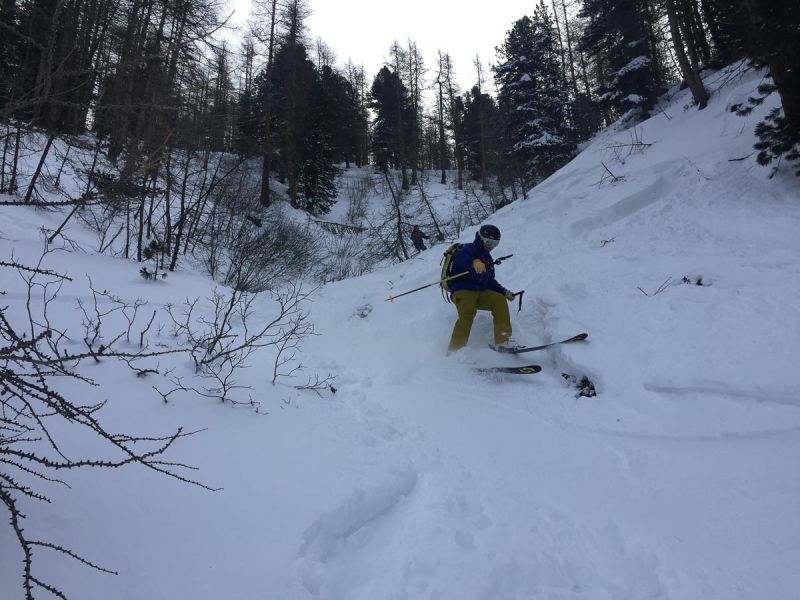
Lesson Learned :- focus on the gaps, not the trees, focus on the gaps, not the trees... thanks Alex! |
|