

Messages posted by : J2SkiNews
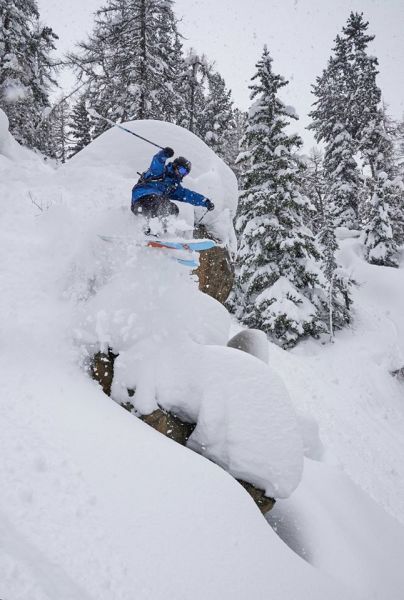
Snowfall currently forecast for the Alps looks like it could be the heaviest of the winter so far, if it arrives as forecasting models are predicting. After temperatures got uncomfortably warm again in places at the weekend, temperatures are falling and snowfall should begin to arrive in the next 24 hours, bringing 30-60cm of snowfall to mot areas in the Alps over a 72-hour period to the end of Thursday. However it currently looks like the snowfall won't end then but could continue in to the weekend and even the start of March/meteorological Spring on Sunday – with some areas potentially getting more than a metre of snowfall by then. It is however notoriously difficult to predict mountain weather more than a few days in advance. Although the snowfall will be widespread, the heaviest and most prolonged is forecast for the north-Western Alps with the Chamonix Valley, 3 Valleys, Grand Massif, Portes du Soleil and other major French regions looking like they could get the metre-plus accumulations by the end of the weekend. Resorts in Western and Central Switzerland should get similar accumulations. The Pyrenees and the southern side of Europe however looks like it will again miss out. The deepest snowbase in Europe is currently just over 4 metres with the fastest base growth in February reported in Western Norway which has seen regular snowfall throughout most of the past two months. Andermatt, which currently has the deepest base in the alps at just over 4 metres, is one of those forecast to get more than a metre of snowfall. |
|
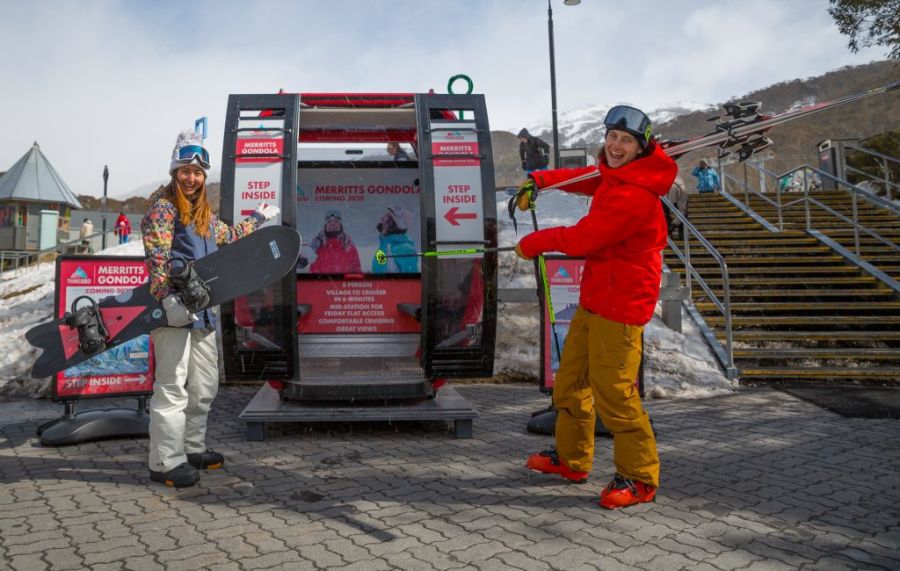
Work is underway on what will be the first gondola lift to serve ski slopes in Australia, due to open this coming winter 2020. Thredbo Resort are replacing the Merritts double chairlift with a high speed, eight-person gondola that will quadruple the capacity of the old lift. The new lift went in to production in Austria with Doppelmayr building the lift, and CWA in Switzerland the cabins, nearly a year ago. It is being delivered to Australia in more than 45 containers. In addition 20 truckloads of reinforcing and steel and 150 truckloads of concrete have been delivered to Thredbo with construction due to be completed in May, ahead of Australia's season start in June. Once completed the new Gondola will span over 1.3 kilometres, rise 298 vertical metres, and be able to lift 2,000 people per hour. Travel time on the Gondola from Thredbo Village to the Cruiser area will be approximately six minutes, saving 15 minutes on current times. In addition to the Gondola, a fully automated snowmaking system on the popular 'Dream Run' is being installed as well as other slope works ahead of the upcoming winter. This development will allow more reliable access to Friday Flat and the mid-station of the new Merritts Gondola as well as better access to a wide variety of intermediate and advanced tree runs. |
|
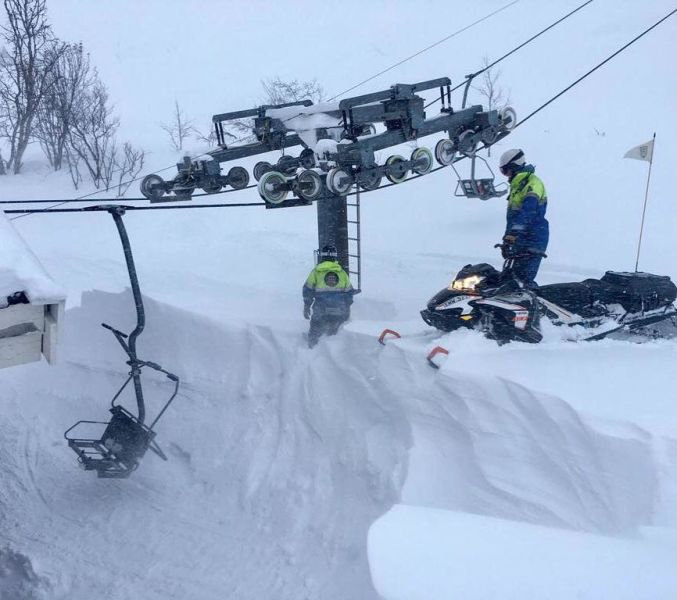
Riksgransen ski area in northern Sweden begins its 2020 season next Friday, but staff have found they'll need to dig out the resort's lifts first. Access to the railway station many skiers use to access the resort's compact base (most of it one giant hotel complex) via an underpass also needs digging out. Although Scandinavia as a whole has had one of its warmest winters on record, leaving many ski areas in the south and centre of the region short of snow, there have been constant heavy snowfalls on the mountains of Western Norway, and snow depths up in the Arctic Circle where Riksgränsen is located are at a 23 year high. Known as the 'Spring skiing Capital of Europe'. Riksgränsen doesn't really open in the winter, when conditions are very cold most years and dark, opening at the start of meteorological springtime at the end of Februry. It then stays open through into May, when it famously offers skiing and boarding under the midnight sun several days a week as 24 hour daylight arrives. It also usually re-opens for a sell-out long weekend over midsummers day in the latter half of June, assuming there's enough snow left. Riksgränsen means "The National Border" in Swedish and has offered skiing here since the railway line arrived in 1903. It is still popular to take the overnight sleeper train from Stockholm to get there as skiers have for generations. Some ski runs at the centre crops in to Norway on their way down the mountain before returning to Sweden at the base and the railway line continues for 40 minutes or so to reach the Norwegian coast and the ski area of Narvik, which is also famous for offering skiing on slopes above the sea. |
|
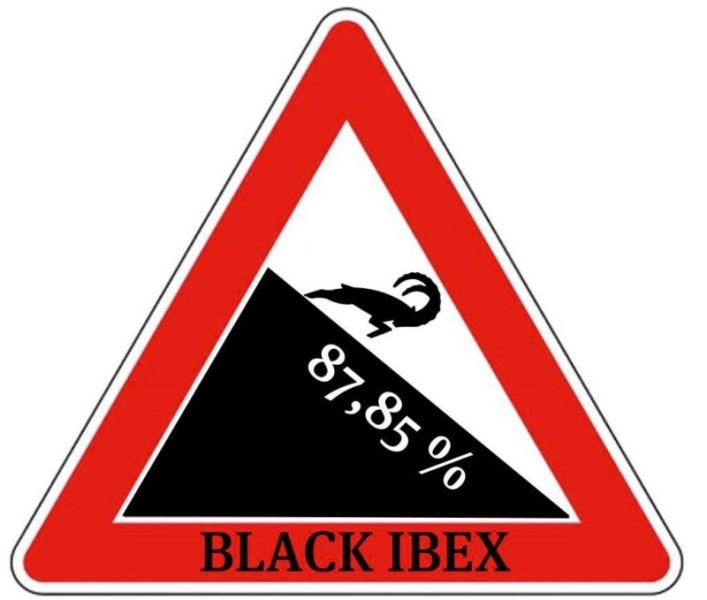
A ski run with an average pitch of 41.3 degrees and with a gradient of 87.85% opens at the Austrian glacier ski area of Kaunertal on Saturday, 22nd February. Christened the 'Black Ibex' the run is the latest in a line of Austrian slopes that claim the 'steepest lift-served groomed run in the country' title. Part of the promotional blurb for the run includes the stat that it's even steeper than the Streif in Kitzbühel over which the Hahnenkamm World Cup downhill is raced each January and has a maximum 85% gradient. Other recent contenders include the Lange Zug ski route above Lech Zurs in the Arlberg which has a maximum gradient of 80% at its steepest part. Despite this the Harakiri piste in Mayrhofen, which opened back in 2004 and has a 78% gradient, is generally regarded as Austria's steepest slope. Other steep Austrian slopes with intimidating titles include the Diabolo ski area in Montafon which has a 70% slope and Black Mamba at the Kitzsteinhorn glacier which pitches at 63%. |
|
|
Update: today (Wednesday 19th) could be the day to ski Scotland this week as winds have dropped, pause in the snow showers after more fresh overnight: https://www.visitscotland.com/see-do/active/skiing-snowsports/conditions/
|
|
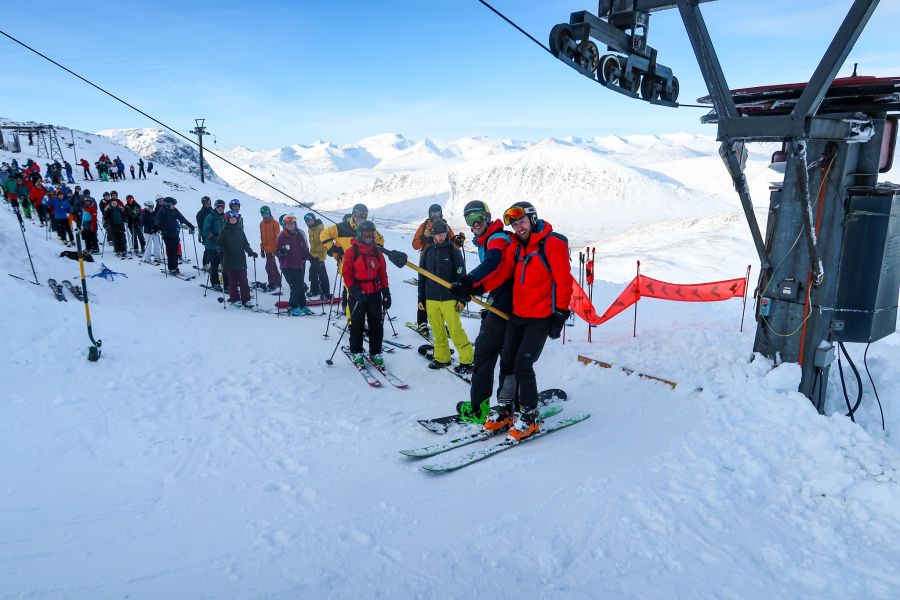
Scotland's ski centres may have had some of the heaviest snowfall in Europe over the past week, and the forecast snow at the five centres for the wee ahead is also amongst the most for anywhere in Europe. The problem skiers are having is getting on to it top ski or snowboard it, and for the five highland centres the battles include keeping the snow on the slopes and opening the lifts to access the slopes. It's a familiar issue for Scottish centres, but the recent storms Ciara and Dennis have taken things to extremes. The two West coast ski areas of Glencoe and Nevis Range appear to have had the most snow, but they've also been mostly closed for most of the time, over the past five days, as gales have stopped lifts running to access it all. The week ahead isn't looking too promising either. There are signs of a bit of a lull over the next 48-72 hours before more gales arrive for the weekend, along with more heavy snowfall. It was a similar scenario last week. During the brief lull between Ciara moving on and Dennis arriving, last Thursday was reported to be one of the best ski days in recent memory at Glencoe (pictured above on that day). The irony of not being able to access the slopes when the snow is looking good is particularly cruel as Scottish centres have struggled for decent cover for the past two winters and have only been able to open lifts and runs for a few weeks last season and this. It has been too warm for snow cover to build up most weeks. Things have been less problematic further east at Cairngorm, Glenshee and The Lecht, although there's been less snowfall here too. But there have been some good snowfalls and all have more terrain open than they have had all season to date in the past week, even if they remain only part open at present. |
|
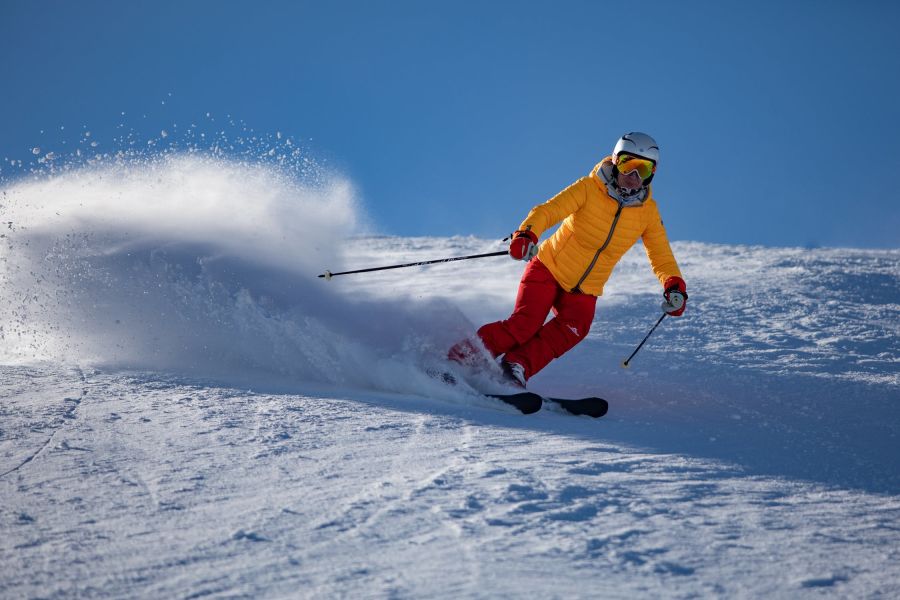
A strike by seasonal workers called by two unions and actively observed at around 50 French ski resorts appears to have had limited impact. The unions are unhappy about new French government employment laws which makes it harder for seasonal workers to claim benefits by asking them to work longer before they can get them. In some cases unions say the term now required exceeds the length of the ski season, which is diminishing anyway, they say, due to climate change. It's a different issue to the pension changes that led to widespread transport strikes in December and January. The strikes and protests began yesterday, Saturday 15th February, one of the busiest days of the ski season so far as it is the start of the main February school holiday week for many European countries, and a large part of France. In the Alps the most visible protests appear to have been in the town of Moûtiers below the 3 Valleys and other ski resorts where strikers and protesters are reported to have lobbied people arriving by rail and car drivers about their cause. The resort of Les Deux Alpes is also reported to have had a higher percentage of strikers than other resorts. The strike also appears to have been heeded in parts of the French Pyrenees where the Grand Tourmalet ski area was reported to be only 40% open on Saturday compared to 85% the rest of the week. Other areas like the Massif Central saw some small areas impacted, but most strikers decided to keep protests short as several areas are already closed there anyway due to lack of snow. French ski resorts are having a mixed winter so far. The transport strikes in December and January were blamed for a 10% drop in people heading to the slopes but against that most of the country's main destination resorts are having a good winter in terms of snow cover, being fully open since well before Christmas, despite this being the warmest winter ever recorded in the country. Smaller, lower areas are suffering because of that however with some totally closed for lack of snow. The French government appears to be aware of multiple strikes impacting the country's key ski industry and has said it will "look again" at the "unique status" of seasonal workers and introduce a special "assistance plan." Reports indicate that one of the two unions involved in the strikes called them for yesterday only, the other has called its stroke "indefinitely." |
|
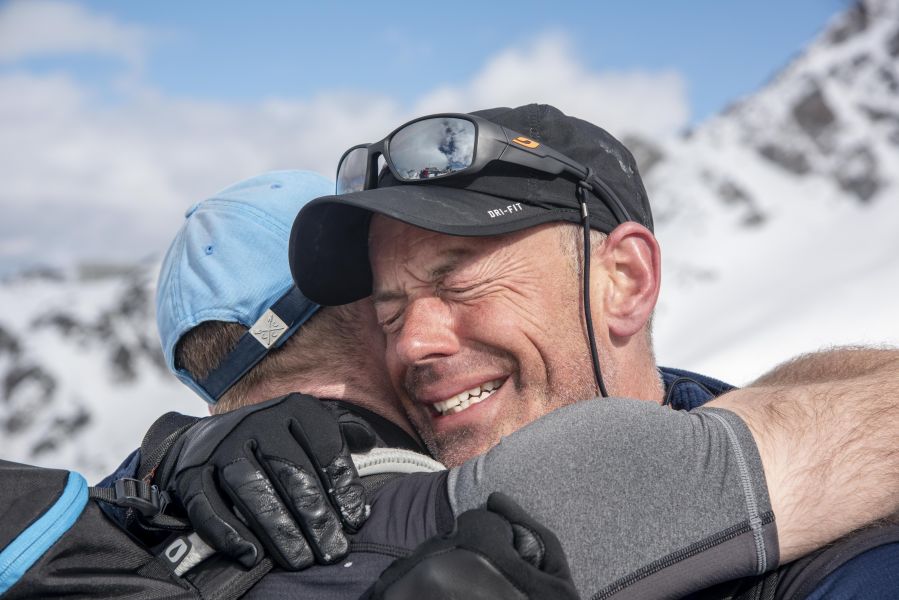
TV presenter Phil Spencer is to take part in the tough 'Everest in the Alps' challenge later this month - skiing 8,848 metres uphill, the height of Everest, in the Swiss Alps. The first Challenge took place in 2015 when Rob Ritchie and 13 of his friends and family travelled to Verbier where they took on the very first Everest in the Alps. Funds raised by all the 2020 teams will go to The Everest Centre, financed by The Brain Tumour Charity with a goal to research new treatments. The centre funds several vital research projects that aim to help us understand more about low grade paediatric brain tumours and trial new treatments. Rob's twelve-year-old son Toby has a low grade brain tumour. Now after three successful summits in 2015, 2018 and 2019, Rob and his team members have raised over £4.5 million – the single largest donation The Brain Tumour Charity has ever received. On February 29th, the three teams of the 2020 challenge will include TV presenter Phil Spencer, leading his own team for the gruelling ascent over four days. Phil, back for his third challenge, leads Team MoveiQ: Phil, Nick Sowerbutts, Richard Billington, Tom Golding and James Orme-Smith – a group of five close friends as well as fathers with young children. All the teams will climb for 10-14 hours each day, burning 10,000 calories and using the energy required to complete three back-to-back marathons. Sleeping in mountain huts, they'll set out before dawn each day in temperatures that can drop as low as -30c during this epic challenge, as they did in 2018. Phil said: "There are so many facets aside from the physical height. You've got the weather, the altitude, you've got the unknown, the route, the routine and you've got the temperature. It could be +20 degrees or it could be -20 degrees and that's something else that's quite individual to this challenge. There's no hiding place in the mountains, once you start, you have to finish because your hut's at the top, so what are you going to do? You still have to get up there even if it hurts or your kit breaks, your bed is still at the top of the mountain!"
https://www.everestinthealps.com/ |
|