

Messages posted by : J2SkiNews
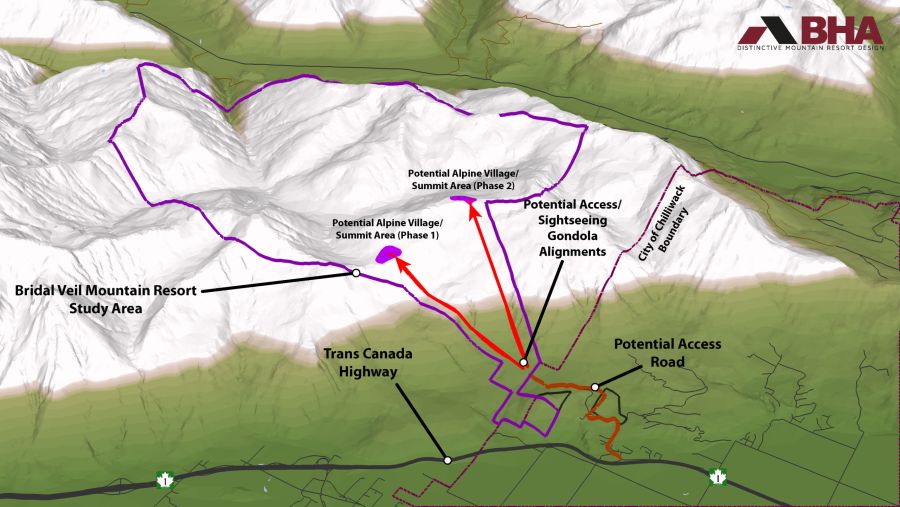
The latest in a number of giant ski resort proposals for a part of the Canadian wilderness has been put forward. The proposed Bridal Veil Mountain Resort would be located above the Trans-Canada Highway near Chilliwack. Covering a proposed 11,500 acres of terrain, it would have a footprint about a third larger than North America's current biggest at Whistler Blackcomb. However initial reports suggest the skiable vertical would be much more modest at only around 700 metres. Car-free, the year-round destination would offer skiing, boarding, hiking and biking accessed by two gondolas from the base. Those behind the proposal are keen to stress their desire to work in partnership with the S'olh Temexw First Nation who are the original inhabitants of the land involved and to develop to high environmental standards. The proposals are currently at the "Expression of interest" (EOI) stage. If successful here a more detailed formal proposal will follow and then a comprehensive resort master plan over a period of years. A number of other large ski resort development, mostly in British Columbia, are also making their way through this process. |
|
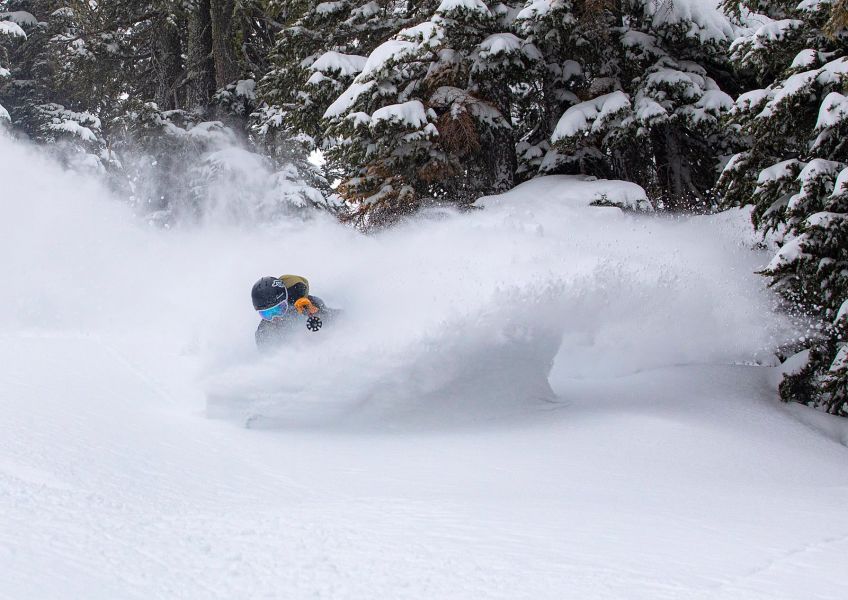
A long-planned gondola connection between two Californian ski areas will create a 6,000 acres ski resort, the third biggest in North America. Squaw Valley and Alpine Meadows have operated under joint ownership and been treated as a single-entity for nearly a decades and the plan to connect the two ski areas by a gondola goes back much further still. Now owners the Alterra Group say construction work on the new lift is finally expected to begin in a $60m project which will see a 2.4 mile long gondola connection supersede the current seven mile road link. No new ski runs will be built though with the territory between the two areas however. That includes environmentally protected land (the project has had plenty of objections on environmental grounds), some of it owned by third parties, and much of it steep and avalanche prone. No completion date for the lift has been announced yet, nor a new name for Squaw Valley and perhaps the entire ski area. It was announced last year that Squaw Valley will be renamed as the term has been deemed derogatory having been reassessed following the black lives matter campaign. |
|
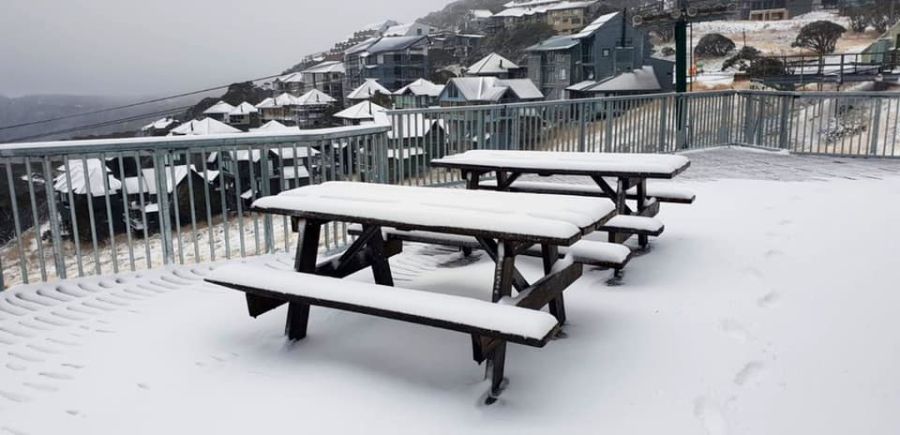
Australia's ski areas are in to their second day of a major early-autumn snow storm. A southerly weather front has brought up to 23cm (nine inches) of snowfall so far to virtually all of the country's ski areas. The snow is still falling. Mt BawBaw (pictured below, Mt Buller top) appears to have had the most, reporting on Sunday afternoon, local time, that their total had reached 22cm (nine inches) and advising against travel.
The snowfall follows similar falls reported in the Andes 72 hours ago. Australia is hoping for a more normal season this winter after a stop-start experience with resort openings last winter during the early months of the pandemic. Some ski areas in the state of Victoria were closed almost all winter, due to a spike in the pandemic in cities there, apart from a few days. Ski areas in New South Wales by contrast, including the country's largest, Perisher, did manage to open for most of the season although with limited numbers allowed on the slopes, a scenario since played out at ski areas that have been able to open around the world over the past year. 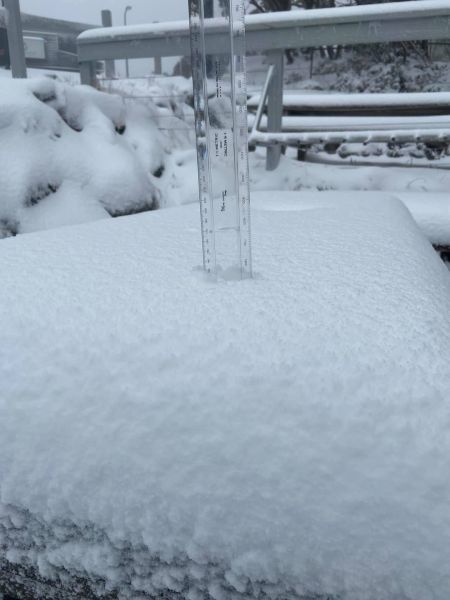 |
|
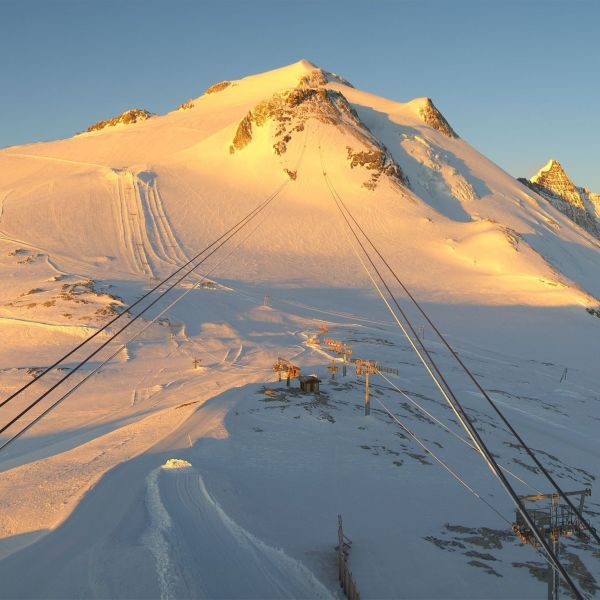
French ski resorts were not permitted to run their ski lifts all winter, but they are hoping that they will be able to offer summer skiing. Although closed from early March at the end of winter 19-20 by the first lockdown, and then throughout the past ski season, France's ski resorts were open last summer and in some cases reported record business. It is not yet known if they will be able to open the ski lifts this summer, but they are planning for it. "For several weeks now, the slopes service has been preparing the opening for summer skiing. See you on June 19th," an online statement from the resort of Tignes says. Summer skiing and boarding here takes place on the Grande-Motte glacier. The country's other major summer ski area, Les 2 Alpes, which claims the largest summer glacier ski area in the Alps, also published its aim of opening the first two weekends in June then daily, also from June 19th. The French summerski season usually lasts between 5 and 10 weeks through July into August, sometimes ending early if the snow cover melts away. Val d'Isere also normally opens a small summer ski area through June in early July. As well as it currently being unknown whether French glaciers will be able to open in June as the resorts hope, it's also currently unknown whether travel to France from the UK will be possible this summer nor what, if any, restrictions will be in place if it is. Picture above is of the Grande-Motte taken April 8, 2021 at 7:03 am |
|
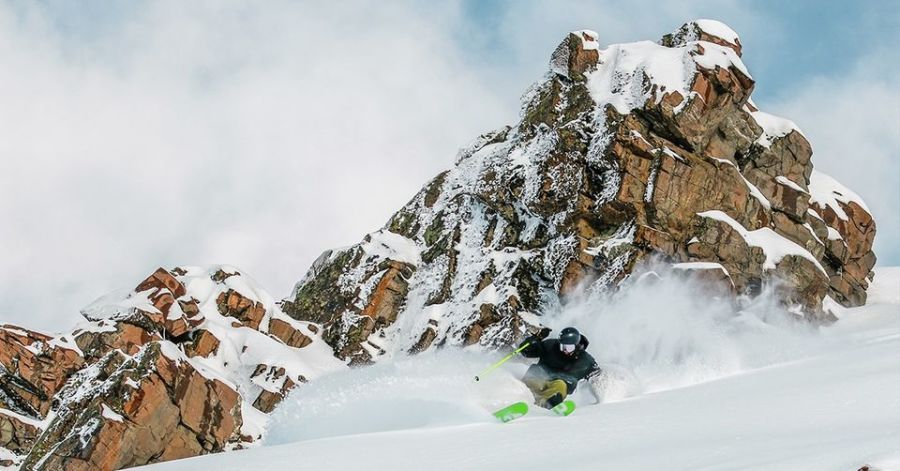
New Zealand is to allow travellers from Australia to arrive without needing to quarantine. The initiative, first discussed almost a year ago, is seen as a big boost for the country's ski areas, some of which rely heavily on international skier visits, particularly from Australia. New Zealand has a relatively normal ski season last winter with no/very few coronavirus infections thanks to its prompt action to curtail infections at the start of the pandemic and then tight border controls. However some of the country's ski areas were only open for limited periods as the restrictions meant not enough skiers arrived to make operating mid-week or low-season viable. Some ski resort businesses had reported an 80% drop in business despite ski areas operating relatively normally. Australia already allows quarantine-free travel from New Zealand but the travel bubble in the other direction will begin from 19 April. There will be a traffic-light system with different Australian provinces depending on levels of infection at each. No testing will be required. New Zealand has warned however that it is a case of "flyer beware" – in that the border could close suddenly and immediately with Australians stuck in new Zealand if there are any virus cases. "Tourism operators can now take bookings with confidence and scale up their staffing," said Chris Roberts, head of the New Zealand travel body Tourism Industry Aotearoa. |
|
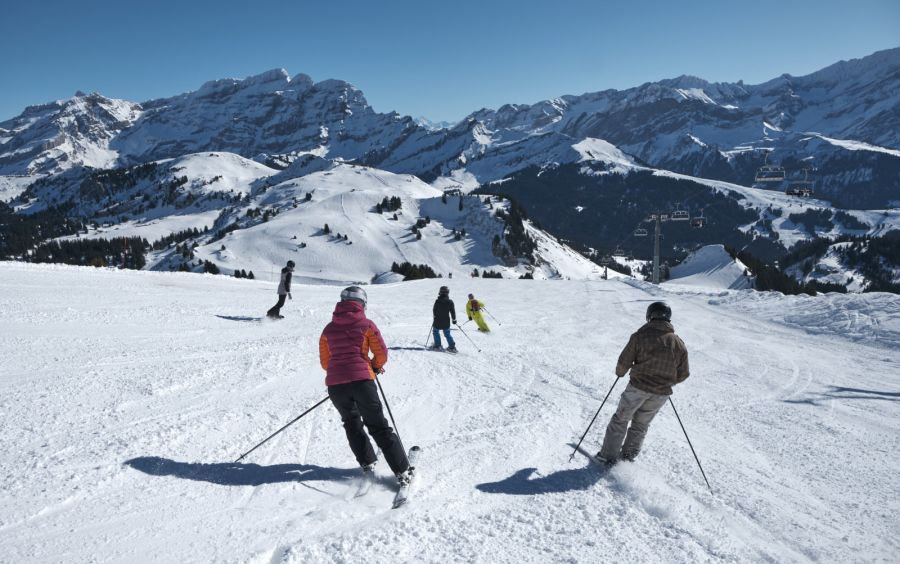
The number of ski areas open in Europe, particularly the Alps, has dropped dramatically following the Easter weekend. It is normal for the season to end at 99% of the northern hemisphere's 5,000 or so ski areas between late march and early May, but this year appears to have seen around 90% of ski areas decide the end of Easter Sunday, or Monday the 5th would end their season, if they had not closed already. Most are doing so due to lack of business caused by pandemic travel restrictions, even where they are allowed to open. The most dramatic fall was seen in Austria where only about a dozen ski areas remain open. In Switzerland its about a third of leading areas still open. Ski areas in France and Italy remain closed by order. In Germany of the two areas in one region allowed to open in March, one is still operating. Things are more normal up in Scandinavia where almost all centres remain open, some reporting 50cm of fresh snow this morning. Ski areas in Bulgaria also have fresh snow and remain open this weekend. All but one ski area in the Pyrenees (La Molina in Spain) are believed to now be closed after open areas dramatically increased the terrain available to skiers for the Easter weekend, from the previous 20-30% of their ski areas to nearer 70-80%. Sierra Nevada also remains open. Several Scottish areas say they may reopen for a limited time when ski areas there are allowed to re-open on April 26th – three weeks after hairdressers. It is a different picture in North America and in Asia where ski areas appear to be operating to a more regular schedule. Around 75% of leading US ski areas are still open, although many will close this weekend, as they normally would. It's largely a similar picture in Canada, although some BC ski areas have closed a week or more early there due to a COVID spike in the province. In Japan most smaller areas have closed, as they normally would at the end of March, but many bigger centres are aiming to stay open for the country's 'Golden Week' at the start of May, again, as usual. Worldwide it is estimated around 85-90% of ski areas have closed for the season (or were never permitted to open). (Pictured: Villars) |
|
|
Ha ha! Oops ...good point.
|
|
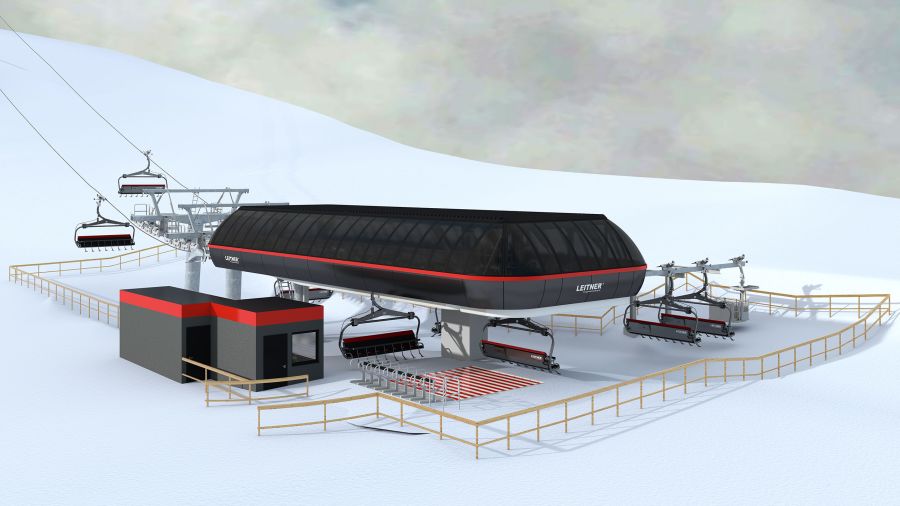
Work is reported to be progressing well on the first eight-seater chairlift to be set up in New Zealand. The new Nor'west Express which the resort hopes will be ready for the start of the season at the beginning of June is set to transform access to the mountain. As well as doubling capacity from 1,500 to 3,000 people per hour, compared to the old quad, the journey time will be cut from over seven minutes to just two minutes. The lift tower foundations have been going in over the past month and the resort recently announced the last of 88 concrete trucks delivered their final load of concrete recently, taking the project to a total of 1000 tonnes of concrete poured since the start of the New Year. All the towers are now in place.
Mt Hutt's targeted opening date is Friday 11th June 2021. Last season New Zealand's ski areas were able to operate without many pandemic restrictions for much of the winter and they're hoping for the same again in 2021. |
|