

Messages posted by : J2SkiNews
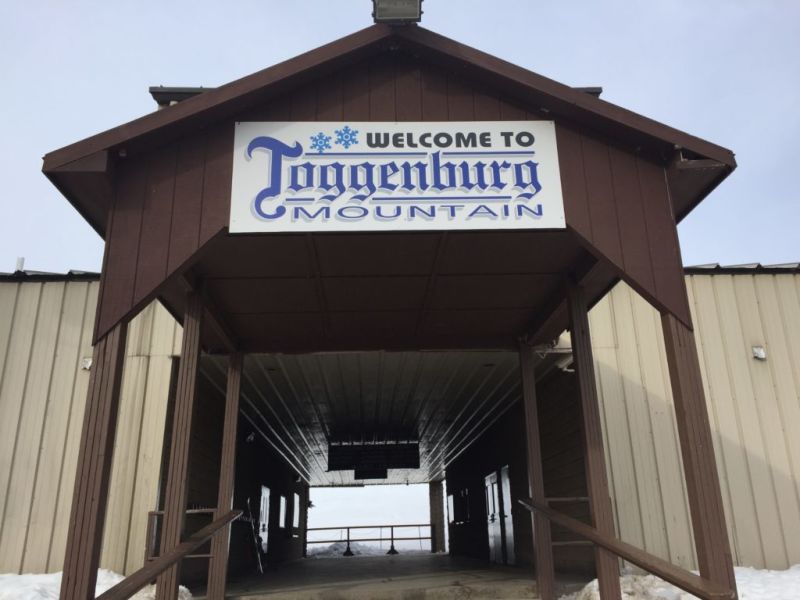
A small US ski resort which opened in the early 1950s is to close permanently. Toggenburg Mountain ski resort opened near the town of Fabius, south of the city of Syracuse and about 50 miles from Lake Ontario and the Canadian border back in 1953. The ski area had more than a dozen runs, half of them graded black diamond, around 160 metres of vertical and five lifts, three of them chairs. Toggenburg Mountain was developed by one family for many years but in 2015 was sold and has since been sold again. The centre's latest owner, Peter Harris, who also owns Song Mountain and Labrador Mountain ski areas, both located within a 12 mile radius of Toggenburg told local media that the closure decision was a hard one to make, but that he felt it was actually good news for the region's skiers and snowboarders, who would be "welcome to try out Song and Labrador Mountains." A press statement from Mr Harris's SkiCNY company explained,
By closing Toggenburg, Mr Harris said he plans to make investments in infrastructure and equipment at Song and Labrador that will improve the overall experience for skiers and snowboarders. Both Song and Labrador have excess capacity, so an anticipated increase in traffic should have little or no impact on their operations. It is unclear if there are any plans for an alternative use of Toggenburg Mountain at present. |
|

A Dutch design company has released its concept for redeveloping a former aircraft carrier into a super yacht. The company's plans for the 60 year old former French Naval ship would see the boat's large surface area switch to 'interchangeable decks' which could include a ski slope, as well as a golf course. Design company Mitsi Studio are behind the plans to renovate the aircraft carrier into a super yacht, and they're reported to be supported by a German entrepreneur who is trying to get investors interested in financing the project. There have been proposals for a snow slope on a ship before. Ski holiday travel agency Iglu suggested such a slope as an April Fool, but later one of the world's leading cruise line companies said they had seriously considered a ski slope as an attraction on one of their ships, but found that there were potential issues with the weight of the snow moving on the water. It's unclear how detailed Mitsi Studio's snow slope plans are with just the simple image created. The former aircraft carrier is a huge 165 meters long and 29.5 metres high. Originally called 'Foch' it was in service with the French Navy from 1963 to 2000, then for 10 years with the Brazilian Navy when it was renamed 'Sao Paolo' but it was decommissioned a decade ago. |
|
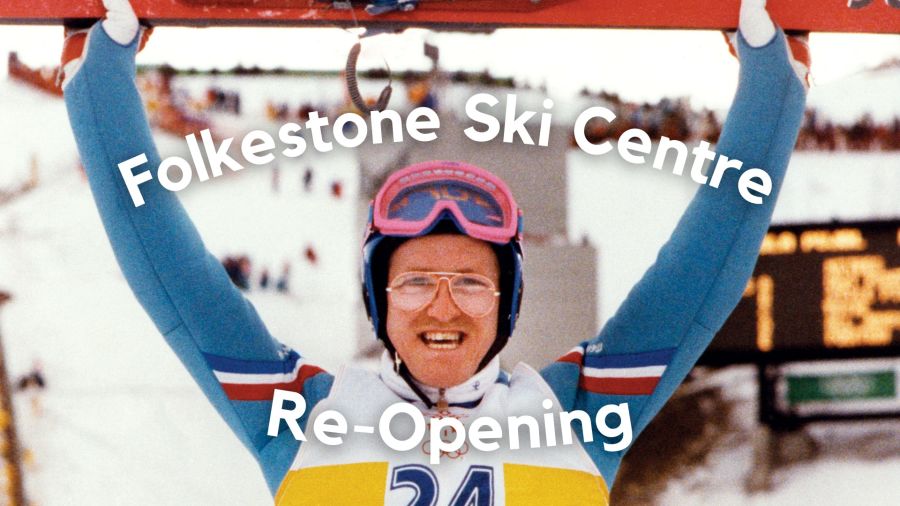
World famous ski jumper Eddie The Eagle was guest of honour at the re-opening of the dry ski slope at Folkestone Sports Centre in southern England. The former Olympic ski jumper, real name Michael Edwards, officially opened the centre's refurbished ski slope which has a new surface and a new sprinkler system. Eddie, who competed in the 1988 Winter Olympics in Canada, enjoyed a practice session on the 60 metre slope. The refurbished Ski Centre also has a new reception and social area. Like most British Olympic ski and snowboarding competitors Eddie began his training on dry ski slopes. |
|
Ski areas in the Australian state of Victoria have re-opened over the past few days after the state's fifth coronavirus lockdown ended after 12 days. There had been more frustration than usual for skiers and boarders as the 12 day period directly coincided with a major snowstorm which dumped more than 1.2 metres (four feet) of snow on the region's ski slopes after a fairly snowless previous six-weeks or so of the season. The lockdown was to try to keep a tight hold on localised outbreaks of the Delta variant in the province and although the lockdown has been lifted strict restrictions are still in place. Skiers need to be in possession of a negative virus test and there are Australian media reports of police checking every skier for this proof. There are unfortunately also now reports of the first cases of the delta variant being reported at a ski area. Mount Hotham and Falls Creek both now have more than 1.3 metres lying, very healthy figures for an Australian ski centre and are opening more terrain. Falls Creek has opened its Summit Quad Chair for the first time this season today. Ski areas in New South Wales have remained open although the state and Australia's largest city, Sydney, has been in lockdown to try to suppress the spread of the delta variant. This has led to reported near empty slopes there with the border with Victoria also closed. There have been reports of a Sydney family being fined for breaking lockdown to go skiing. The outbreaks of the Delta Variant in Australia has also hit ski areas in New Zealand which had a lot of bookings from Aussie skiers who now can't visit the country due to their lockdowns and a ow two-month closure of the Trans-Tasman quarantine-free travel bubble that had opened between the two countries. One New Zealand ski area, Mt Hutt, reported 60% of its bookings for August, which had been at capacity, were from Australians, which have now all had to be cancelled. |
|
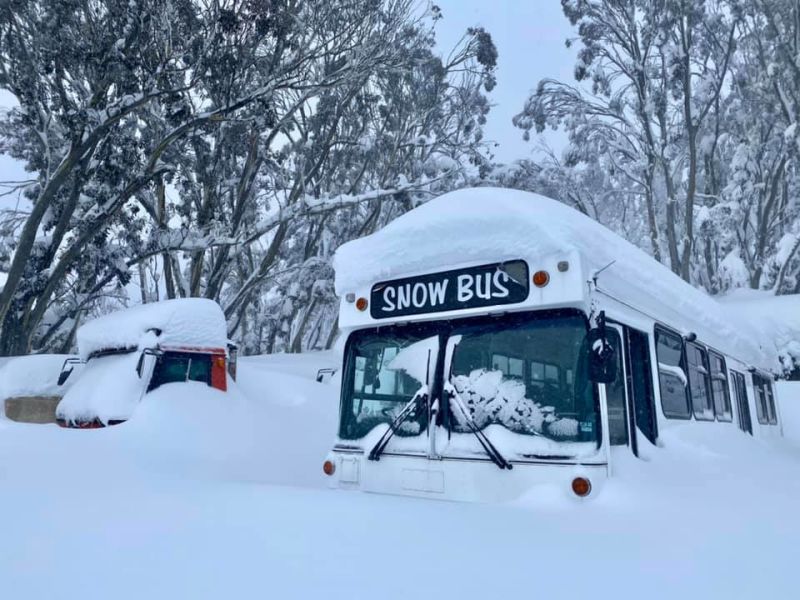
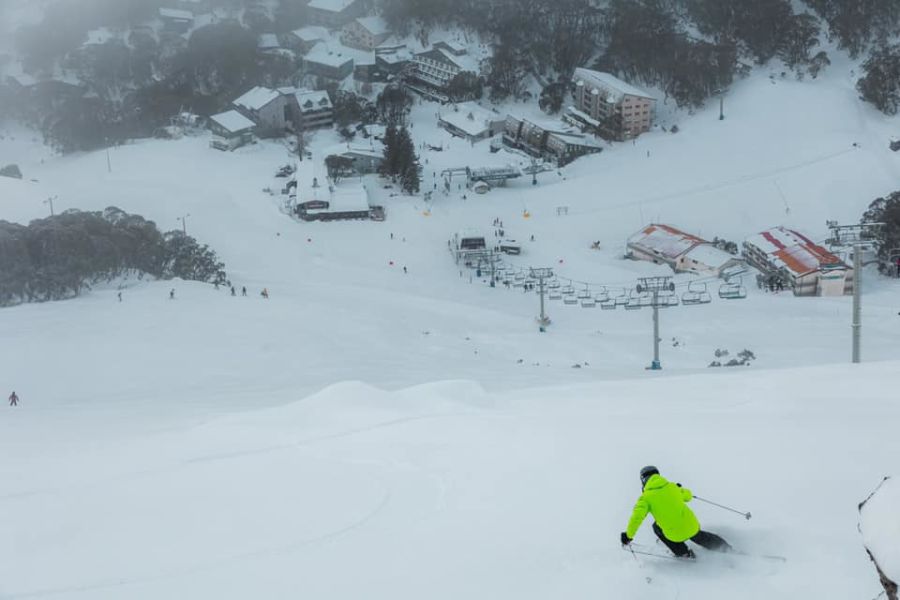
The remarkable snowfalls over the past 10 days in the Australian state of Victoria have now seen ski areas there reporting a cumulative total of nearly 1.5 metres (five feet) of snow. However ski centres there remain closed in an extended fifth state-wide lockdown to try to get on top of small outbreaks of the Delta variant of the virus. The lockdown is currently due to end on Tuesday and ski areas have stressed they're ready to open as soon as permitted. Ironically the snow started falling just as the lockdown begun after a fairly snowless first six weeks of the season. Over the state line in New South Wales the country's largest city, Sydney, is also locked down, but ski areas like Perisher and Thredbo can still operate. They've had plenty of snowfall, and report powder conditions but not many guests able to enjoy it. The snow is expected to keep falling through the coming week. Australia currently has the best conditions in the southern hemisphere, with dry weather in the Andes forcing the famous resort of Las Lenas to stay closed with snowless slopes. New Zealand has had a warm and wet start to its winter but it is an improving picture there. International leisure travel remains largely impossible. Pictures today from Mt Hotham, above and Mt Buller, below. 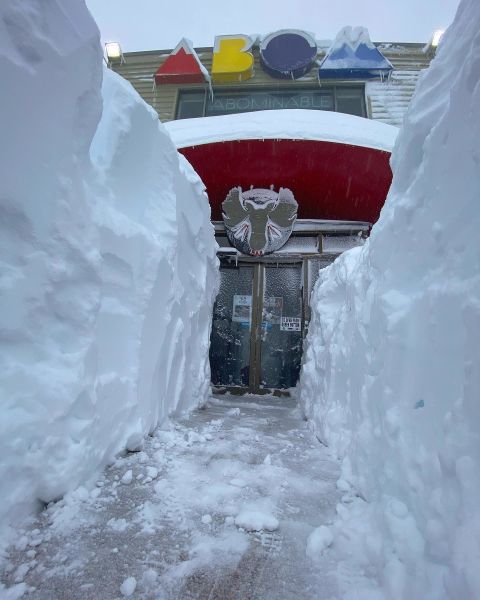 |
|
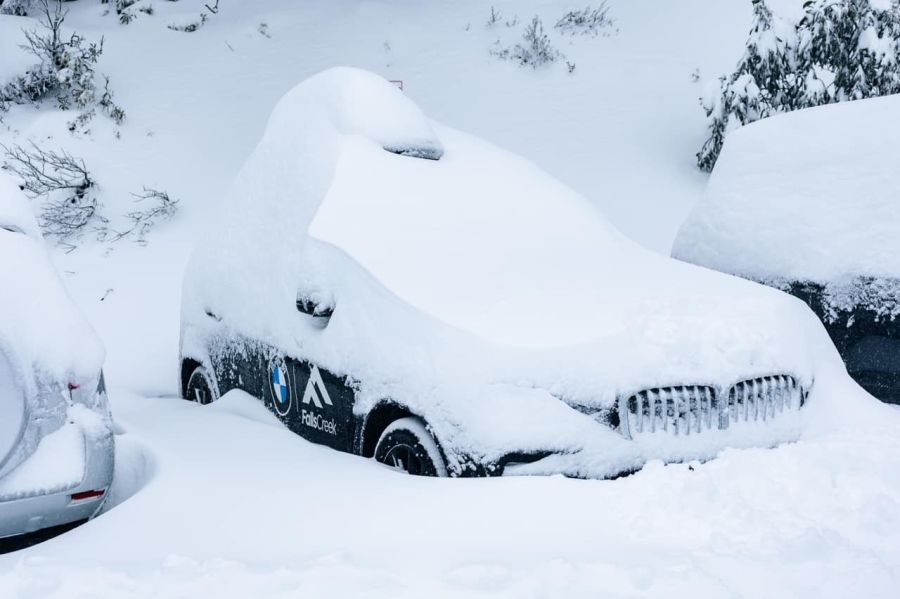
A major storm is currently dumping large amounts of snow on Australian ski slopes, but this biggest fall of the season to date is arriving as one of the country's ski-states in lockdown, and several cities in other states are locked down too, preventing skiers from getting to the snow. Ski areas in the state of Victoria have reported up to half-a-metre (two feet) of snow so far, at the midway point of a five-day statewide lockdown designed to stop a small outbreak of the delta variant there for spreading. Ski resorts like Falls Creek (pictured today) there are closed, currently until Wednesday, when it will hopefully be a powdery re-opening, if the lockdown isn't extended. Over the border ski areas in New South Wales including the country's largest, Perisher, are still open, but there are lockdown in major cities like Sydney due to the Delta variant there. Heavy snow there led Perisher (pictured below) to declare yesterday the best of the season to date. It's about a month in to the 2021 ski season in the southern hemisphere and it is looking better than 2020 in terms of ski areas opening with more than three-quarters now open, compared to about a third at this point last year. However snow conditions have been lacklustre to poor so far this winter in almost all the main ski regions with dry conditions in South America meaning only limited terrain openings and some areas like Las Lenas in Argentina unable to open due to a lack of snow. In New Zealand it has been warm and wet, with June the warmest on record, so again centres have struggled to open, although it is (hopefully) an improving picture. Australian ski areas have the most terrain open with Perisher the only one in the world currently posting more than 50km (30 miles) of trails open. 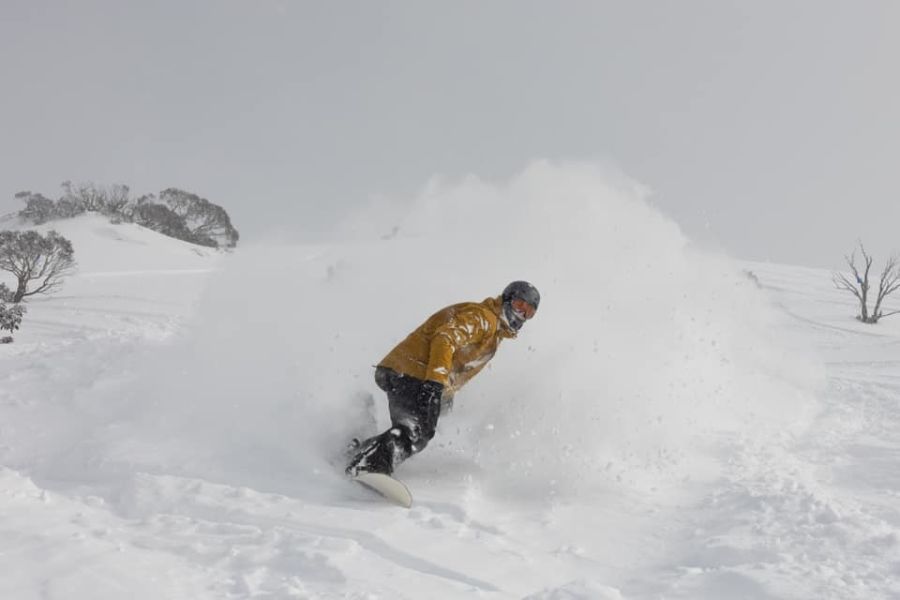 |
|
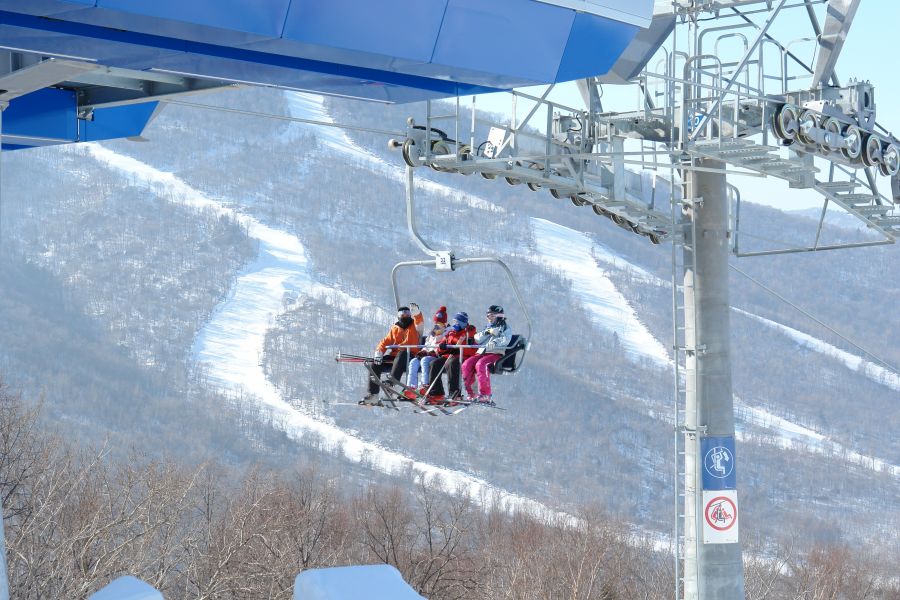
A Chinese company called IntelliCloud is reported to be running an artificial intelligence (AI) system to manage one of the ski resorts that will host some events at the 2022 Winter Olympics and Paralympic Winter Games next year. IntelliCloud operates a "smart safety management solution" at the ski area in Zhangjiakou, Hebei province, which integrates software, hardware, the internet of things and an AI sensing system to survey the slopes and use AI to react if any problems are detected.
Established in 2018, IntelliCloud already holds more than a dozen AI-related software copyrights. |
|
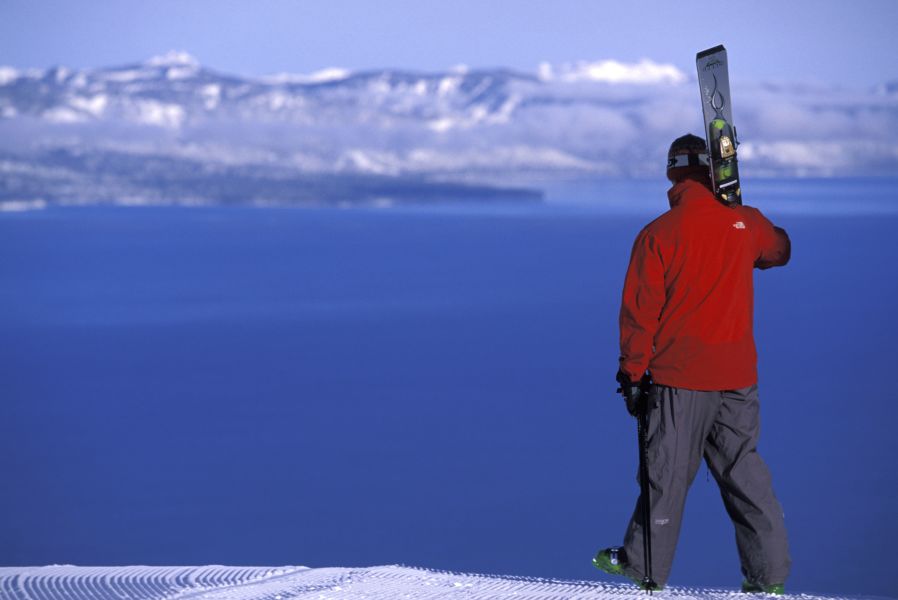
Local residents have reported seeing a 'roller' wave on the surface of Lake Tahoe when a magnitude 6.0 earthquake hit the region late last week. The earthquake's epicentre was located near the California-Nevada border and close to the Lake's location.
Some ski areas in the region have chairlifts and cable cars operating for sightseeing and mountain biking but these had to temporarily stop for a safety inspection post-quake. |
|