

Messages posted by : J2SkiNews
The start of North America's 2021-22 ski season may be less than two months away and Canadian and US resorts are beginning to publish tentative opening dates and plans for operating in another pandemic season. Most of the continent's ski areas were open all of last season but a number opened in autumn 2020 with restrictions in place. The world's largest ski resorts operator, Vail Resorts, for example, only allowed its Epic Pass holders on the slopes in the run-up to Christmas, then gave them priority at peak times through the season. That doesn't look like it will need to be the case again this year, thwarting fears expressed by some that Vail Resorts might limit mountain access at some timers to their season pass holders only even post pandemic.
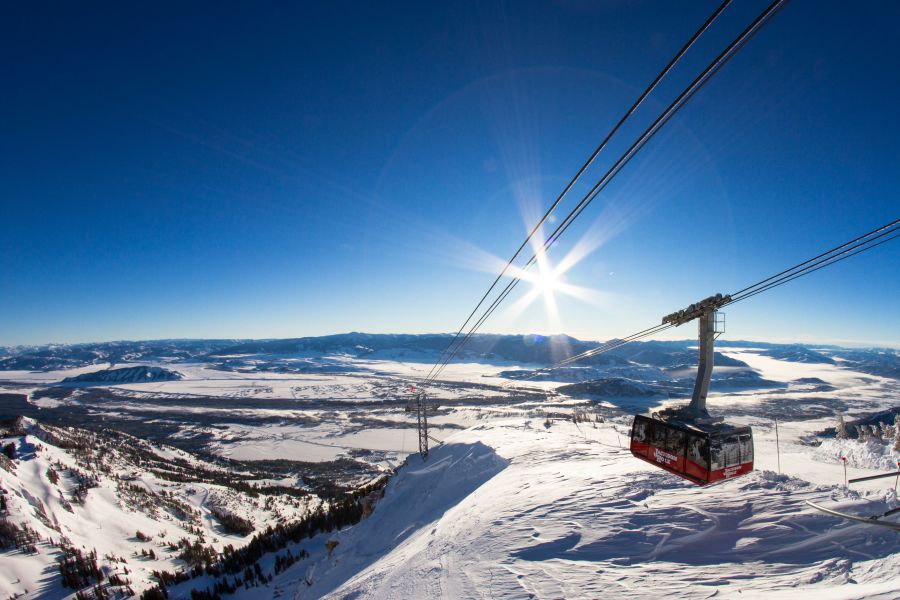
It's not yet clear whether ski areas will return to operating at capacity, Jackson Hole's president Mary Kate Buckley released a "Winter welcome message" detailing the resort's plans saying lifts would run at capacity again but they'd continue to have a limit on the maximum number of people allowed on the mountain. It's not clear if that's different to whatever limit there was pre-pandemic.
All resorts are stressing they are ready to adapt plans according to circumstances as the season starts. It's a nervous time with cases rising in many areas, as around the world, and some local restrictions tightening and less talk of re-opening international borders. But there's also been the more promising sign of fresh snow on high slopes in recent weeks, raising anticipation. In terms of where will open first Vail Resorts say Keystone will open as early as possible in October. Arapahoe Basin, Loveland and wolf creek also open in October some years. Some ski areas in Alberta and the US Midwest also manage to open in October some years. |
|
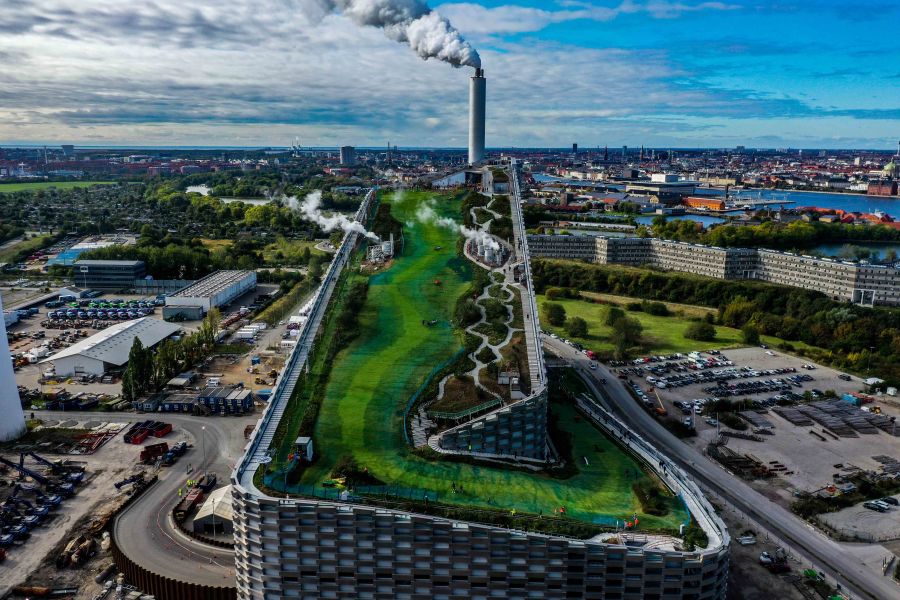
The operators of the iconic CopenHill ski slope on top of a waste-to-energy power plant near Copenhagen have denied Danish media reports that the slope is in danger of closure. The Danish media reports indicated that there were problems with the slope, which opened in autumn 2019, and that there was uncertainty over how repairs needed would be paid for, with the danger of a short-term or possibly permanent closure if these could not be resolved. Moving to quash the rumours, CopenHill published a statement entitled "Facts about the ski surface" on its website, saying, "Of course we're not closing!" The section explains that all repairs needed will be carried out, with small sections repaired at a time, mostly outside normal opening hours, so there will be little or no impact on opening. A spokesman for the slope's owners said that what they were doing building the slope on the power plant was revolutionary, and not tried before, so whilst annoying, it was not really surprising that unexpected problems would occur. |
|
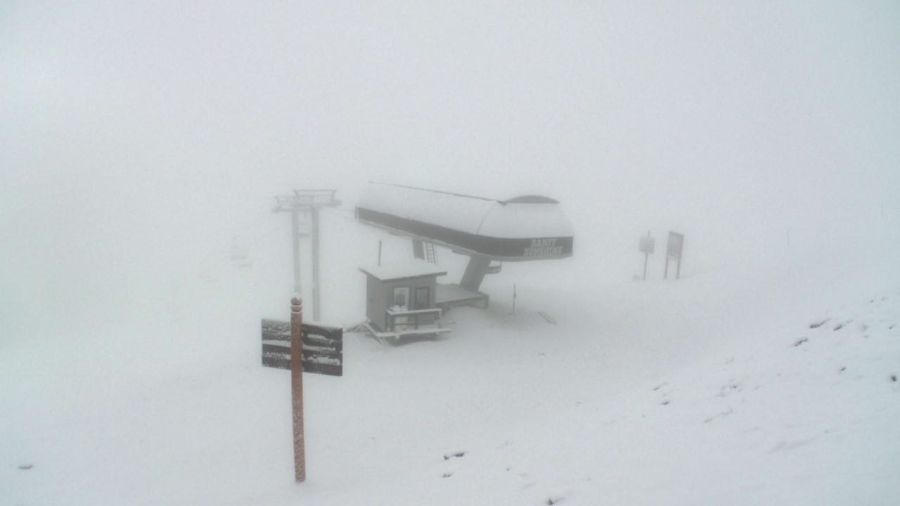
Ski areas in Canada and USA have been celebrating the 'first snows of the season' on high slopes over the past week. 'Dustings' of snow were reported up high at ski areas in the Canadian Rockies first, and then south into the US with ski resorts in Colorado and Utah among those posting pictures of mountain tops turning white. They included resorts like Arapahoe Basin which usually tries to open in October (pictured below), thanks to its high altitude allowing early snowmaking, so the start of the 21-22 season may be less than two months away. Although early snow dustings tend to thaw away almost as fast as they fall, ski areas in Alberta including Sunshine near Banff, another to open in late October or the start of November each year, reported a more substantial second snowfall on Monday (pictured above). At the same time many ski areas in Western North America are or have been closed due to forest fires, either due to their immediate proximity or due to smoke in the air making breathing difficult. Ski areas in Utah, British Columbia and (currently) around Lake Tahoe in California have been particularly hard hit. Many ski areas in North America did surprisingly good business last season despite pandemic operating restrictions. This winter resorts including Jackson Hole have said they hope to operate at full capacity. International leisure travel to the US remains off limits for most although there are strong hopes this position will change before the main ski season starts. Travel to Canada from oversea is re-opening. 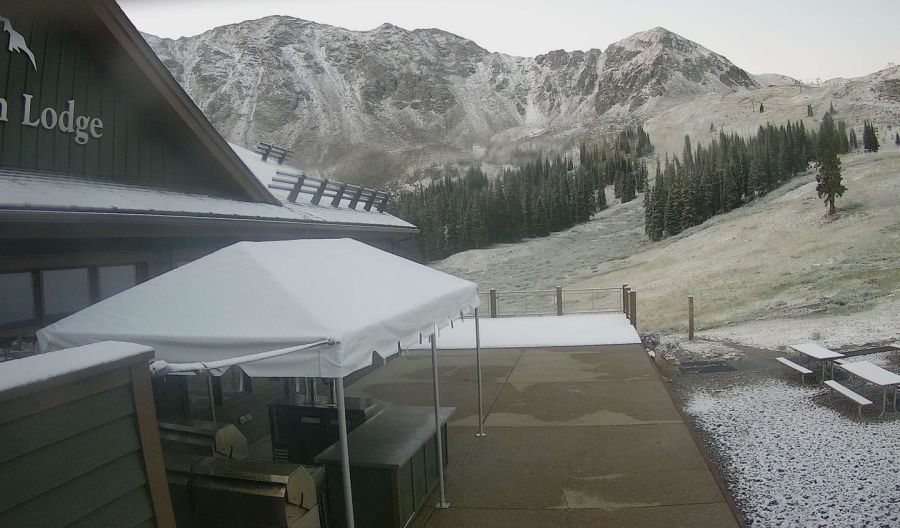
|
|
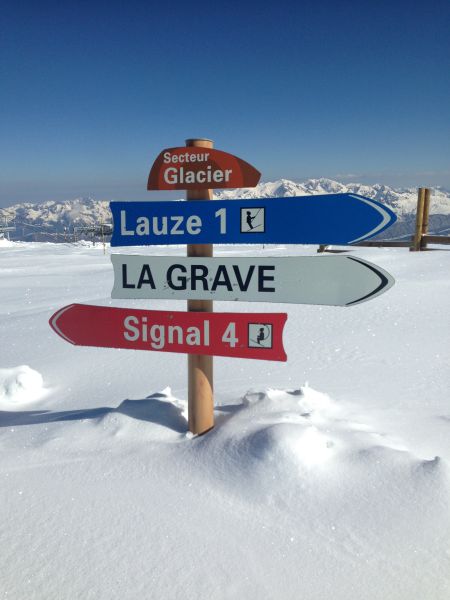
Les 2 Alpes, one of the few remaining summer-ski destinations in the Alps and home to what they claim is Europe's largest skiable glacier is to replace its main Jandri Express lift. Work is due to start on the replacement, part of a projected €128 million spend by the resort's new lift company over the next five years, in 2022, with the lift scheduled to open for the 2024-25 season. The current lift, which opened in 1985, can carry 1200 people per hour, the new tri-cable lift with 32-passdenger cabins will more than triple capacity to 4,000 people per hour, with stations en route at 2,100m and at 2,600m altitude. The 4km long lift will also be a little faster than its predecessor. Lift operations at Les 2 Alpes were taken over in December 2020 by the SATA Group which also manages the lifts At neighbouring Alpe d'Huez and La Grave. As the ski lift didn't open last winter, winter 2021-22 will be their first winter season. Before SATA took over the lifts were run by the Compagnie des Alpes under the name Deux Alpes Loisirs.
|
|
Continued Easing of Travel Restrictions To and From European Ski Nations
Started by User in Ski News, 6 Replies |
|
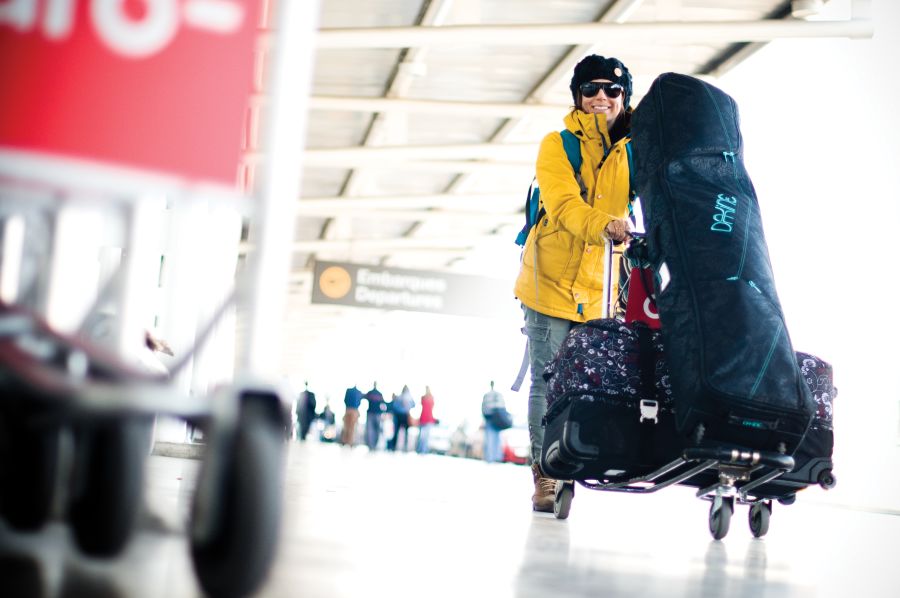
Things currently appear to be continuing to move in the right direction when it comes to travel to European ski nations from the UK, and home again. Separately a survey published by the Mountain Trade Network in partnership with Skitude found that 97% of snowsport travel businesses expect to operate this winter, with an increase in visitor numbers. That's a considerable increase in confidence on the last survey. The picture remains complex and confused however with different rules, in some cases, depending which UK nation you travel from. The rules also continue to change frequently. But currently the rules seem to be moving towards a greater possibility to travel, although recent history has shown such progress can quickly reverse. The main changes really centre around the need to self-isolate when arriving in another country or returning to the UK, which is less and less the case. For most European destinations you increasingly need evidence of vaccination instead, and/or a negative PCR test from a private provider. You generally need to take a PCR test on returning to the UK too. Among the recent changes green-listed Norway has reopened its border to Britons provided they can show they have an Covid Vaccine passport for restriction-free travel provided by the NHS in England and Wales. However people vaccinated in Scotland currently can't travel to Norway as the country so far only issues a paper certificate of vaccination, which Norway isn't accepting. Scotland's government says it "aims to have a digital vaccination passport" available to Scots next month. The ski nations of Germany, Austria, Romania, Slovakia and Slovenia have also been added to the UK's green list for travel at the latest review. Some of these, including until Sunday 15th August the major ski nation of Austria, wouldn't allow Brits travelling for leisure in, but that's changing too. "We now also have green light from Austria: Since 15 August, the UK is no longer considered a virus variant area in Austria, meaning double-jabbed travellers can enter without having to self-isolate. To enter the country, Brits and those travelling from the UK will need to show proof of either two doses of AstraZeneca, BioNtech/Pfizer or Moderna or one Johnson & Johnson dose (at least 22 days before arriving in Austria). No additional COVID-test is required. Travellers who are not fully vaccinated yet still have to quarantine for ten days but can leave self-isolation after a negative COVID-19 test on the fifth day," said the Austrian National Tourist Office in London on Monday. France has dropped from its special 'amber-plus' status to amber which means double-vaccinated passengers will no longer need to isolate upon return to the UK, as is now the case for most of Europe's ski nations where they're allowing Brits in. France has introduced an internal health pass which delivers a QR code allowing people to travel around the country and enter restaurants, similar to the system China introduced after the first wave of the virus was suppressed there in spring last year. |
|
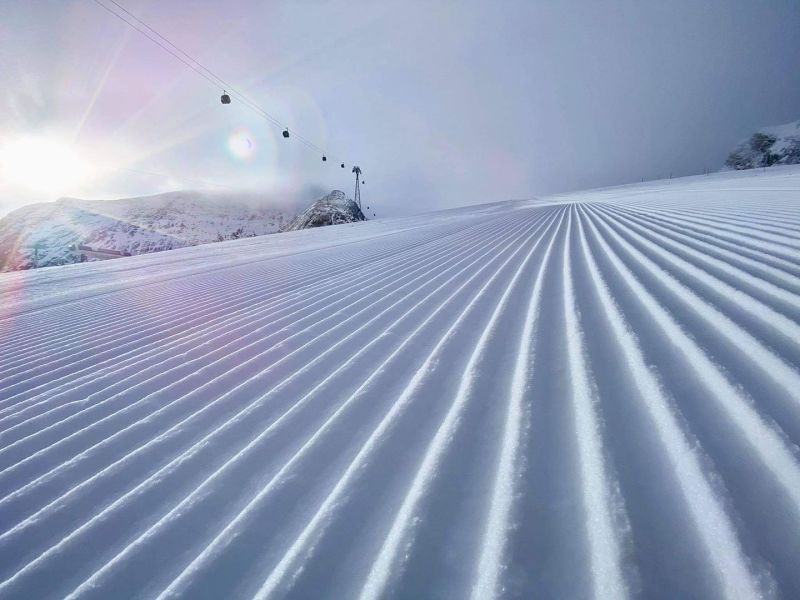
Last year saw some great August, September and October snowfalls leading to superb ski conditions for autumn in the Alps. Skiers and boarders lucky enough to make it to the slopes in September and October 2020 enjoyed great conditions at the 20-odd areas that had opened by mid-October. Then, at the end of that month, everything stopped and the second lockdown began. Well it did in Austria, France and Italy at that point. Ski areas in Scandinavia and Switzerland stayed open and remained open all winter with Austria re-joining them in early January, although centres could open for locals only. Now another autumn approaches, there have been some initial dustings of snow in the Alps and glacier resorts are beginning to tentatively announce target opening dates (snow conditions and pandemic operating rules permitting…). In Austria the Hintertux glacier is already open and is open year-round, pandemic permitting. The Stubai glacier says it plans to open, "mid/end September, depending on the snow conditions." The Kitzsteinhorn above Kaprun (pictured top last October) currently says "autumn!" but usually tries to open at the end of September or start of October. Similarly, Solden, which stages the first World Cup Alpine ski competitions of the 21-22 season at the end of October, says it aims to open on the 4th of that month, but may open earlier if conditions allow. The Kaunertal Glacier will stage its official opening weekend from 8th October and the Pitztal Glacier, the country's highest, says they'll open from 15th October. The Molltal Glacier should also be open but it has closed temporarily due to lack of snow on the glacier, and hopes to re-open mid-September. In France Les 2 Alpes is the only centre still open for summer skiing and plans to stay open to the end of this month. Tignes is usually the first in the country to open each autumn, it plans to open for its 21-22 season on 16th October. In Italy Passo Stelvio is open for summer skiing and due to remain open to the end of October. Cervinia is also currently open accessing the ski area shared with Zermatt. It will close in early September but had announced it plans to re-open for the season from October 16th too. Val Senales reports it plans to open its glacier slopes on 17th September this year. For Switzerland Saas Fee and Zermatt are open as usual already. The Diavolezza Glacier near St Moritz in the Engadin region plans to open from the 23rd October but initially only open at weekends and on Wednesday for the general public. The Titlis Glacier at Engelberg say they hope to open in 'October' but has not set a date. Last year, Glacier 300, which had planned to open in mid-November, did so at the start of October after a big early snowfall. Crans Montana, Davos and Laax also have glacier areas but don't usually open until November. Outside the Alps a number of ski areas in Scandinavia aim to open in the first half of the autumn too. Like the ski centres in Switzerland, these actually stayed open for their normal seasons. Among them Norway's Galdhopiggen glacier is another that should be open now but is closed instead as the snow has thawed. It hopes to open September 11th or maybe the 18th. However it hopes to re-open in mid-September. Ruka and Levi in Finland open at the start of October using snow-farming, recycling last winter's saved snow to create their initial runs. |
|
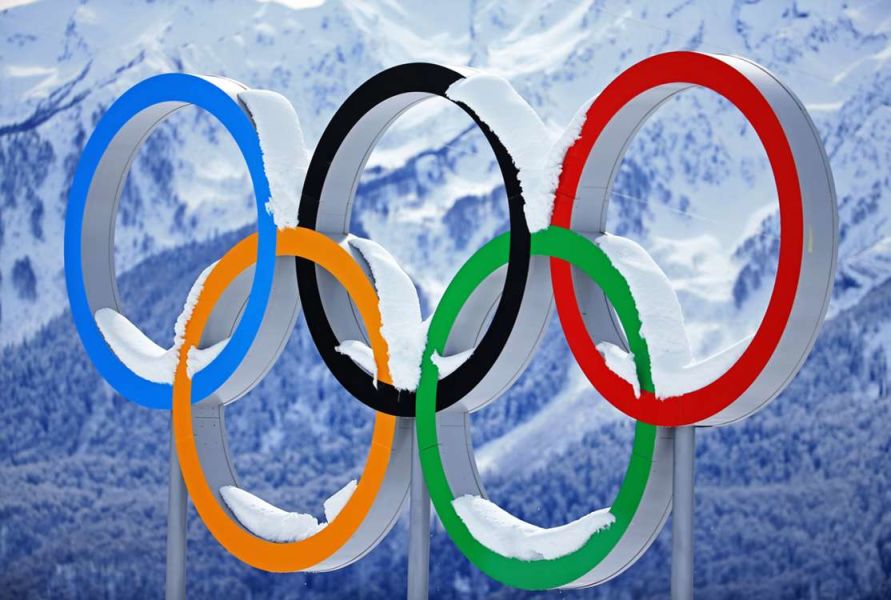
With the Tokyo Summer Olympics behind us it's suddenly only six months – a little less in fact – until the 2022 Winter Olympics and Paralympics are due to kicks off in China. Although it seems odd today that the summer and winter Olympics are taking place so close together, thanks to the year's delay in staging Tokyo Games due to COVID, we only need go back to the early 1990s when the decision was made to start staging the summer and winter Olympics two years apart, prior to that both took place in the same year. The 1994 Olympics in Lillehammer, Norway were staged only two years after the 1992 Games of Albertville, France to make this scheduling change. Had that not been the case Beijing might not be happening until m 2024, when we celebrate 100 years since the first Winter Olympics in Chamonix. Seven new events are due to be competed at Olympic level for the first time in Beijing. In snowsports these include men's and women's freestyle, skiing big air and mixed-team events in snowboarding and skiing. Participation in the Beijing Games is causing some soul-searching by a few Western governments due to the reported treatment of the Uyghurs ethnic group in China along with the ongoing tensions with Hong Kong. Some factors within these governments seem content to continue to do billions of dollars of trade with China but think the Olympic Games are where they should make a statement. On 20th July the IOC agreed to change the motto of the Olympic movement from 'Faster, Higher, Stronger' to 'Faster, Higher, Stronger – Together'. The virus also continues to be a background issue although ironically China's draconian control of its population appears to have helped it do a better job of track and trace and vaccination than most liberal western democracies. It has not yet been decided whether any spectators will be allowed. |
|
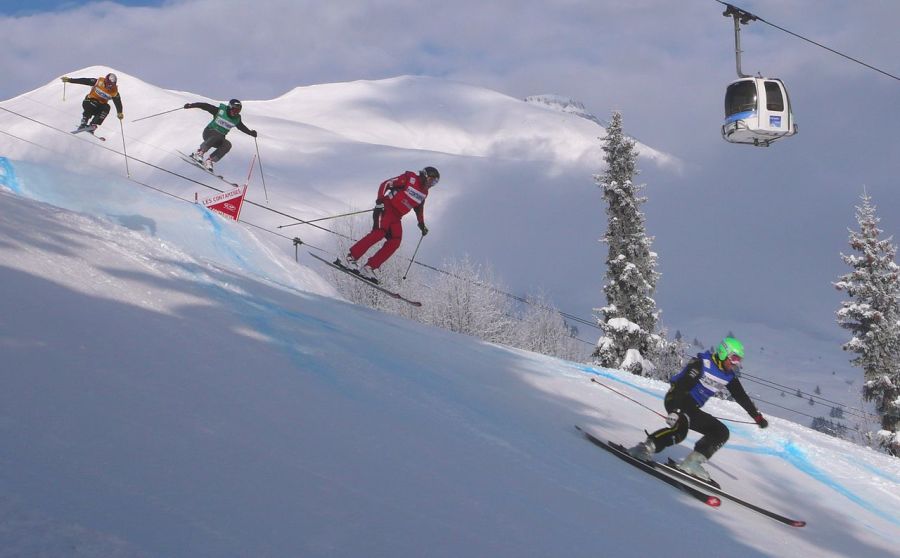
There's an early sign that COVID will still be a factor next winter (if anyone doubted it) with the news that a stage of the Ski Cross World Cup and Snowboard World Cup this coming winter has been cancelled. The events had been scheduled to be held in Feldberg in Germany on 29 and 30th January 2022 as the final events before athletes moved to China for the Beijing Winter Olympics. The German Ski Association (DSV) and Snowboard Germany and the FIS agreed that ongoing restrictions in Germany meant that an early cancellation was the best option. The "organisational, sportive and economical hazards linked to this uncertain situation are simply too high," an FIS statement concluded. The Ski Cross World Cup is due to start the new season at the end of November at the Secret Garden resort in China with the twice delayed Olympic test event now taking place less than three months before the Games themselves. A return of the tour to Feldberg in February 2023 is now being planned. |
|