


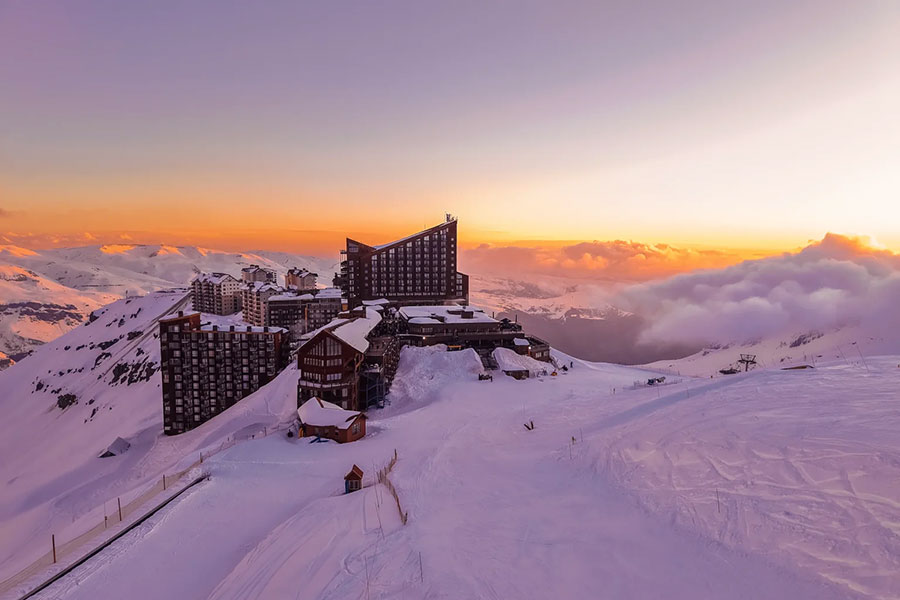
Valle Nevado, Chile, just extended their season into November!
The Southern Hemisphere ski season winds down, but Chile's Valle Nevado heads for a historic 8 November finish in the Andes. Meanwhile, Alpine glaciers reopen, although snowfall across the Alps remains below usual early-October levels.
The Snow Headlines - October 9th
- Valle Nevado to be the last area open in the Andes, extending its season to a historic 8 November.
- The 2026-27 ski season starts at centres in Finland and Sweden.
- More Austrian glaciers open for the 2026-27 season, with far more terrain available.
- Saas-Fee and Hintertux reopen after summer glacier closures; Zermatt remains closed for now.
- The 2026 season continues to wind down in the Southern Hemisphere as more major centres close.
- First snowfall of the autumn falls on peaks in Japan.
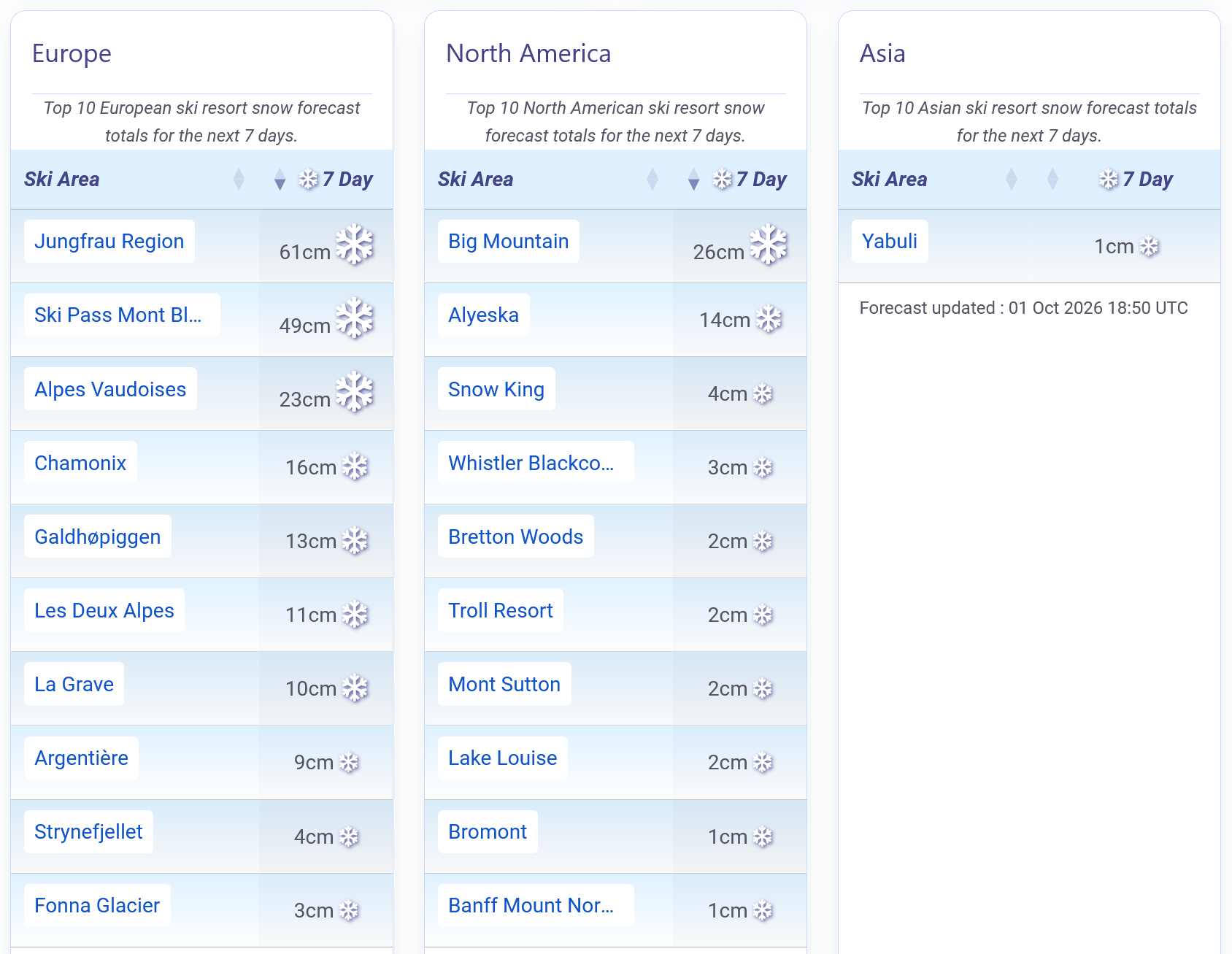
It's cooling and there's snow in the forecast for Europe and North America.
Re-publication :- the J2Ski Snow Report Summary, being the text above this line, is free to re-publish, but must be clearly credited to www.J2ski.com with text including "J2Ski Snow Report" linked to this page - thank you.
World Overview
We have almost reached the point in the year when the number of ski areas open in the northern hemisphere overtakes the number open in the southern. With still very little snowfall in the Alps, although a light dusting over the past few days has raised spirits, glacier areas are opening later than usual, so the switch may happen a week or two later than last year.
Saas-Fee and Hintertux have re-opened after around two months of closure, and Sölden and the Kitzsteinhorn will join them this weekend, taking the Austrian total open to five.
The Scandinavian ski season has also got underway thanks to snow-farming in Sweden and Finland this week, with glacier skiing also possible in Norway and Italy.
Late-season skiing continues unevenly across the Southern Hemisphere. New Zealand still has the most areas open, though with several closing this weekend. Conditions have alternated between snow showers, windy spells and sunny slush, with South Island terrain holding strong and North Island bases thinner. Valle Nevado, Chile is expected to be the last area open in the Andes, with Portillo, Catedral and others closing this weekend. It has just announced an unprecedented further season extension to 8 November.
Southern Hemisphere
New Zealand
New Zealand is heading into its final stretch of 2026, with six ski areas still operating - several due to close on Sunday. The past week delivered a mix of snow showers, windy spells and bright afternoons, producing classic spring 'slushy laps'. Mount Hutt and The Remarkables remain almost fully open, while Cardrona plans to run for another week.
North Island centres continue with reduced terrain and thinner bases, but aim to stay open until at least the 18th.
Looking ahead, mild temperatures, sunshine and occasional rain or sleet dominate the forecast, with the North Island slightly colder and a chance of early-week snowfall.
Argentina
Unsettled weather has dominated Argentinian ski areas, with sunshine, showers and 5-15 cm/2-6 inches of new snow on higher slopes. Mild temperatures, often reaching +12 °C/54 °F at base level and barely dipping below freezing overnight, have also brought rain and sleet.
Most resorts have now closed for 2026, but Cerro Catedral has extended its season to Sunday, offering just under half its terrain and around 22 km/14 miles of piste.
Catedral's closing weekend looks mixed, with frequent rain-snow combinations, steady upper-mountain snowfall, variable surfaces and low visibility under humid, unsettled skies.
Chile
Chile's ski season is still delivering wintry conditions despite the spring calendar, with high-mountain lows near -8 °C/18 °F and daytime temperatures at lower elevations only a few degrees above freezing. Resorts have seen the full spring mix of rain, sleet, snow showers and sunny breaks.
Four centres remain open, with three finishing this weekend, including Corralco, still holding the world's deepest base at nearly 5m/16ft, and Portillo, which extended its season after July's record snowfall and added another 25 cm/10 inches recently.
Valle Nevado is expected to be South America's sole ski area still operating after the weekend, and it has just announced plans to keep going a whole extra month into November.
Snowy, unsettled weather continues across the Andes for the week ahead, with frequent high-elevation snow, mixed precipitation lower down, sub-zero mountain temperatures and breezy spells into the closing weekend.
Northern Hemisphere
The Alps
The amount of skiable piste mileage in the Northern Hemisphere jumped sharply last weekend as formerly year-round Austria's Hintertux reopened after a two-month closure, offering around 15km/9 miles of skiing.
Switzerland's Saas-Fee also resumed limited summer operations, adding 10km/6 miles more.
That takes the total available glacier terrain from roughly 6km/4 miles a week ago to about 32km/20 miles now. That may not seem like a lot, but it's a five-fold increase on where we were through September, although still far below early-October norms.
Several major centres, including Zermatt, remain shut after an unprecedented two-month closure following the record-warm Alpine summer. The good news is that the past few days have seen cooler temperatures and light snowfalls reported on glaciers.
Temperatures have eased slightly, with freezing levels dipping to around 2,500m/8,202ft overnight and staying close to freezing above 3,000m/9,843ft during the day with those light top-ups, but meaningful snowfall has yet to arrive.
Austria's Sölden plans to open on Friday, then Kitzsteinhorn on Saturday, while Engelberg's Titlis Glacier is scheduled to start its season this weekend, with confirmation still pending. A colder, more unsettled pattern is expected over the coming days, with regular light snowfall, brisk winds and gradually improving upper-glacier conditions.
Scandinavia
Finland's 2026-27 ski season got underway last weekend as Levi and Ruka switched on lifts and unveiled their first snow-farmed slopes of autumn. Both resorts rely on vast winter stockpiles preserved through summer. Each centre now has around 2km/1 mile of slopes open, plus terrain parks and cross-country trails. Conditions have been a bit misty and mild at times, but overnight freezes have prevented much thawing. Both resorts now begin seven-month seasons lasting until May.
Sweden's Kläppen has also opened thanks to its own snow-farming efforts, in this case only a terrain park so far. The Galdhøpiggen Glacier in Norway is a fourth option in the region, although it remains focused on providing training facilities for race teams rather than recreational snow sports at present.
North America
North America saw rare early-October snow sports last weekend as Snowmass in Colorado and Trollhaugen in Wisconsin built temporary terrain parks from stockpiled winter snow.
Snowmass opened a free rail park using snow preserved under insulated blankets, reporting that around 85% of its stash survived Colorado's record-warm summer. The resort shaped a one-acre pile for a small early-season setup.
Trollhaugen's Open Haugen weekend, which unlike Snowmass has been running for quite a few years now, used similar snow-storage methods and saw more than 300 athletes booking all available snow slots. The snow was still there later in the week, and it reopened for bonus laps on Thursday 8th.
Beyond these events, North America's 2026-27 season is yet to begin; higher terrain continues to see pre-season dustings, including the first in New York's Adirondacks at Whiteface, where test snowmaking and altitude temperature drops signal promising early-season conditions.
Looking ahead, western high-elevation terrain shifts to more unsettled weather this week, with overnight lows at 8,000-10,000 ft dipping into the 20s °F and afternoons rising from the mid-40s to mid-60s °F. Snowfall is possible at more northerly latitudes.