

Messages posted by : J2SkiNews
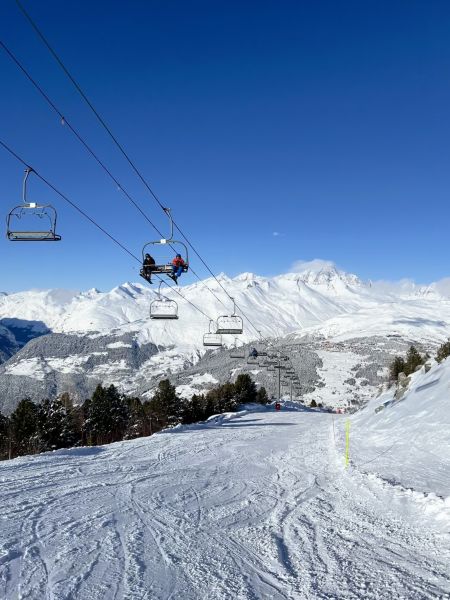
A threatened strike by ski lift operators at French resorts appeared to be aimed at focussing the minds of politicians on the plight of seasonal workers rather than intending to actually spoil holidays and damage resort businesses trying to recover after pandemic closures. Two unions, Force Ouvrière (FO), which represents ski lift operators and the Confédération Générale du Travail (CGT) are both reported to have issued threats of a strike from (or 'on' depending on what you read) next Tuesday 31st January. That's because although it's being widely reported that the strikes are of an "unlimited" duration, a statement from the Les Arcs lift company, and others, is disputing that.
The unions are concerned about pay, pension changes and terms and conditions for seasonal workers. The strike is part of wider protests against government plans that include raising the pension age in France from 62 to 64. It's not the first time French ski resort workers have voted to strike at peak periods of the season and, while there are no guarantees, previously the threats in seasons past have not resulted in many significant lift closures. |
|
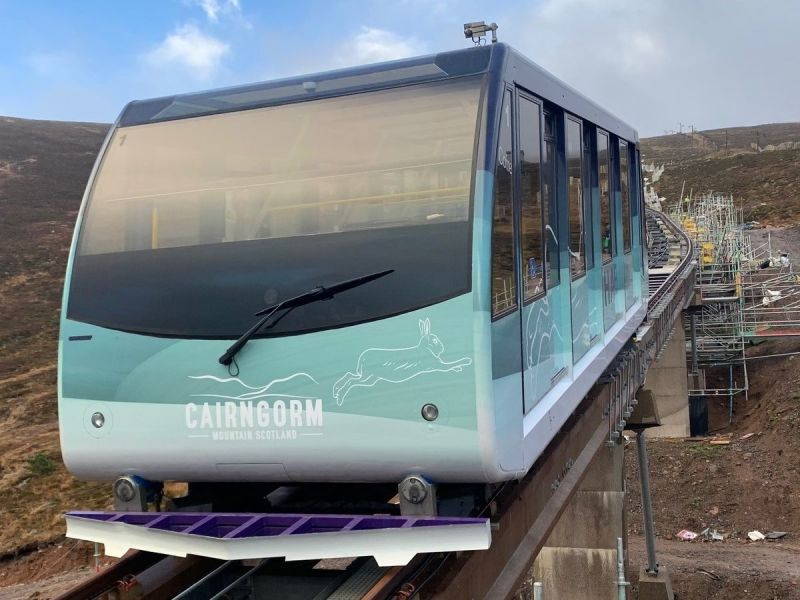
The funicular railway that provides access to much of Cairngorm ski area above Aviemore in Scotland has re-opened after a four years and four months closure. The lift was closed after structural problems were identified in the concrete supports for its track. Initial estimates of about £10m to repair the lift grew to approximately £16m when more detailed tenders were received. That cost though was suggested to be a little lower than what it would cost to remove the railway altogether, due to the sensitive ecological environment where it's located. However the final repair cost appear to be closer to £25m. Cairngorm Mountain Railway is Scotland's only funicular railway and is the highest in the UK reaching the Ptarmigan building at over 1,065m. Weather conditions permitting, the 2km funicular railway will now run a regular service taking snowsports enthusiasts to the top of the slopes in around 5 minutes. The reinstatement of the railway comes alongside other major improvement works including new 'magic carpet' conveyor belts for the beginner slopes, car park improvements and the refurbishment of the Ptarmigan building. Repair work began in spring 2021 with the aim of completion for last year but was delayed by the pandemic and "global supply issues" sourcing required materials. The work involved thousands of helicopter flights to deliver a total of 800 tonnes of concrete to the site. The funicular originally opened in 2001 at a cost of £26m, previously carried around 300,000 visitors up the slopes each year and is a year round attraction. Numerous enquiries are believed to be ongoing into the previous operators of the centre and even the original construction of the lift in the late 1990s and early 2000s given its shorter than expected life span, with more than £50m not spent on it over the past 25 years. Scottish ski areas have had a mostly cold and snowy start to the 22-23 season although the past week has seen the Highlands have far warmer temperatures than the rest of the British Isles. Temperatures are now dropping again however and cairngorm currently has about a dozen runs open. |
|
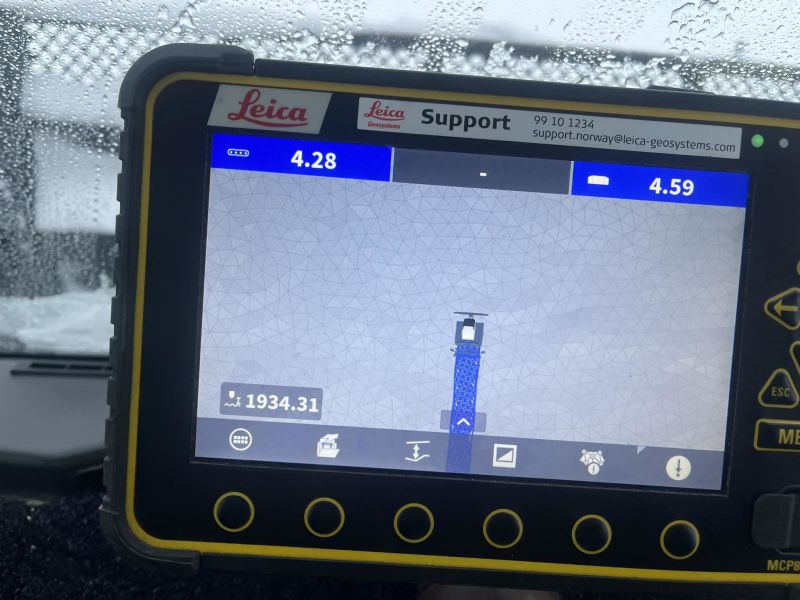
The Galdhøpiggen summer ski area in Norway, which has Scandinavia's highest slopes, has measured the snow lying on its runs at 4.28 metres already. That's a metre deeper than anywhere currently open in Europe. Galdhøpiggen is one of three Norwegian summer ski areas that see snow build up through the preceding autumn, winter and early spring before opening in May. Galdhøpiggen is expected to open for 2023 summer ski season in mid-May around the same time as the Fonna Glacier Resort with the Stryn Glacier expected to open towards the end of the month. Galdhøpiggen normally has the longest season of the three, usually aiming to stay open to late October or early November, however in recent years it has often been forced to close in July to September due to warmer temperatures melting the snow cover away. The 4.23 metre measurement was taken by a new Leica snow depth meter and was taken at an area set to trap wind-blown snow which is stored for the summer.
|
|
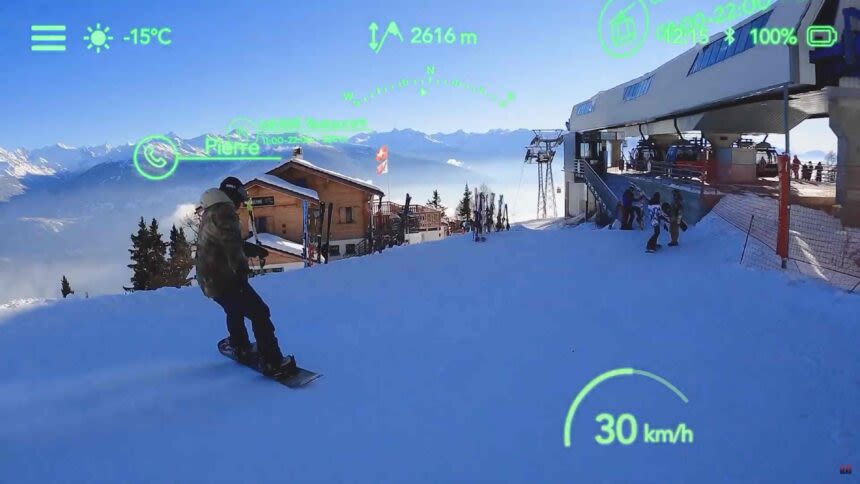
A Swiss tech start-up has integrated an augmented reality display into a pair of ski goggles to provide live info to skiers and boarders on the slopes. Options include tracking friends and family in your group or creating virtual slalom poles to ski around. It's not the first time that ski goggles containing digital information displays for the wearer have been created but previous attempts have been criticised as potentially dangerous for risking distracting the skier, however the Ostloong Innovations business behind the new VR goggles claims they'll actually make wearers safer. The company's Sirius AR goggles will allow users the options to access the same kind of information they can currently get on smart watches or phones such as weather and altitude, their own speed and a digital compass. However thanks to a GS sensor the goggles can also provide directional arrows or even virtual slalom poles on the piste. There's a built-in HD camera for taking photos or video which can be fed to live streams and shared between multiple people wearing their own pair of the goggles. Ostloong say their Sirius goggles will be available for pre-order in February, prices so far unknown. |
|

Britain's Dave Ryding has taken a sensational second place in the Hahnenkamm slalom at Kitzbuhel today, the race where he became the first ever Brit to win an Alpine World Cup ski race a year ago. The result came after Dave had been left in 16th place more than a second and a half behind race leader Manuel Feller from Austria, after the first run. However Ryding posted what ended up the fastest second run of all to move to top spot as half-a-dozen skiers failed to beat his combined time, before Dave's Kandahar Club team mate Daniel Yule, who has Scottish parents but races for Switzerland, finally managed it. But the remaining racers with better first run times, including Feller, either failed to beat their times or skied out. Ryding has now further strengthened his position as Britain's most successful Alpine skier with this his sixth podium and fourth second place result, his first also being second at Kitzbühel in 2017. The race was also memorable for Britain's Billy Major who made 23rd position after breaking into the top 30 for the second run from his 40th start place in the first run. 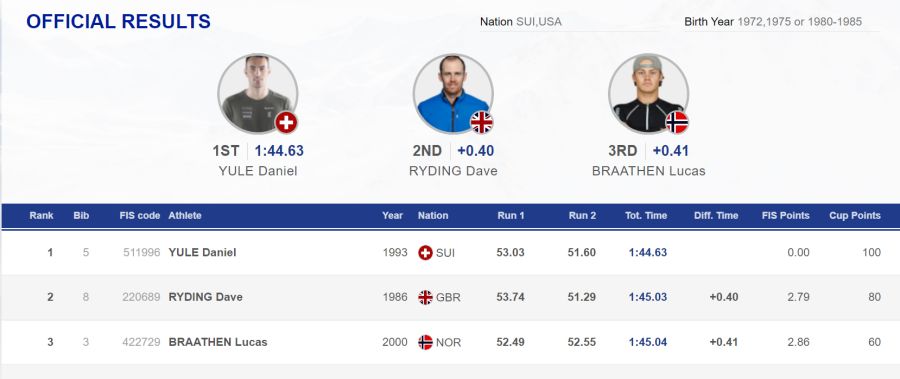 |
|
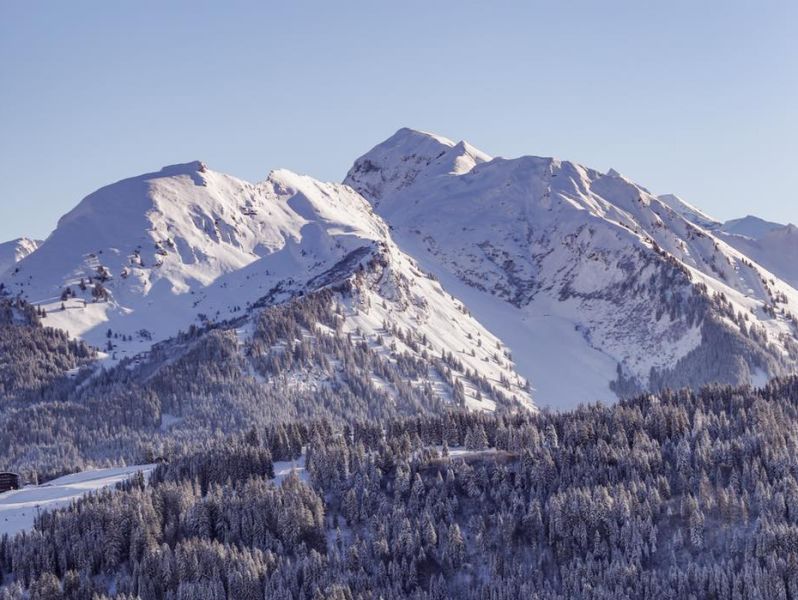
Conditions have settled in the Alps after heavy snowfall, heaviest in the west, over the first half of this week. Snowfall has now eased, although lighter showers continue, particularly in the east, sunnier in the west, with the main change on the past month being a big drop in temperatures. Most Alpine villages are not seeing temperatures getting above freezing and up on high mountain slopes the numbers are as low as -25C. The forecast is much the same through the coming week. In terms of how the snowfall has impacted ski areas, some higher slopes in the French and Swiss Alps have reported jumps of upto a metre in their upper slope base depths in the last seven days. Alpe d'Huez and Avoriaz are now posting more than 3 metres lying on their highest slopes. The biggest difference though is for lower lying areas like Les Gets (pictured above on Thursday), Megeve, Gstaad and others that sparked (continuing) "No snow in the Alps" stories in world media. These have seen a big improvement with les gets, for example, which had all its slopes closed, now reporting it has fully reopened them along with Portes du Soleil connections, with the snow lying 60cm deep on lower slopes. Most of the big ski regions like the 3 Valleys and 4 Valleys have much of their terrain above 1800m so were 60-80% open during the "no snow in the Alps" periods. They've seen a small improvement being able to open their low runs and are now mostly 80-95% open. All the snowfall has though increased avalanche danger with much of the Western Alps at level 3 on the scale to 5 ("considerable") and some areas at level 4 ("high"). Conditions have also improved in terms of colder temperatures and some snowfall in the Balkans and the Pyrenees, which had also been facing unseasonably warm temperatures previously. |
|
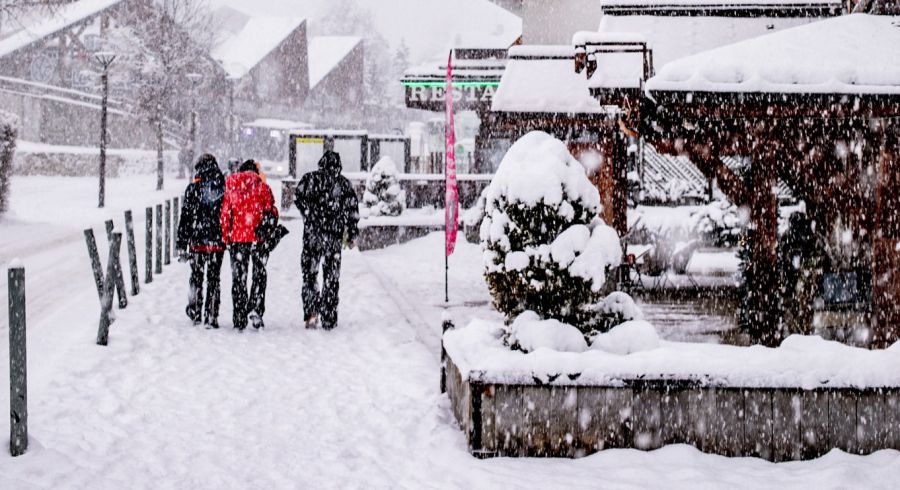
Les Gets, which was in the news recently when it was forced to fully close its ski area due to warm weather and rain over Christmas and New Year, has announced that it is fully re-opening its slopes from Tuesday, 16th January. The connection to Morzine Avoriaz in the Portes du Soleil is also due to re-open. Les Gets is pictured above on Monday, 16th January, 2023. Les Gets re-opened some lifts and about half-a-dozen runs last Wednesday after it received some fresh snowfall. Things have now improved dramatically however with heavy snowfall to low levels and consistently sub-zero temperatures forecast for the coming week. The bigger, higher French regions like Paradiski (La Plagne and Les Arcs), the 3 Valleys (Courchevel, Meribel, Les Menuires and Val Thorens) and Tignes-Val d'Isere were already 70-90% open and it now seems like areas with more lower lying terrain like the Portes du Soleil and Grand Massif will quickly make up lost ground and re-open slopes. |
|
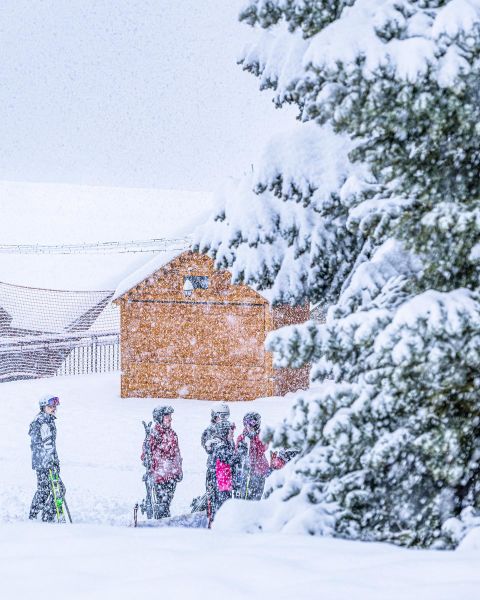
The deepest snow reported on European ski slopes has reached the three metres (10 feet) mark on the Pic Blanc slopes above Alpe d'Huez. The resort is pictured above on Monday morning, 16th January. In a sign of a major weather shift, overnight lows of -30C were recorded at the resort's highest slopes at Pic Blanc with winds reaching 80kph (50 mph), the avalanche danger across the western alps is widely at level 3 on the scale to 5 or "considerable". Studies have shown this can be the most dangerous level as more skiers tend to 'risk it' when they wouldn't at levels 4 or 5. Temperatures have dipped below freezing down to low levels in the valley floor too and are expected to stay below freezing day and night for at least the next week as son falls across the Alps and Pyrenees. The change will be a huge relief for many low-lying results still struggling with warm weather that has plagued Europe over the past month, causing snow cover issues below about 1800m. The latest snow stats show that after many received fresh snowfall at the start of last week, bases have dropped 5-10cm below 1800m at many resorts over the weekend as another warm front moved through, while rising another 10-20cm on average above 2000m. Heavy snowfall to low elevations is forecast for the next 48-72 hours however. Among the other big winners of the last seven days are La Rosiere which reports 70cm more snow lying on its highest slopes than seven days ago although strong winds have currently closed its cross-border connection to La Thuile. The Grand Massif area around Flaine has 45cm more snow up high than a week ago and both the 3 Valleys and 4 Valleys are around 90% open now, the most terrain of the season so far. |
|