

Messages posted by : J2SkiNews
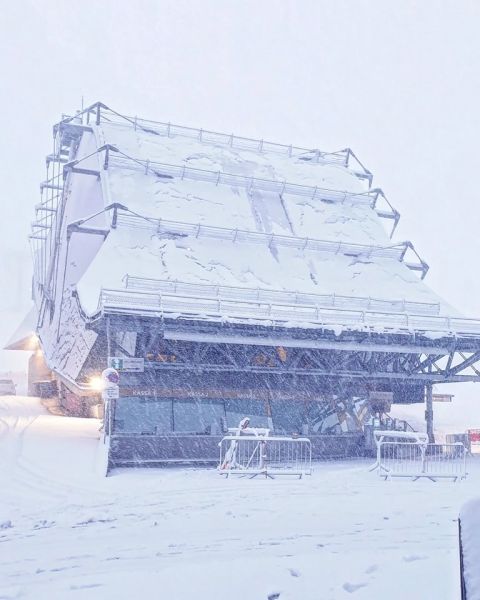
The Alps are enjoying one of their coldest and snowiest few days of March, bringing a period of warm, sunny weather to a temporary end. Temperatures dipped below freezing down to valley floors to start this week and up to 45cm (18") of snowfall has been reported so far, the biggest accumulations in the western Alps, particularly France, and on higher slopes above 2000m. Tignes, which has been posting the deepest snow in Europe on its glacier all season, is now posting a 4.4 metre base on its highest slopes – nearly 15 feet. The avalanche danger has risen however, and is now at 4, one below the highest danger alert, at many areas. Most other well-known French, Swiss and Italian resorts have had at least 20cm of snowfall on their higher slopes, with snow falling down to low valleys. In Switzerland Engelberg has posted 38cm of snowfall in the past 24 hours, Leysin 30cm, in France Val Thorens 37cm, nearby Courchevel 32cm and Val d'Isere 27cm. The snowfall is expected to ease over the next few days, with warmer, sunnier weather returning before more snowfall expected later this week. St Anton pictured on Monday, 27th March. |
|
Conditions have turned colder and snowier for the final few days of March, particularly on higher slopes, which should be good news for the Easter holiday fortnight coming up in the first half of April. Several weeks of predominantly warm, dry and sunny weather which has led to an ongoing meltdown of snow cover in the Alps, particularly at lower lying centres, is ending as a front brings cold and moisture laden air in from the northwest, initial reaching France and western Switzerland and Italy but now moving east right across the Alps. Tignes reached a 4 metre base on Saturday, the first ski area in Europe to reach that stat this season. Switzerland's Saas-Fee is on 3 metres, La Plagne 295cm and Flaine 280cm. All are forecast to see several feet of snowfall on higher slopes through the coming week. The snowfall is good news for ski areas with plenty of high altitude terrain but comes a little too late for lower altitude slopes which have seen much of their snow melt away in recent weeks and have then seen rain initially, rather than snow, from this fresh front, although the freezing point is now dropping. Austria's St Johann in Tirol, which has its highest lifts at just over 1600m, announced on Saturday that it would have to close early for the season on Sunday due to this combination of unfavourable conditions. 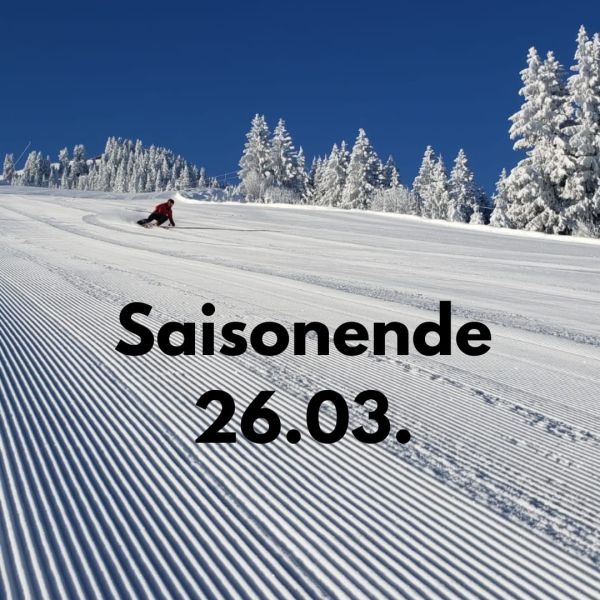 |
|
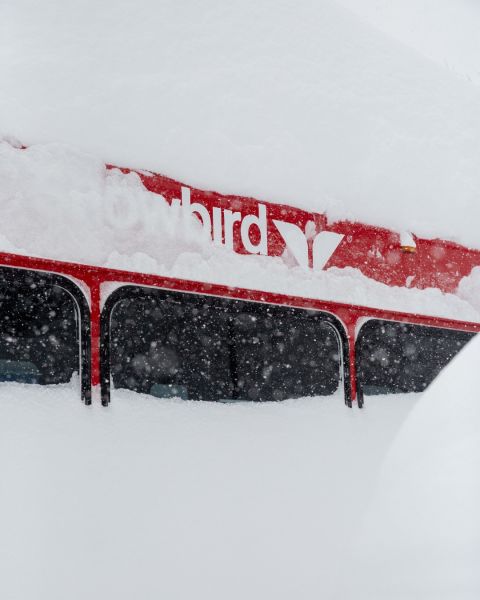
It has been one of the snowiest winters on record in Utah, which has the state motto, "The greatest snow on earth". However the snowfall can sometimes be so great that the avalanche danger suddenly becomes very high and a state of emergency known as "Interlodge" is declared in the Little Cottonwood Canyon, location of Alta and Snowbird ski resorts. The Utah Department of Transportation along with several private and public entities operate a "state of the art avalanche forecasting and mitigation program" and declares Interlodge when a combination of snow, wind and temperatures occur. Unusually, it was declared during the day on Friday after a natural avalanche hit the main highway up to the resorts. The main message was for skiers to leave the slopes and to not try to drive anywhere and in both cases get to a building. It was lifted a little before 7pm. The resorts eventually posted that they'd received another 20-21 inches (50cm) of snowfall in 12 hours during the day with snowfall rates peaking at 5 inches (13cm) per hour. Alta has a special Interlodge explanation video: https://www.alta.com/stories/interlodge |
|
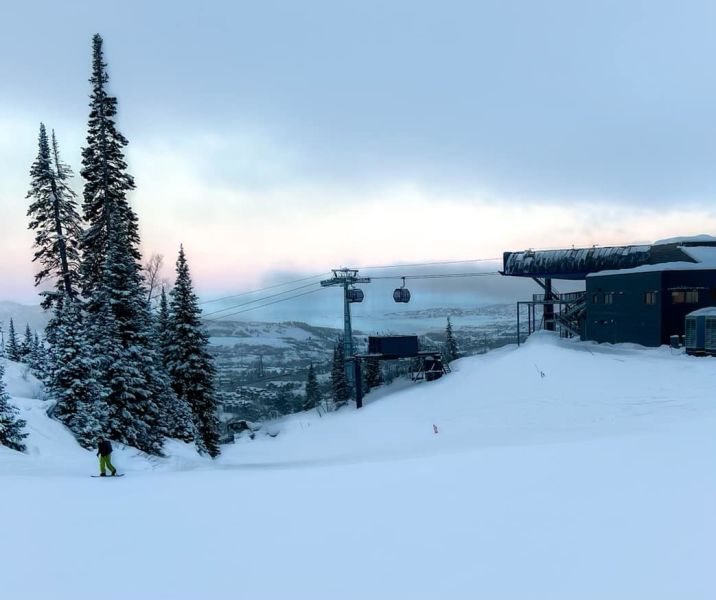
Steamboat ski area in Colorado's massive 'Full steam Ahead' programme which is seeing $200m invested over several years on a full base upgrade is set to see more now lifts opening next winter. The upgrades will lead to Steamboat expanding to become Colorado's second biggest ski area and see its uplift capacity from its base almost double. Current ski area owners, the Alterra group, say the second section of the Wild Blue Gondola will be completed in time for next winter The Doppelmayr-built D-Line gondola will become the longest in North America with a 12 minute ride from base to summit. The first section opened this winter from Steamboat Square to Greenhorn Ranch and Doppelmayr has already completed tower foundations for phase 2 to Sunshine Peak. Leitner-Poma of America will build Steamboat's second new lift this summer, previously known as Pioneer Ridge but now rechristened Mahogany Ridge Express. The new detachable quad will service 655 acres of expert terrain in Mahogany Ridge and Fish Creek Canyon, making Steamboat the second largest mountain in Colorado. All the lift upgrades will eventually lead to Steamboat's capacity up the mountain from the base increasing from 6,000 to 10,000 people per hour. |
|
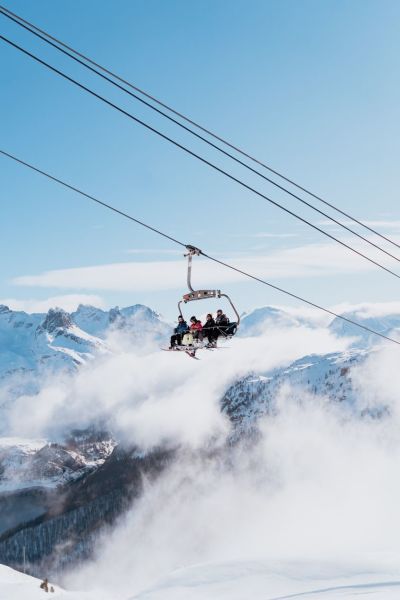
After months with little change in snow depths on Alpine glaciers, what's currently shaping up to be the second significant snowstorm in a fortnight is currently forecast to bring up to a metre more snow to the highest Alpine slopes over the weekend. Tignes has posted the deepest base in Europe up on its glacier all winter, getting to 3 metres after the mid-January snow storms but then gradually dropping back down to 2.7 metres over the following two months that saw little new snow. It jumped back again though during the last nig snowstorm 10 days ago and with smaller falls since is currently on 397cm, with about a metre of snowfall in its forecast over the coming weekend. Although base depths have been well below average across the Alps all winter, Tignes' numbers appear to put it in a strong position for its spring ski season through to early May, and its summer ski season, currently expected to take place in June and July. Last year's French summer ski season at Tignes, Val d'Isere and Les 2 Alpes was (in common with summer skiing across the Alps) either cancelled completely or severely curtailed by record warm spring and summer temperatures at 3000-4000m following another low snow accumulation winter. It remains to be seen how the remainder of this spring will play out in that regard, but 4 metres is a strong starting point. A number of other high altitude ski areas are currently posting 3m+ bases including Les Arcs and La Plagne and also currently expect big snowfalls this weekend, if the forecast (which is for much less snow below 2000m) plays out as expected. |
|
|
And Heavenly adding 3 weeks to their season - staying open to May 7th.
|
|
|
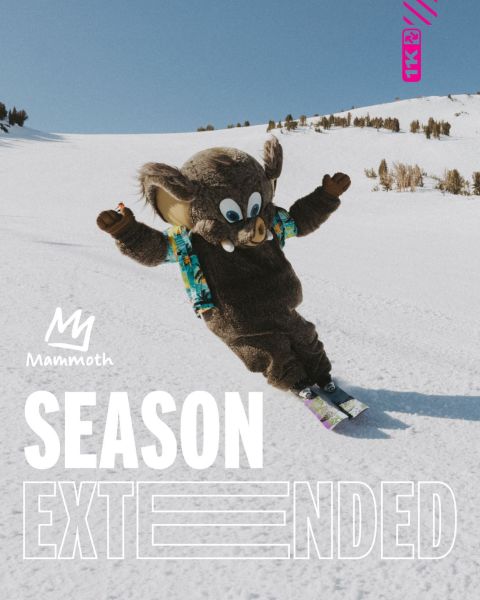
Now confirmed "at least to late July" by Mammoth, they must have read the report...
 |
|
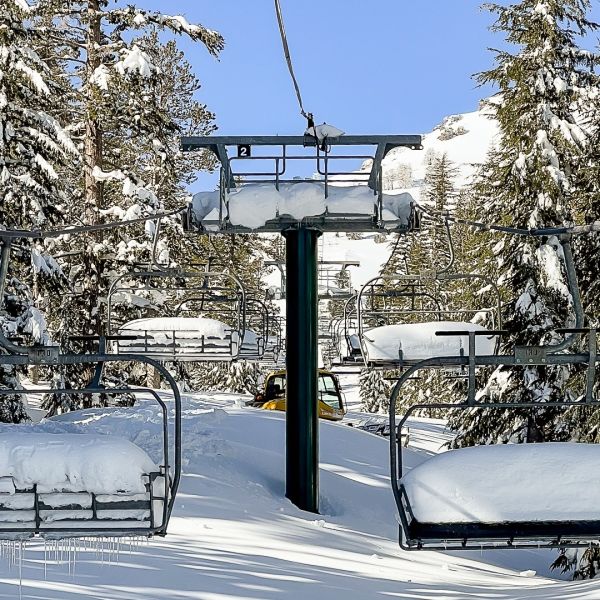
With the snowpack in the Sierra Mountains on the US West Coast running at double the seasonal average and a number of western US resorts already having surpassed their all-time snowfall records speculation is mountain that some will extend their ski seasons into June and that it may also be possible to ski on US Independence Day again on 4th July. The last year that happened at multiple ski areas was July 2019, when 10 ski areas, mostly on the US West coast, along with Arapahoe Basin in Colorado, staying open that late for the first time in 8 years, remained open to 4th July, or re-opened on the day. Currently Mammoth Mountain is posting America and the world's deepest snowpack at over 25 feet (7.5 metres). It has stayed open into August some years. Normally Timberline in Oregon is the only US area that makes it through to July and August opening however. The Palisades, currently reporting 10 feet of snow lying at its base and 20 feet on upper slopes, plans to stay open at least to the end of May. Despite the big snow depths at present, with snow still falling, much depends on the spring and early summer heat to see how long the snow does last once the conventional ski season ends. |
|