

Messages posted by : J2SkiNews
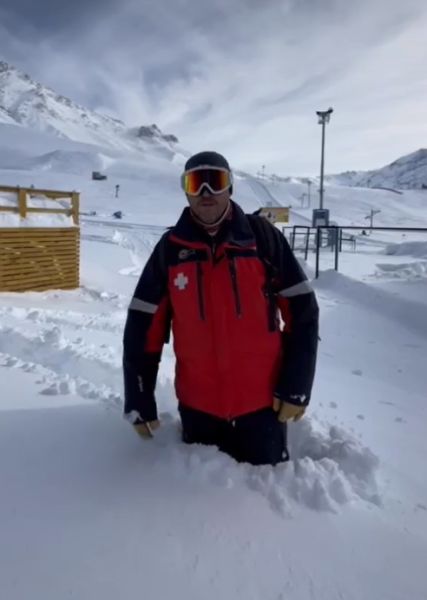
The marketing departments of ski resorts around the world tend to put a lot of store in the likely snowfall consequences of the El Niño and La Nina systems in the Pacific which dominate the region's weather …and some believe the entire planet's. Although one tends to bring cooler temperatures, the other warmer, ski areas seem to be able to interpret both as potentially good news for them in their marketing. Warmer temperatures bring more moisture which could mean more snow when it hits the mountains they say…or alternatively cooler temperatures mean that more of the rain that falls, falls as snow. It's a win win. How much any of this rings true will become clear as the season plays out, but so far some meteorologists are already blaming an increasingly confirmed "strong El Niño" for an initially rather mild start to Australia's winter, warning this may be the patten for all of 2023. More generally, climate scientists are warning coming global warming with an El Niño event will tip the planet over the 1.5 degree temperature increase mark by the end of 2024 that's one of the many red lines we didn't want to cross. In the South American Andes though (Argentina's Las Lenas pictured above after a pre-season snowfall last month), specialist tour operator PowderQuest, are excited:
|
|
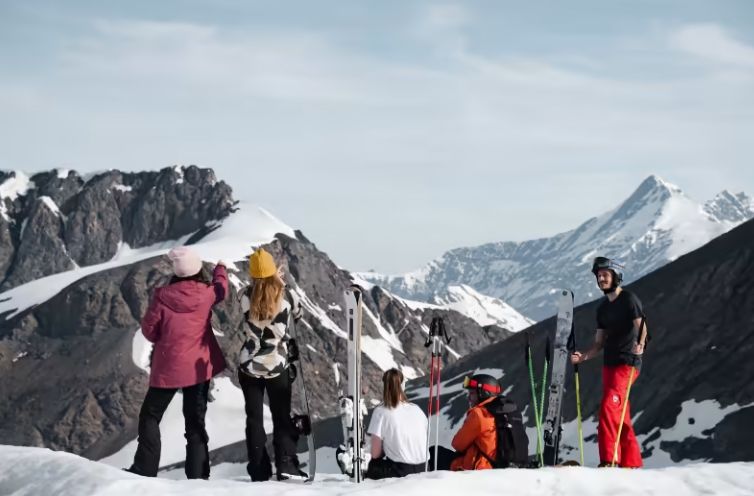
Val d'Isère will open for a four-week summer ski season on its Pissaillas Glacier this Saturday June 10th, aiming to stay open to Friday July 7th. The Cascade and Montet lifts will be open from 7am to noon daily serving terrain above 3,000m. Seven runs will be open however four of these are reserved for athletes training. The Combe du géant, Moraine and Pissaillas slopes will be open to all with Aiguille-Perse, Champions, Pisaillas and Roche pistes reserved for training. Summer ski tickets can be purchased at the bottom of the Cascade chairlift and cost €34 for a day pass, €194 for a 6 day pass or €304 for all four weeks. Val d'Isère will be the second ski area open in France in June, joining Les 2 Alpes. There are also one area open in Austria (Hintertux), Italy (Passo Stelvio) and Switzerland (Zermatt). A third French area, Tignes, is due to open for summer skiing and boarding the weekend after next. |
|
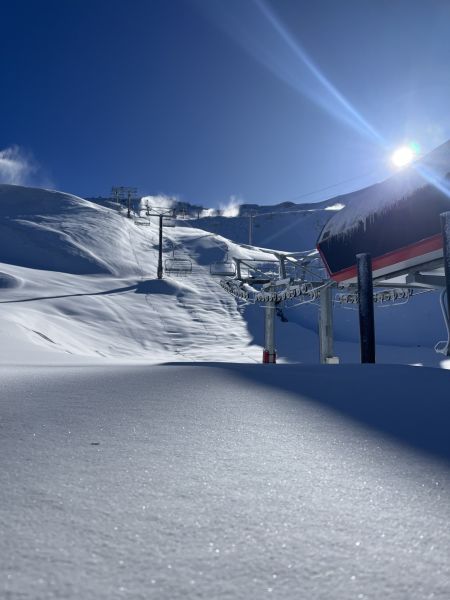
The eternal vagaries of the weather have left the likely start date and of the 2023 southern hemisphere ski season uncertain until today, with Mt Hutt announcing it will open this week – just 24 hours later than they'd hoped, on Saturday 10th June rather than Friday. That's the same day as Australia's ski areas will also be open but, due to recent warm weather, it remains unclear whether any of these will be offering snow sports on day one. Thredbo has now joined Selwyn in saying they won't be – after warm weather melted early snow cover from May falls and wasn't good for snowmaking either. The good news is colder and snowier weather forecast over the coming week. Mt Hutt plan to open with the Summit 6, Nor'west Express and both of their carpet lifts and they say they hope to have Learners areas, HW72, Broadway and Hoods Hollow groomed on the mid mountain and Morning Glory and Chair Bowl on the upper mountain.
It's currently unclear if any ski areas will open in the South American Andes this weekend, several areas seem, to have enough snow but the first confirmed opening date is the 15th. |
|
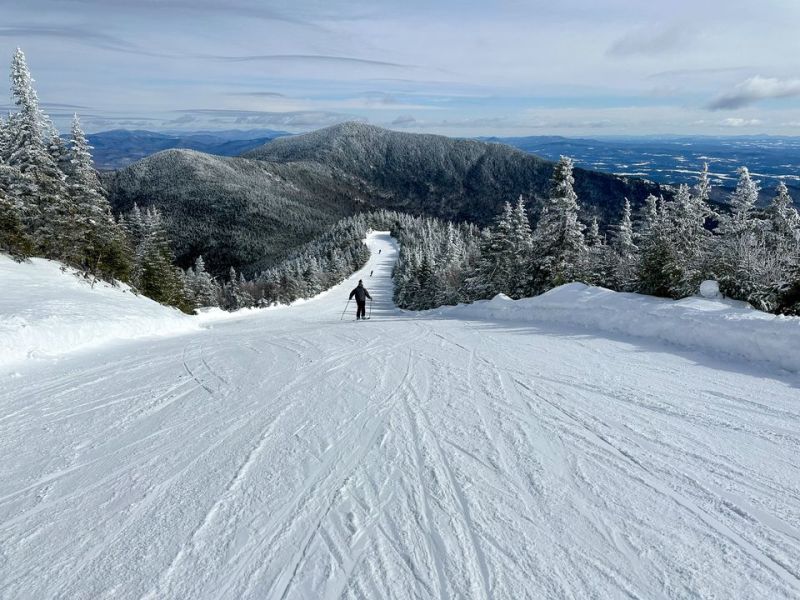
A rare plan to join two independently-operated US ski areas has emerged. Smugglers' Notch and Stowe in Vermont are near neighbours as the crow flies and it has long been possible, and fairly easy for experienced skiers with lift tickets for both mountains, to traverse between the two. In the past there have been semi-formal inter-connect agreements, but the lift-link plan is new. The possible move, still in its early stages, has come to light through a notification of the plan to Vermont's Agency of Natural Resources. The idea is to build a gondola lift, about 750 metres long, with a capacity of 1200 people per hour, between the two areas, and it is at least six years old. It's about an hours drive between the two resorts in winter. Connections between US ski areas are rare, particularly where the two are operated by separate companies. Park City in Utah, Big Sky in Montana and The Palisades in California are all made up of inter-connected, formerly neighbouring ski areas where one company bought out its neighbour. But there are few cases where resorts have built a link but continued to operate separately. However independent Smugglers' Notch, which has a reputation as one of the world's best resorts for families, and Stowe, now owned by the world's largest resort operator Vail, have insisted they're staying separate since the possible lift connection news broke.
|
|
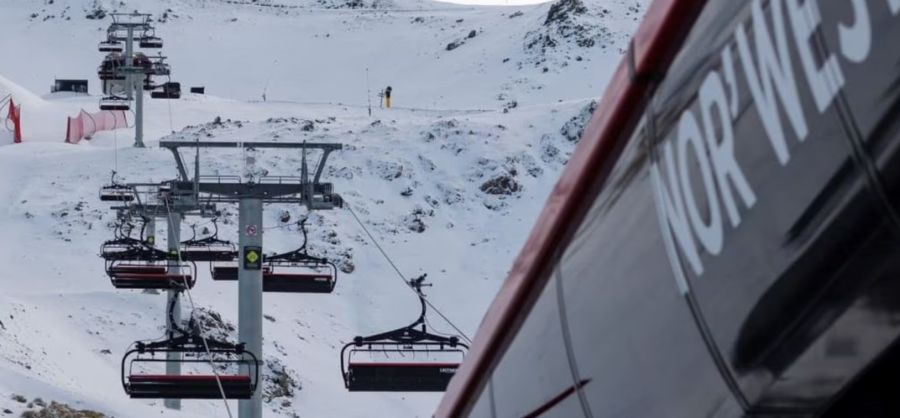
Exactly which ski area will open first for the 2023 ski season in the southern hemisphere is still uncertain with days to go to the scheduled start. New Zealand's Mt Hutt has the actual first named date – this Friday June 9th – but the country had a warm end to May and although a snowstorm hit on Sunday, hopes of metre-plus accumulations from the long term forecast delivered just 10cm of snowfall when it eventually arrived and the forecast for the next few days is dry and not that cold. A final decision has not yet been made but talk has already begun of the date being an aspiration rather than a fixed date and it's noted the season start was delayed 10 days in 2022. Most of Australia's ski areas plan to open on Saturday, June 10th, for a long weekend with Monday 12th a public holiday to celebrate King Charles III's birthday. However, here too after several good may snowfalls the end of may and start of June have bee mild to date. It is getting cooler but cam images show incomplete runs with piles of machine made snow. It seems some will have limited terrain open, but not a lot. That's not unusual for an Aussie season start though. Nor is having now snow at all, which is the plan for Selwyn ski area, opening on Saturday for the first time since 2019, having been closed for rebuilding since a bush fire in early 2020. 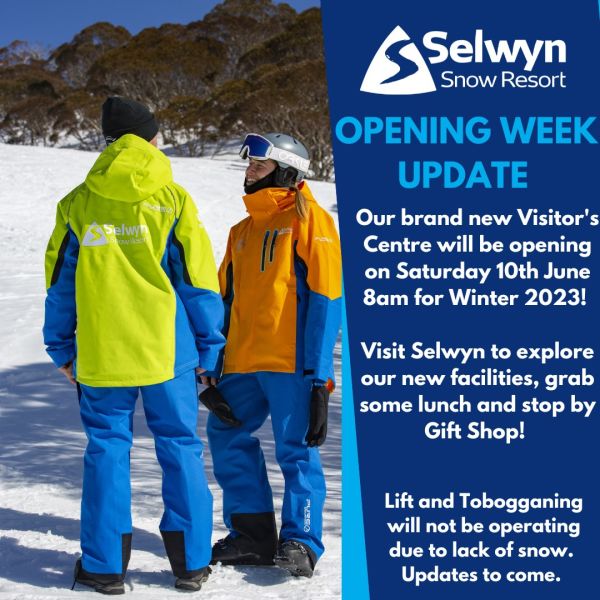
In a normal winter one or both of southern Africa's two areas, Afriski in Lesotho and Tiffindell in South Africa, would have opened by now, but Tiffindell has not operated since before the pandemic and Afriski has announced it won' make snow this winter and will offers now play only with any natural snow (which has already been falling). In the Andes there have been some big lore-season snowfalls and tourers have been up in the mountains but resorts like Chapelco and Las Lenas which reported lover a metre of snowfall have not yet started running their lifts. Ski lifts have already run in New Zealand this year, with the Manganui ski field opening for three days in May following a good early snowfall in the country, so that could be counted as the season start, now we're waiting for ski areas to open and stay open. |
|

A legal action against the state of Austria, with interest to people from 45 countries who claim they were infected with COVID 19 at the resort of Ischgl in the early months of 2019, has been rejected by Austria's Supreme Court. More than 6,000 people had contacted Austrian authorities from around the world saying they thought they had caught the disease while in the country, with about 1,000 of these joining a class action, seeking an average of €100,000 compensation each. The court ruled that Austria could not be held responsible for the spate of infections and 32 COVID-19 related deaths that have been traced back to Ischgl as an early European epicentre of the infection. The case hinged on the accusation that Ischgl, the province of Tirol and Austria as a whole were slow to act as it became clear what was happening. The plaintiffs stated the resort and the region should have shut down ski lifts, bars and restaurants earlier than they did. The first cases from Ischgl were confirmed in Iceland from returning skiers on March 4th, 2020. However on March 8th the Tyrol Medical Authority issued a statement saying there was no cause for concern and the resort was not closed until March 13th. An Austrian government investigation had already determined that the reaction was slow and suggested that the resort should have been shut down earlier than it was. It also found that the way Austria's national lockdown was also poorly handled in the way its terms were communicated leading to a panicked evacuation of resorts of foreign guests, some of whom were carrying COVID-19 and should have stayed in resort.
However the supreme court decided that, essentially, the vagueness of communication meant that it could not be treated as specifically bad advice that could be held as legally responsible, saying the initial advice was part of a developing period of advice. Peter Kolba, the legal director of Austria's Consumer Protection Association, which brought the case, expressed deep disappointment with the court's decision, and said that the association was now reviewing the detail of the court's ruling before deciding on what to do next. |
|
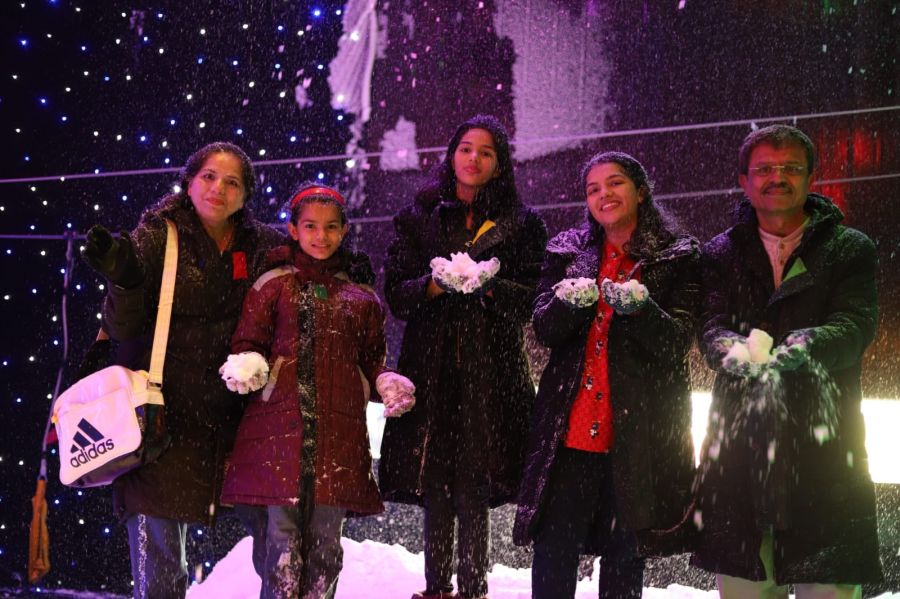
A second indoor snow centre has opened in Lahore, Pakistan's second biggest city and the 26th largest in the world. Winterland is a snow and ice themed centre where attractions include a short snow slide, ice cycling, ice skating, a tubing carousel on ice and a snow swing among other attractions. There's also a zipline and kids non-snow play area. The facility is maintained at an an unusually low temperature of -10C in a city where the average temperature is in the +30 to +40C mark through the summer.
The country's original indoor snow centre, also named Winterland and operated by the same group, open in capital Karachi in 2020. Although generally a hot country, Pakistan also has the Himalaya mountains to its north and a number of conventional ski areas, several operated by the PAF. Most famous is Malam Jabba which opened in the 1990s with lifts donated by Austria, then re-opened a few years ago having previously being destroyed during the Taliban occupation of the Swat valley over a decade ago. |
|
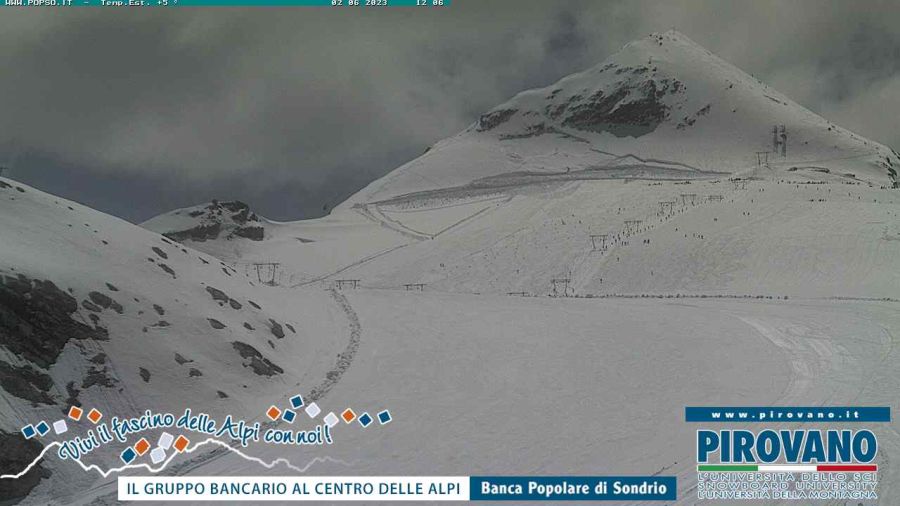
Italy's Passo Stelvio has opened for its 2023 season. One of the world's few remaining summer-only ski areas it also has one of the longest seasons of any summer-opening northern hemisphere ski area, aiming to stay open for five months through to 5th November this year. However in recent years it has been forced to close in the height of summer due to melting of snow cover. This year it opens with 30cm (12") lying on lower slopes 110cm (44") up top. The slope is particularly popular with national teams training, often starting at first light in the early morning before recreational skiers and boarders arrive. The opening of the Stelvio Pass is also a big event in the cycling calendar with the hairpin ascent a big draw for dedicated cyclists during the five months of the year that the pass is not snow covered. The opening of Stelvio, following the closure of two of the three Austrian ski areas that had been open up to last Sunday means there are currently four glacier ski areas open in each of the four main Alpine nations. Zermatt in Switzerland, Hintertux in Austria and Les 2 Alpes in France are the three other options. There are also three centres open in Norway. Cervinia is due to open later in the month providing lift access to the glacier ski slopes above Zermatt. |
|