

Messages posted by : J2SkiNews
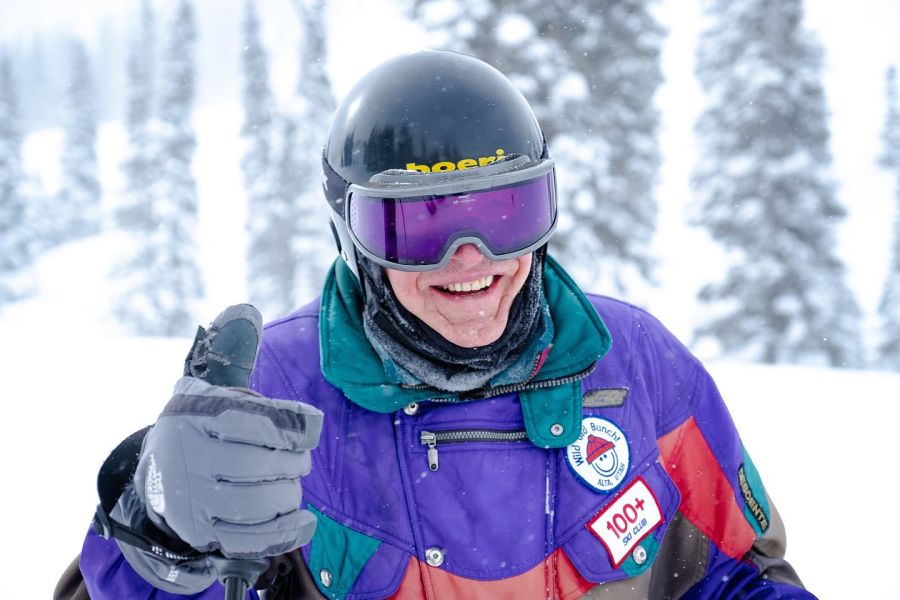
George Jedenoff, who kept skiing past the age of 100 at Alta ski area in Utah, has celebrated his 106th birthday.
Mr Jedenoff began skiing more than 60 years ago after moving to Utah and was still skiing at Alta until the age of 103. Asked about skiing in the latter years of life, George commented,
|
|
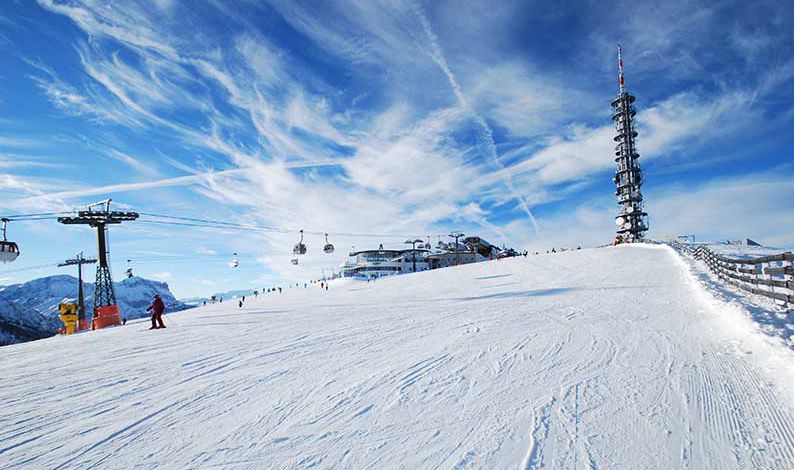
Italy's Kronplatz ski area in the Dolomiti Superski region is one of the big ski area success stories of the 21st century and one of just a handful of ski areas in the world operating at least 15 gondola lifts. In fact in Kronplatz's case 20 of its lifts, about two thirds of the total, are gondolas. Its success is such though that it is already upgrading gondola lifts built in the current century to still bigger, faster models. Two such upgrades are underway ahead of winter 23-24 with the new Kronplatz I and Kronplatz II gondolas with cabins each capable of carrying 10 people at a speed of 6 metres per second giving an uplift capacity of 3000 people per hour replacing gondolas with the same name built 20 years ago with mere 8 person cabins. The two lifts climb about 1300 vertical metres over an approximately four kilometre long combined ascent in around 12 minutes. There's little change is ascent time for the new lifts compared to the old but the increased cabin size means uplift capacity of the route will increase by about a third. |
|
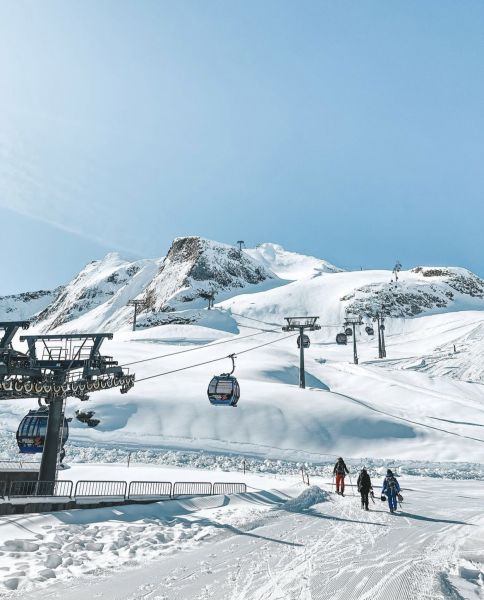
Snow conditions on European glaciers are reported to be much better this summer than last, thanks to colder, snowier weather in spring compared to spring 2022.
There are currently six glacier ski areas open in four countries in the Alps and a further two small centres in Norway. Les 2 Alpes, which formerly opened in June through to August or early September re-thought its opening in light of the impact of climate change which has been melting now cover from glaciers in the hottest month of summer in recent years meaning there was very little summer skiing last year. This years it opened from early May with a plan to stay open to the end of June. This has now been extended to a season end on July 9th, this coming Sunday, after 10 weeks of operations. Val d'Isere, which opened for summer skiing four weeks ago, also closes this weekend. However Switzerland's Saas Fee opens for its 23-24 season in mid-July. You can also currently ski at Tignes, Hintertux (pictured), Passo Stelvio and Zermatt, the latter glacier with lifts also running up from Cervinia. In Norway the Folgefonn and Galdhopiggen glaciers are open. Although fewer resorts are offering summer skiing and those that do are mostly shortening their summer ski seasons, summer access to non-ski attractions are increasingly popular. At les 2 Alpes glacier access will still be open for pedestrians after the ski slopes close with panoramas, ice cave, Belvédère des Ecrins, restaurant and a sledging area to be enjoyed. |
|
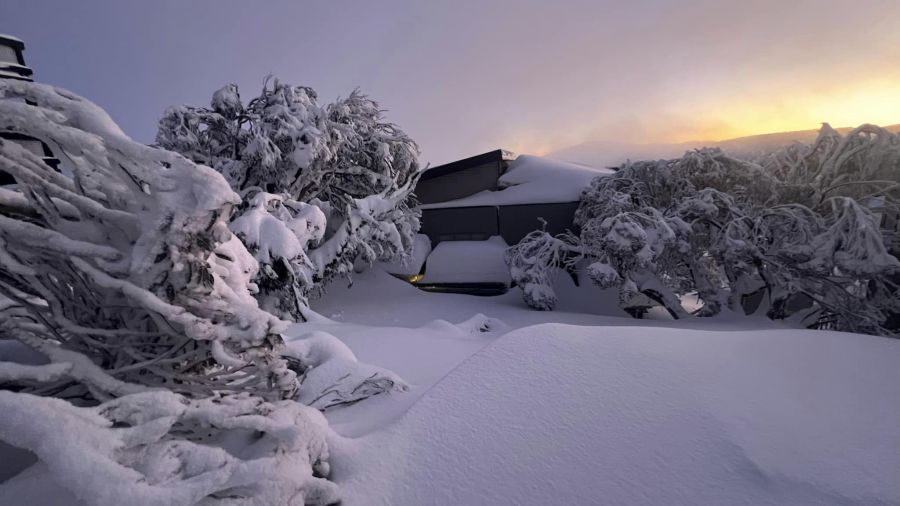
In what they're describing as "a pivotal moment since pandemic closures, "Australia's Hotham ski area has opened its Gotcha, Keogh's and Orchard Chairlifts for the first time since 2019. It means that the resort has all lifts turning at once for the first time since winter 2019. Over the last three seasons their operation was limited or prevented altogether by successive pandemic closures or occasionally an issue with too little snow cover to open everything. The lifts provide access for skiers and boarders access to some of Australia's most highly regarded intermediate and advanced terrain.
It's the second week of the Australian school holidays and full day kids lessons are back for parents to be able to head out on the slopes while their children are in snowsports school. There's up to 70cm of snow in the forecast for the coming week but also gale force winds and potential blizzard conditions. Selwyn Resort has also opened what is in its any case any lifts or runs for the first time since 2019. The resort was destroyed by bush fires in early 2020 and has since been rebuilt through the pandemic. |
|
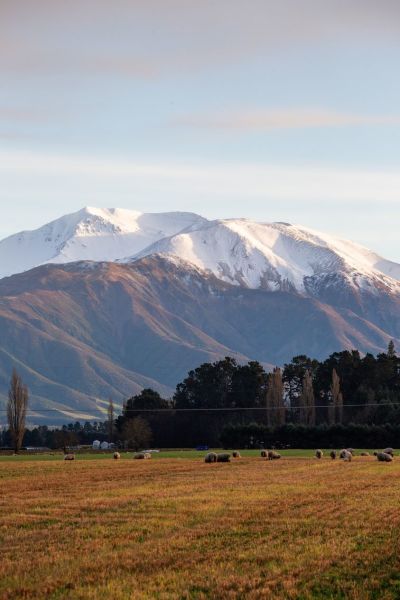
It has unfortunately been a poor start to the New Zealand ski season with mild temperatures and rain at lower elevations leading several areas that opened in June to close again and others to delay opening. Only Cardrona and The Remarkables have managed to stay open, but each only with a small fraction of their full terrain open. However things have started to improve in recent days with colder temperatures and snow to lower levels, leading Mt Hutt (pictured above this weekend) and Coronet Peak to announce that they'll be re-opening from Sunday.
The financially troubled Ruapehu resort home to Turoa and Whakapapa ski areas is also planning to open from Monday thanks to a $5m donation from the New Zealand government. |
|
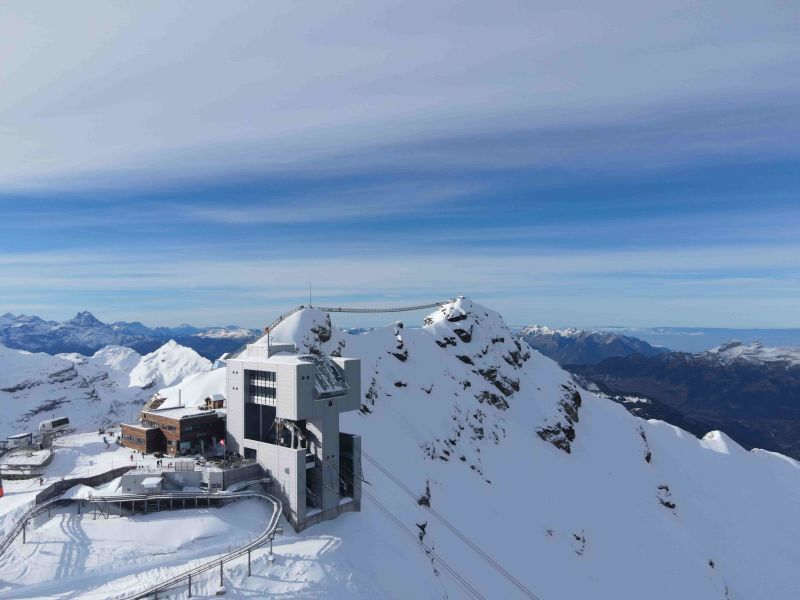
Following the terrible fire that destroyed the iconic cube-shaped Glacier 3000 restaurant last September, the ski centre has announced a rebuild is getting underway, again masterminded by the famous Swiss architect, Mario Botta, now 80 years old. The new building, which will also feature an alpine solar micro power plant, has been redesigned to enhance both the quality of the visitor experience and fire safety. It's due to be completed by summer 2024. At the top of Glacier 3000, workers have already been busy since April in difficult conditions to dismantle the metal structure that survived the fire and to clear the concrete slab-work. "This first phase is now almost complete, and the reconstruction work can begin in the next few days," enthuses the company CEO, Bernhard Tschannen While for planning permission reasons, the building's exterior appearance will be virtually identical, the interior space has been completely redesigned, with a 35m2 increase in surface area per floor and the addition of new panoramic windows in the corners. At a time when plans for solar power plants are burgeoning in the Alps, Glacier 3000's vision is to focus its energy efforts on improving what already exists, without increasing the footprint of the building. 600 solar panels capable of producing up to 110 KW will be added on the south-west façade and side eaves – enough to cover most of the establishment's energy consumption, and up to 6% of the entire company's total annual consumption. In addition, the heat released by the kitchens' ventilation system and the running of the walk-in coolers will be recovered to produce hot water, while the building's perimeter insulation was specially designed to minimise heat-loss, a crucial point at an altitude of 3,000 metres. In close collaboration with the Etablissement cantonal d'assurance (ECA) in the canton of Vaud, fire safety has also been reviewed, with the installation of a brand-new fire extinguishing system using foggers and additional fire escapes on the south-west side. Once complete the restaurants will offer a total of 400 seats over two floors, in a warm atmosphere, with more spacious and luminous dimensions, and the total separation of the establishments. An innovative concept has been devised for the "Le 3" restaurant (formerly a Self-Service restaurant): ordering and payment will be done via a QR code, with the dishes then served at the table.
Finally, a 250m2 panoramic terrace will be built on the roof of the building, 25 metres above the ground, offering an uninterrupted view of the famous Peak Walk by Tissot suspension bridge, as well as the Matterhorn and 24 over 4,000-metre-high peaks. Mario Botta ultimately withdrew from the initial project in 2000 following disagreements with the promoters at the time, the Ticino architect was keen to participate in the building's rebirth:
The results of the investigation by the Vaud public prosecutor's office into the cause of the fire are as yet unknown. |
|
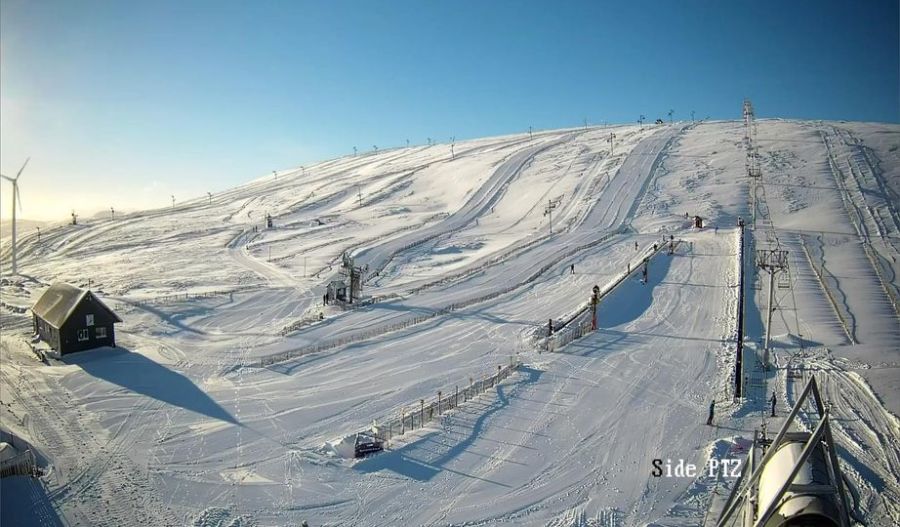
The Scotsman newspaper has reported that Scotland's five centres posted a combined 98,989 skier days for the 2022-23 season. For context, the best season of the 21st century was 2009-10 which saw all areas open consistently through the winter and a total of 374,789 skier days. By contrast the worst seasons, besides pandemic closed ones, 2016-17 and 2018-19 both saw around 54,000 skier days. The 22-23 season got off to a fairly good start in January with most centres at least partially open and Glencoe doing particularly well reporting a base of more than a metre and for a few weeks all runs open. The Lecht is pictured top on January 20th. However a mild spell late in the month led to a dramatic reduction to just a few short runs open, usually maintained by all-weather snowmaking machines. Glenshee is pictured below by 28 January. So most of the 98,989 skier days were recorded in the first third of the season. That's different to the usual model of Scottish ski hill snow build-up which often delivers the best conditions by the latter half of the season in spring. This year the snow kept melting each time it fell and the only build up was way above the lower half of ski slopes. Writing in The Scotsman, Roger Cox noted that Glencoe has 12,169 skier and snowboarder visits, but sold 18,020 tickets to people buying access chair tickets to use their 75 metre long sledging slope, maintained with their all-weather TechnoAlpin SnowFactory machine which was maintained through to April long after the ski slopes had lost adequate snow cover. 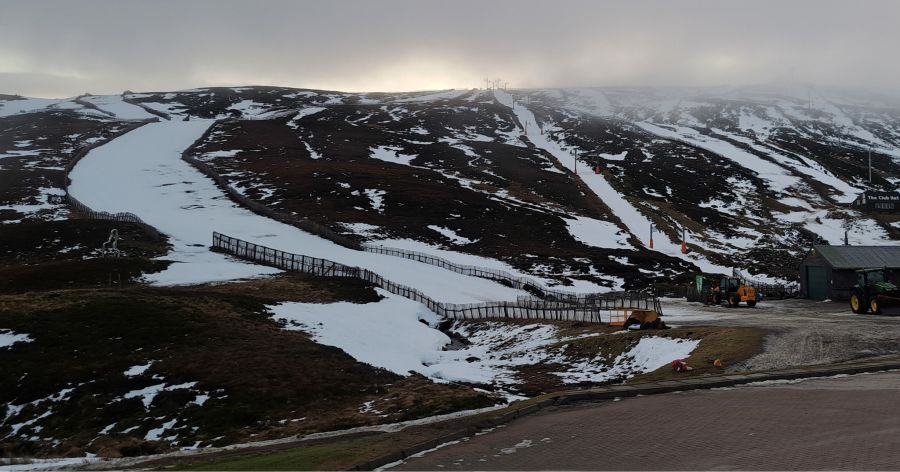 |
|
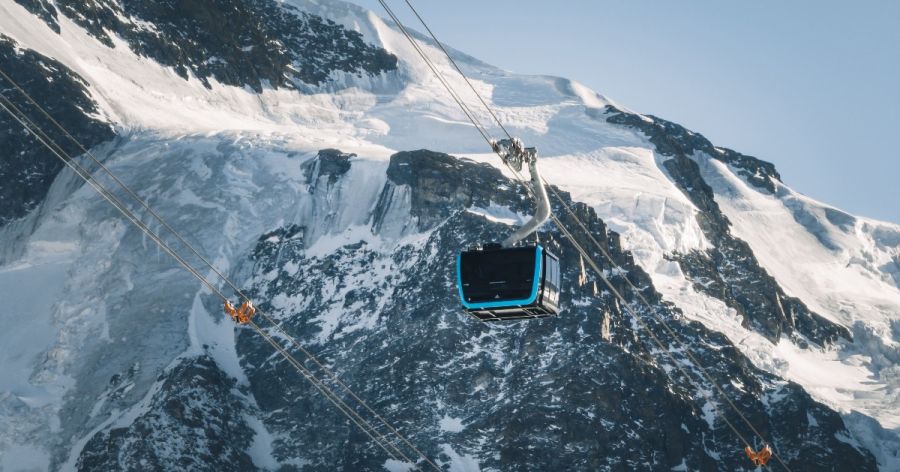
A return ticket to travel on the newly completed Alpine Crossing, a series of interconnected gondola and cable car lifts that crosses the Swiss – Italian border between the ski resorts of Zermatt and Cervinia has been put at 240 Swiss Francs, currently £211. A one way ticket for the approximately 90 minute journey is 164 Swiss Francs or £137. The crossing price may vary depending on demand as Zermatt uses so-called "dynamic pricing" like hotel rooms and airline tickets for its passes. Children up to age 9 and dogs always travel free of charge. Children up to age 16 pay half price and there are various other discounts available to students, groups etc. The Alpine Crossing, which has been "a dream for many years," allows pedestrians to cross the border by the Matterhorn and passing via one of Europe's highest lift served points at the Klein Matterhorn, without needing to go outdoors, travelling within cable car or gondola cabins. It also passes one of the world's only year-round ski and snowboarding areas, at the Matterhorn Glacier paradise. The ticket price also includes admission to attractions along the way including the Glacier Palace, use of the viewing platform and Cinema Lounge, the SnowXperience Plateau Rosa and admission to the 3S InfoCube.
Passengers also receive a 'Boarding pass' souvenir brochure with the most important information about the Matterhorn Alpine Crossing. There are around 6 or 7 sections to the crossing depending on route taken on the Swiss side. Passengers can get on and off at different stations on the route at their leisure, they do not need to keep travelling. The final stage of the lift, which has large gondola cabins descending from the Klein Matterhorn down to the Italian border, is due to open this Saturday, 1st July, about a year later than planned due to pandemic delays and related supply chain issues. |
|