

Messages posted by : J2SkiNews
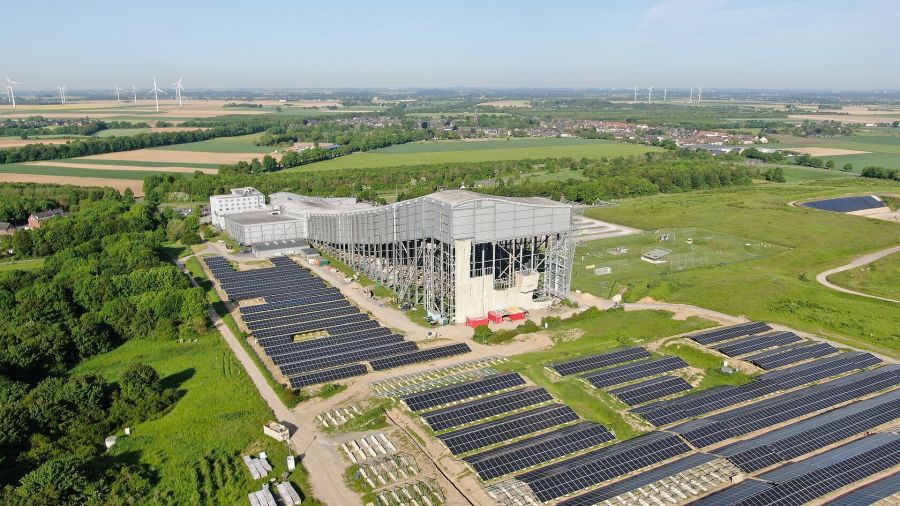
An indoor snow centre in Germany has become fully self-sufficient in green energy by building a vast field of solar panels covering the ground on two sides of the huge building. The Neuss Alpine Park has covered an area of 30,000 m² generating enough solar power to cover the entire energy needs not just of its indoor snow hall but also all associated buildings. The process to make the Neuss Alpine Park CO₂ neutral took more than two years of planning with construction starting in the summer of 2022. Work is now completed and the system is completely connected to the grid. In addition to the large photovoltaic systems, a combined heat and power plant was also built, which uses an intelligent heat recovery system. The entire Alpine Park, including the Neuss ski hall, the 101 room Hotel Fire & Ice, as well as the large restaurants, conference rooms and the associated outdoor facilities, as well as Alpine chalets, can now fully cover their energy needs from their own electricity generation. The centre's parking lot right next to the Neuss ski hall has also been completely renovated in the past few weeks. 30 charging stations for e-cars now round. Neuss Alpine Park is the latest of many indoor snow centres, particularly in Germany and The Netherlands, to focus on sustainable energy with a number covering their rooves in photovoltaic panels which supply much of their energy needs. One of the world's biggest SnowWorld Landgraaf in The Netherlands, covered its roof a few years ago and is now self-sufficient in summer, although not quite in winter. However other than the SNO indoor centre which opened in Oslo recently designed to be already more than CO₂ neutral from day one and actually exporting excess renewable energy generated on site to the grid, The Neuss Alpine Park is believed to be the first to retro-fit on-site energy production to become 100% carbon neutral. Scotland's only indoor snow centre, Snow Factor near Glasgow, blamed rapidly increasing energy costs for its closure in autumn 2022. 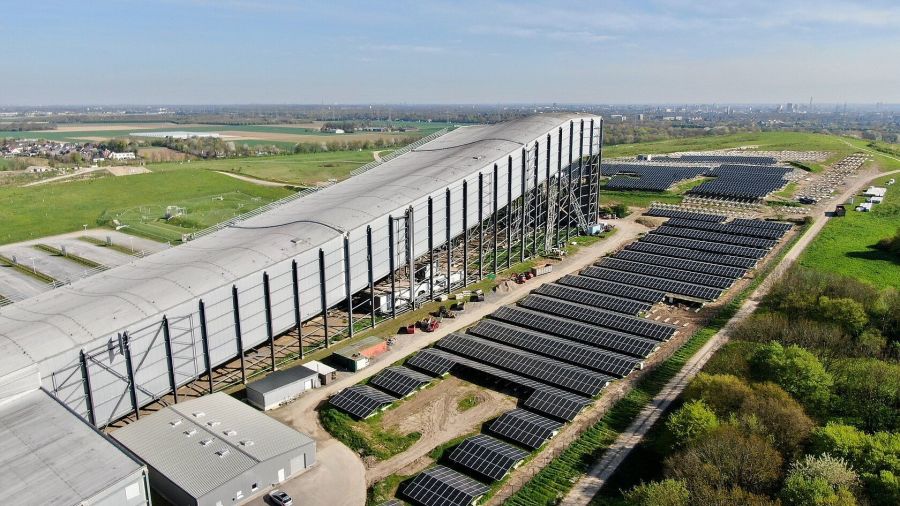 |
|
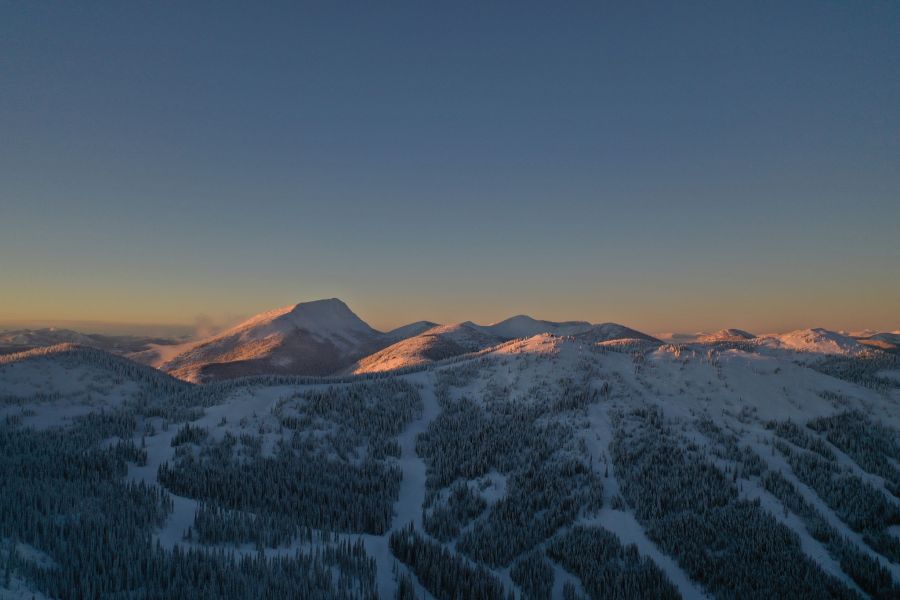
Most ski areas right across North America have been struggling with warm weather and a lack of snowfall impacting their ability to open much terrain and in some cases to open at all. It's unusual for almost all parts of the continent to be impacted at the same time, typically when one side of the continent is doing badly for snowfall, the other is doing well. This time through there are problems almost everywhere and the blame appears to lie with the 'very strong El Nino' that's bringing warmer weather from the Pacific – alongside the growing impact of climate change. The West Coast has been warm and dry, the East Coast warm and wet. The best conditions overall have been in Colorado and southern Utah where ski areas did get a foot or so of snowfall just before Christmas and some have 100+ runs open and some are getting close to fully opening their slopes. Up in Alaska, too, there has been plenty of snow with some areas just passing 3 metres (1q0 feet) of snowfall to date. Resorts right along the Pacific Coast have had problems opening much terrain all winter. Mammoth Mountain in California, which stayed open to august last season after massive snowfalls has struggled to open even a third of its runs and the continent's biggest ski areas, Whistler Blackcomb, had less than half of its terrain open for Christmas although it is now posting 60% skiable. However, its fellow BC resort Red Mountain (pictured above - library pic) that has been hardest hit, postponing its opening dated past Christmas and finally managing to open on December 28th, although initially with just 10% of its runs (just about) skiable.
|
|
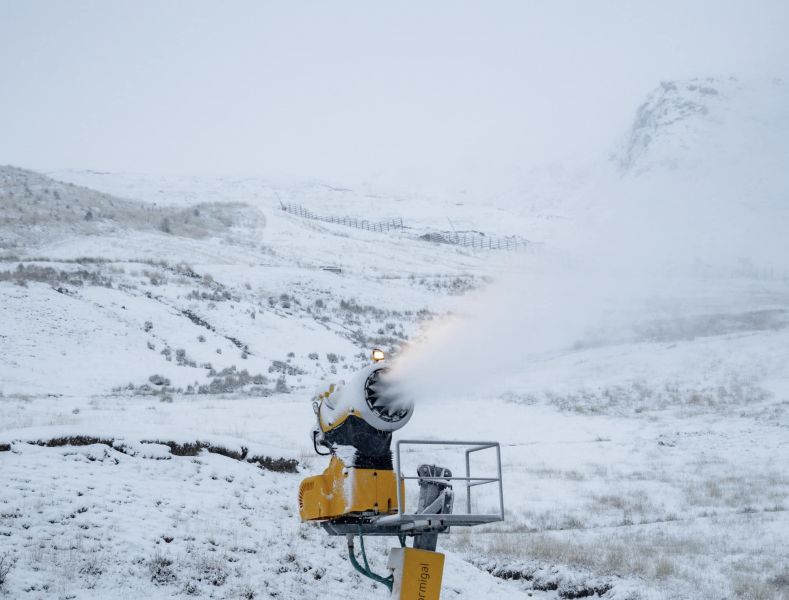
It has been a challenging start to the 23-24 season in the Pyrenees with most ski areas in the region struggling to open many runs or in some cases, to open at all. There have been no big snowfalls in the region as yet and temperatures have been too warm for snowmaking for much of the past two months. That said the region's biggest areas liked Andorra's Grandvalira (Soldeu, Pas de la Casa and others), have managed to open significant amounts of terrain – around 80km (50 miles) of slopes in their case, about a third of the full area. However, connections between sectors need to be made by chairlift rather than piste still in some cases. Spain's Baqueira Beret has had the most terrain open of all resorts in the area so far, peaking at 120km of slopes, about 75% of its full area. In France the Grand Tourmalet/Pic du Midi area of La Mongie and Barèges is the only area reporting it's 100% open, but most have only 20-40% of slopes open, some like Gavarnie/Gèdre as little as 10%. Some Spanish ski areas, some not in the Pyrenees but other Spanish ranges, including Cerler and Candanchú have only just managed to open and have less than 10% of their slopes open so far. The country reported its warmest ever December. Base depths are suiting at 10-40cm (4-16") across the region. |
|
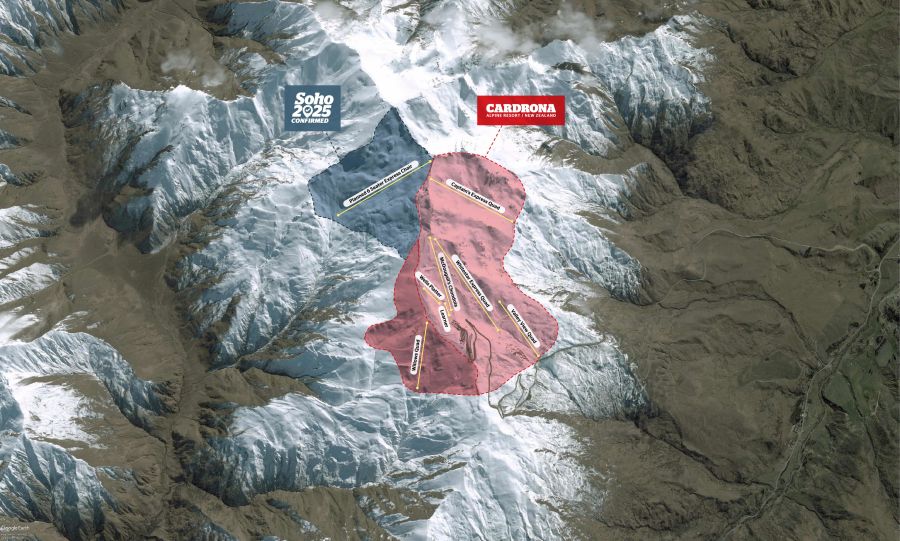
A new high-speed chairlift expanding the terrain at Cardrona ski area in New Zealand from winter 2025 will see the resort offer the country's biggest ski area from the winter after next. Work will begin this February on foundations for the new Soho Basin Express, a Doppelmayr six-seater chairlift. After a break in construction for the 2024 ski season, the lift will be installed by 2025, ahead of that ski season starting. The expansion into Soho Basin has been long planned and means that Cardrona's ski area will grow by 150 hectares, the equivalent of 150 rugby fields, increasing Cardrona's lift-accessed skiable terrain by 24%, taking the resort from 465ha to 615ha – which will make it the biggest commercial ski area in New Zealand.
The Soho Basin Express installation is part of a multi-year commitment to development at Cardrona that has included a total redesign of the resort's base buildings using existing infrastructure, the McDougall's Chondola, and the first steps into Soho in 2021 with the Willow's Quad chairlift.
|
|
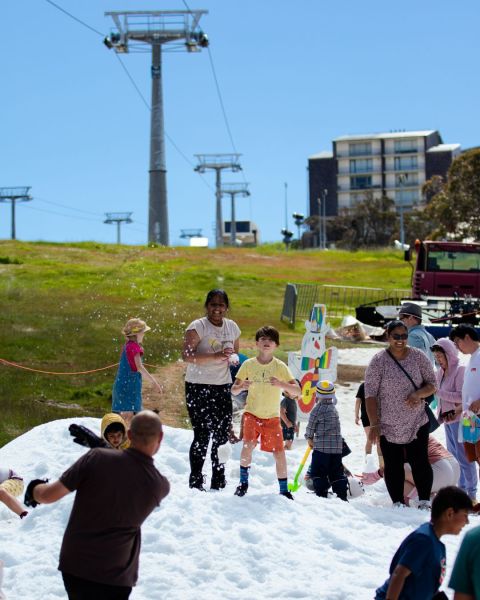
Australia's Mt Buller ski area has been stockpiling snow in order to open for a few days of 'Snow in Summer' fun there from December 29th to 30th. The snowy attraction opens with free snow play offered daily in the resort's Magic Forest between noon and 6pm. Daytime temperatures are currently in the low 20s Celsius in the area. The free-of-charge snow fun festivities also include performances tied to Disney's 'Frozen' franchise with rising Opera star Alastair Cooper-Golec, alongside Daisy Valerio and skilled pianist Alex Byrne performing on the Village Square Stage at Mt Buller.
The concert's repertoire will include iconic tunes such as "Let It Go" from Frozen, "A Whole New World" from Aladdin, and the soul-stirring "Part of Your World" from The Little Mermaid. |
|
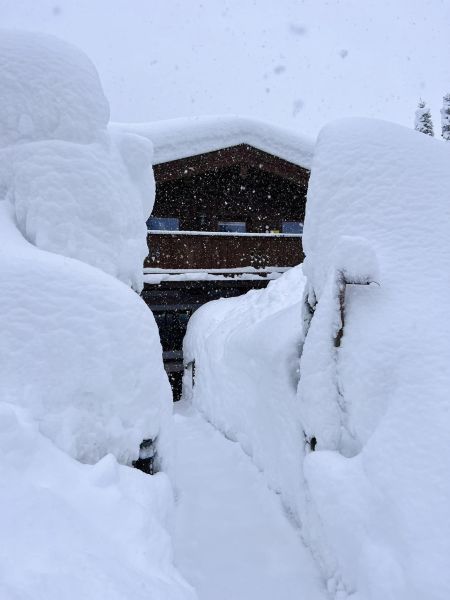
Snowfalls of up to metre in 24 hours have been reported in parts of the Alps. Austria's Zillertal Arena claimed the huge snow total and posted pictures to prove it. The snowfall has arrived with stormy weather, including hurricane force winds, which has also closed access roads and led to some ski areas temporarily shutting down. However the forecast is now for clear skies and sunny week through the Christmas Holidays and up to New Year. |
|
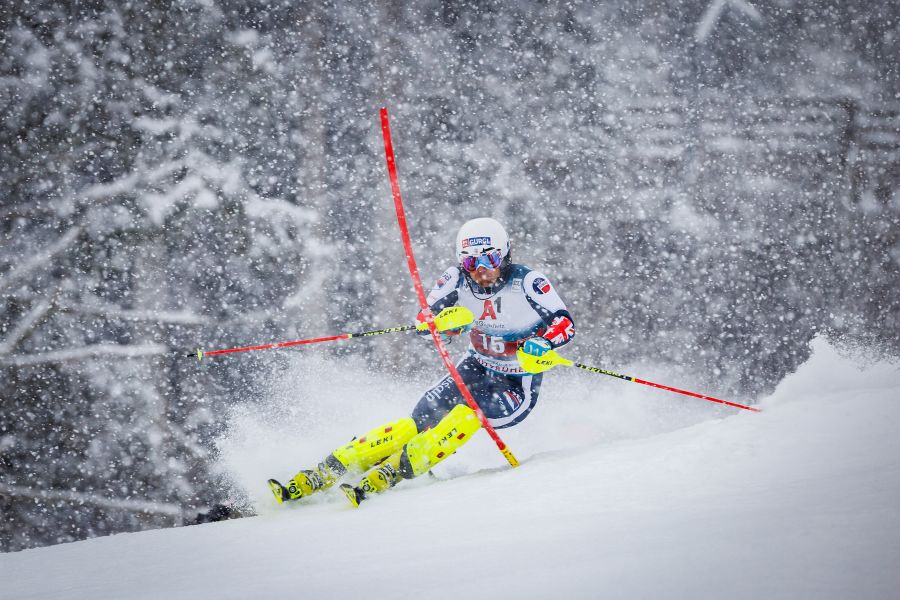
Britain's Dave Ryding has taken his 7th career podium at the age of 37 in tonight's Night Slalom World Cup, being staged for the 70th time at Madonna di Campiglio in Italy. Ryding had been lying in 15th place after the first run but had a storming second run and 12 of the skiers racing after him filed to bet his combined time. It was the second successfully staged World Cup slalom of the season, and having placed 4th in the first race in Obergurgl, Ryding is now lying third in the slalom table with 110 points. Austria's Marco Schwarz won the race and moved to the top of the overall leader board, overtaking Switzerland's Marco Odermatt, with his 100 points. France's Clement Noel, who had led after the first run, took second place. |
|
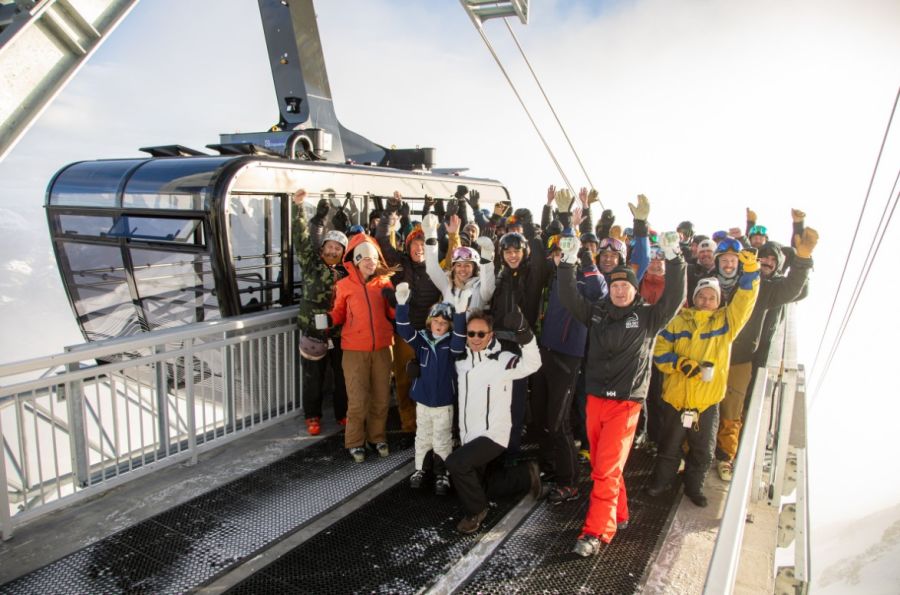
Big Sky ski resort in Montana, one of the claimants to the largest ski area in North America (when the linked private slopes of Yellowstone Resort are included in the numbers) and home to one of the continent's biggest lift-served verticals, has opened its new Lone Peak Tram (cable car). The new tram, opened 50 years to the day after Big Sky opened in 1973, carries guests to the resort's 11,166-foot summit and is a complete replacement of the original jig-back gondola built in 1995. The new state-of-the-art aerial tram has been re-routed to carry more passengers up 2,142 vertical feet in more comfort than its predecessor and in just under five minutes.
After two years of construction and many more years of planning, the new Lone Peak Tram marks a significant milestone in the resort's 50th year. It allows for completely new ways to enjoy skiing the mountain's high alpine eastern and southern exposures. The tram complex will evolve in the years ahead, with the addition of an 'observation experience' planned at the upper terminal in both the winter and summer season. Plans for the tram also include an "architecturally stunning" lower terminal enclosure and a mountaintop food and beverage facility housed in the old top terminal of the original tram. The new Lone Peak Tram is part of a base-to-summit lift network that will more fully come to life by the end of the decade, starting with the addition of the Explorer Gondola, scheduled to open for winter 25/26. This new lift network will create improved access to the resort's learning terrain, accessible to pedestrians for the first time ever, and complemented with further new catering facilities. |
|