

Messages posted by : J2SkiNews
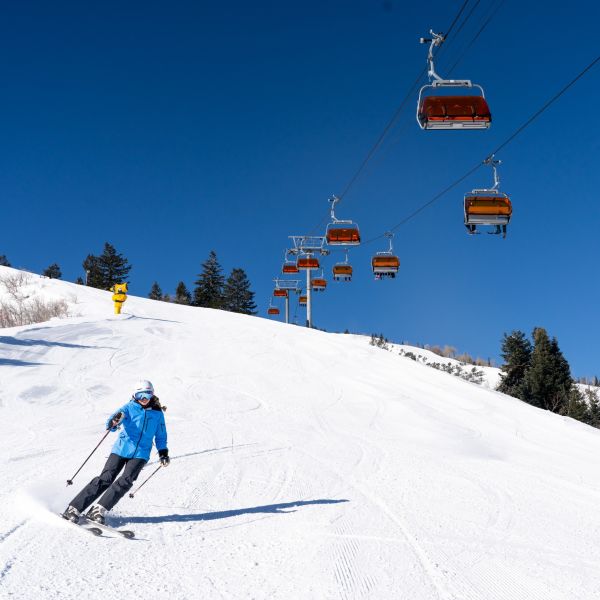
Although we're into the final quarter of the season for most of the world's ski resorts, its only now that the world's largest ski areas are nearing full operations. To be clear, most of Europe's largest ski areas have had 85-95% of their slopes open since before Christmas, and although the snow arrived late, the same is true of most North American resorts since early in the New Year. But the world's largest ski area, the 3 Valleys, has been about 95% open with a little over 550km of its slopes operational most of the winter. The biggest area open in the world but not the full 600km. Across the Atlantic North America's largest, Whistler Blackcomb, had been at 70-80% open for much of 2024, until now, because of poor snowfalls and warm temperatures in the Pacific Northwest corner of North America linked to the strong El Nino system this winter. It's now almost 100% open, it's base doubled to around 3m after more than 2 metres of snowfall in 10 days, as is the biggest ski area in the US, Park City in Utah, pictured above. Big snowfalls in the Alps over the past three weeks has allowed the 3 Valleys to open the most terrain of the season to date this week though. It's now at 97% with an estimated 580km+ of slopes open. The second largest ski area in Europe, the Portes du Soleil, which includes some low-lying terrain around Les Gets, Morzine and other traditional village resorts also remains more than 90% open. |
|
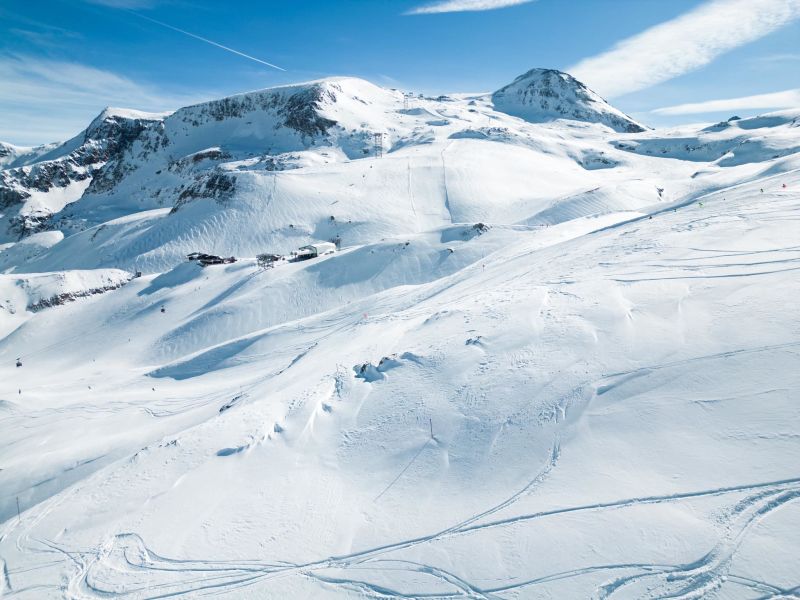
French glacier ski resort Les 2 Alpes is aiming to stay open for skiing to the start of July this year, all being well. Last season the resort (pictured above in April last year) switched from its traditional June to August glacier opening period, and decided to close for a week at the end of the main season then reopen for spring skiing through May and June. As the resort openly acknowledges the impact of climate change and its forced desire to transition to a less snowsports dependent year round resort, this opening model proved more successful than previous recent summer ski seasons when the glacier had been forced to close a few weeks into July due to summer heat thawing snow cover from the glacier. It was so successful in 2023 in fact that the resort stayed open later into July than the original end-of-June closure plan, boosted by the heaviest snows of last season falling through spring, a lot of it after 99% of ski areas had closed. Snow is lying deepest in the world on French glaciers at present and this year the plan is to aim to stay open through to include the first week of July, should conditions permit. There are two other remaining summer glacier ski areas in France, neighbouring Tignes and Val d'Isère. Tignes, which once aimed to open every day of the year, then at least one day every month of the year, then from early-autumn to early May and then again for 6-8 weeks in summer, last year gave up on its autumn opening and reduced to a four-and-a-bit month late-November to early-May opening schedule, relinquishing its long held position as having the longest season in France to Les 2 Alpes. It has not year announced its summer 2024 opening plans. However Val d'Isère have announced that they'll reopen for late-spring/early-summer skiing for four weeks from Saturday, June 8th to Friday, July 5th, 2024.
In the 1980s and 1990s France had around 10 glaciers opening for some summer snow sports. Those that no longer do include Chamonix, Les Arcs, la Plagne and Val Thorens. Alpe d'Huez, which was another summer opener, currently has the world's deepest reported base on its glacier of 4.8 metres. |
|

A 25-year-old plan to build an indoor snow centre in a former quarry at Great Blakenham near Ipswich in Suffolk appears to finally be over. The original SnOasis development (above) was first mooted in the late 1990s by local businessman Godfrey Spanner, who in 2001 proposed a British wintersports centre of excellence with a 400 metre indoor snow slope (more than twice the length of existing British indoor slopes) and facilities for other winter sports. The plan came under fierce opposition from locals however, who formed a group called SnOasis Concern. However moving through various appeals processes at local council level, it was eventually pushed up to central government where it gained planning approval. At the peak of the controversy around the centre, in around 2008, it was proposed that SnOasis could serve as an elite training facility ahead of the 2012 London Olympics. However that came around the time of the global economic crash and the project foundered in to the early 2010s before eventually going quiet. Mr Spanner was declared bankrupt in 2012 but said his plans remained alive. That seemed to be the end of things until it suddenly resurfaced in 2020, just as the pandemic hit, scaled back into a more outdoor holiday village, low profile development, incorporating a much reduced indoor snow slope with a grass covered roof, and rebranded Valley Ridge. It received full planning permission four years ago, but just as in 2008, construction work did not commence. It's now been announced that the company behind the Valley Ridge development have now formally abandoned its ambitions for the site after Suffolk County Council granted a 10-year extension to a neighbouring landfill site. The site where SnOasis was to bed built is currently up for sale and that seems to be the end of the matter …although the planning permission granted in 2020 still applies should any company wish to buy the site and revive the dream again. The UK currently has five indoor snow centres operational in Tamworth, Milton Keynes, Castleford, Manchester and Hemel Hempstead. Most are now 20-30 years old. A sixth centre, at Braehead near Glasglow, ceased operating in late 2022 blaming soaring energy costs making it non-viable. Other recent proposals for Swindon and Middlesborough have also been abandoned although there remains a live project for a major new indoor snow centre Rhydycar West in Wales. Worldwide indoor snow centres continue to gain in popularity, particularly in Asia where China has now opened more than 50 of them. There are currently more than 150 operating across more than 30 countries on six continents. Several in the Netherlands, Germany and Norway are renewable-energy self-sufficient thanks to vast solar arrays and other green power tech systems. |
|
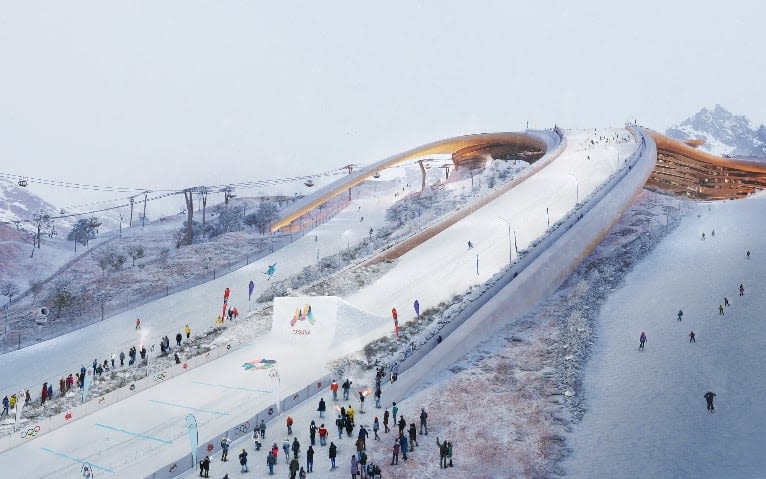
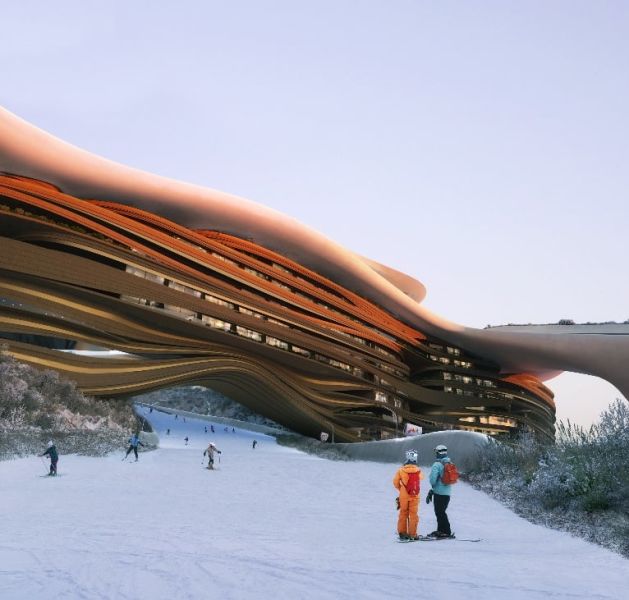
A PR agency has published information and artistic renderings on the Trojena ski area that Saudi Arabia is planning to build and for which it has already been awarded host status for the 10th Asian Winter Games in 2029. Called Trojena, first announced several years ago now, and part of a larger carbon-neutral future-living city project called Neon, the ski resort is being built in some of Saudi Arabia's highest mountains, which see overnight temperatures below freezing at times in winter and very occasional dustings of snow. 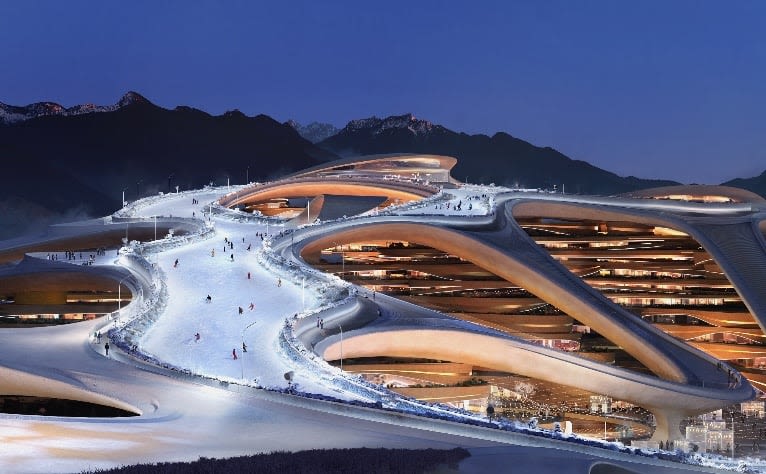
The media release confirms that the plan is to offer year-round skiing at the site, which has already secured two Marriott hotels and many other international corporations as operators, using a combination of dry ski slope surface, all-weather snowmaking machines and, when cold enough to operate, conventional high-efficiency snowmaking machines.
The press release also notes that the roof structure of the village, will house 2 kilometres of the planned 36 kilometres of ski slopes.
 |
|
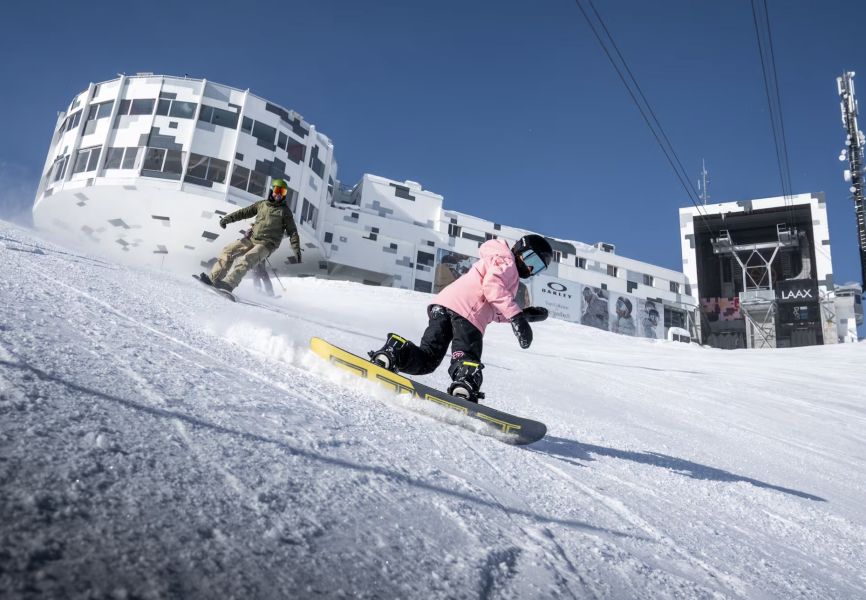
A Swiss ski resort has overtaken a French area to post the deepest snow in the world at present – ever closer to 5 metres/15 feet. Laax reports the snow is lying 489cm up on its glacier, overtaking the 480cm at Alpe d'Huez. It follows a third week of wintery weather with heavy snowfall on higher slopes. However, the spring thaw continues to gain a grip in mountain valleys, with Laax reporting the snow just 15cm thick down at resort level. French resorts had dominated the world's deepest snow table for much of the season, taking the top five spots and at one point nine of the top 10 deepest in January and February, thanks mostly to big snowfalls in November and early December which set them up for the entire season, above 1,800m at least. However Swiss resorts have been moving to higher numbers in the past few weeks, with Saas Fee seeing over 3 metres (10 feet) of fresh snow and moving to the number five slow with 4.4 metres. A third Swiss are in the top 10 is Lötschental (4.2m). Austria's Stubai Glacier, which say 1m of snowfall in 24 hours last week is in the third spot with a 455cm base. North American resorts have also moved into the top 10 for the first time this year after a huge snowstorm off the Pacific. California's Mammoth and Palisades were in the top 10 with 4m+ bases a week ago but have now dropped down a little, however Timberline, which has the continent's longest ski season aiming to stay open into August, is in sixth place with a 300-425cm base. The palisades still reports a 401cm base and remains one of 13 areas posting a 4m+ upper slope base. The world's deepest snow stat usually peaks in the first half of March but last year kept climbing into April as the snowfall arrived late, with many areas seeing heavy falls on high slope throughout the latter half of spring after most had already closed. Peaking around 5 metres is usual but totals can top 6 metres in a good year and sometimes centres in Japan or the Western US have reached 8 or 9 metres after huge storms. |
|
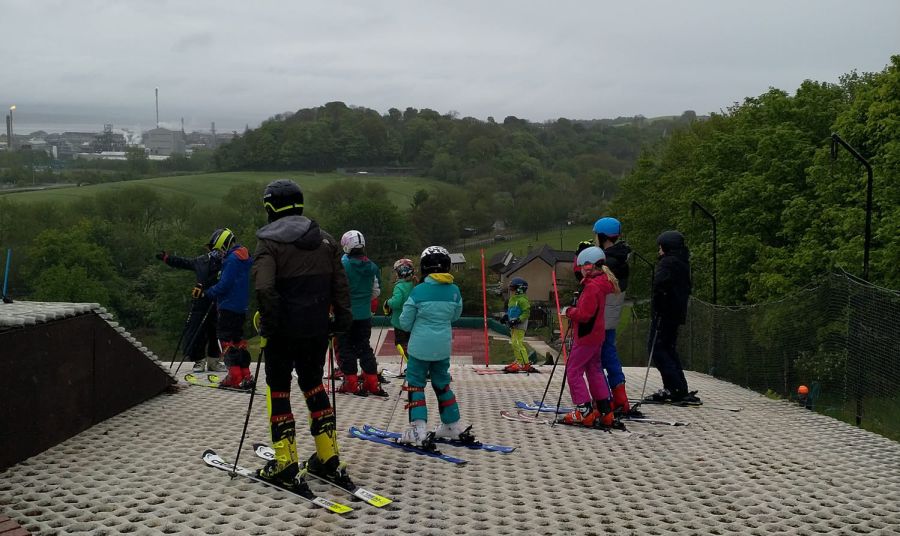
Locals at the latest under-threat-of-closure British community dry ski slope have set up a charity with the aim of taking over operation of the slope. The group behind the move are local parents and others who are bidding to make a "Community Asset Transfer" of Polmonthill Ski Slope near Falkirk from the local council. The fact that the future of the slope, which just celebrated its 50th year in operation and has a 100m main slope and a 20m nursery slope, was in doubt became clear last year when it was featured in Falkirk Council's Strategic Property Review. The new management body has been christened 'Polmonthill Community Snowsport Centre (PCSC)' Polmonthill is the latest in a line of British dry slopes run by local councils to face closure in recent years, with cash-strapped local authorities either unable to continue funding them or seeing a cash boost to council coffers from selling the land where the slope is located to property developers. Usually both. Often this land was low value when the slopes were created but has become much more so in subsequent decades as towns have expanded around them. Falkirk Council has identified more than 100 properties in its estate it wants to remove from council ownership by 2025. On the one hand the council moves save and raise money, on the other they usual go against council's stated aims of encouraging healthy living, mental well-being and community involvement. Often particularly hitting local children, disabled and other community groups. The slopes also bring new skiers and boarders into the sport affordably and locally when they most likely would never have tried skiing or snowboarding otherwise, most famously Britain's World Cup winning skier Dave Ryding.
If the Polmonthill community asset transfer is successful the slope will become the second charity run dry slope in Scotland. The slope had been scheduled to close this April but the community' have won a stay of execution to October. There are about 70 dry slopes still operating in the UK from a high of around 200 in the 1980s. |
|

The greatest Alpine ski racer of all time has returned victorious to the World Cup Tour in the final weeks of the 23-24 season, seven weeks after she was sidelined by an injury sustained whilst racing in Cortina d'Ampezzo. Racing in the slalom at Are in Sweden, Mikaela Shiffrin, who turns 29 this week, won her 96th World Cup race at the same resort where she won her first ever World cup at age 17 in December 2012. This was her 59th slalom win. Shiffrin's 96th win also scored her enough points to secure her eighth slalom crystal globe, although the seven week lay-off means it's now almost statistically impossible for her to overtake Switzerland's Lara Gut-Behrami, who is nearly 350 points ahead of Shiffrin and nearly 300 ahead of second—placed Fredrica Brignone with just a few races left to be run. It's a year this month since Shiffrin won her 87th World Cup race, also at Are, overtaking Sweden's Ingemar Stenmark's near three-decade old record of 86 wins. Her eight slalom Crystal globe equals another record held by Stenmark. Image credit: Erich Spiess / ASP / Red Bull Content Pool |
|
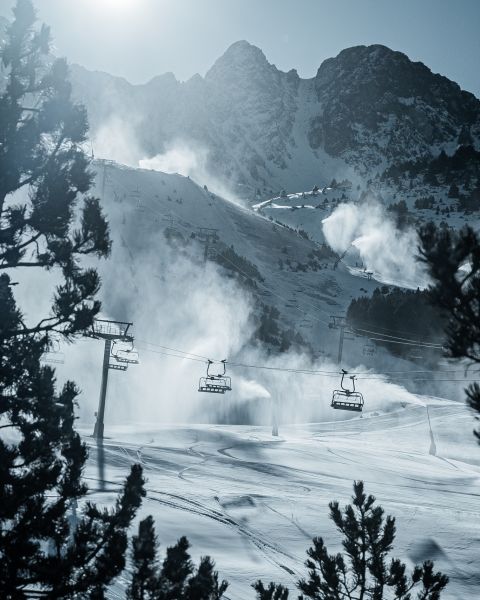
Snow is continuing to fall in the Pyrenees with some resorts now reporting that they've had more than two metres of snowfall in the last three weeks, having received less than that in total through the previous first three months of the season. As a result, ski areas are finally opening most of their terrain, having previously been limited by lack of snow cover and temperatures often too warm for snowmaking. The region's biggest ski area, Andorra's Grandvalira, which includes the resorts of Pas de la Casa and Soldeu El Tarter, is more than 90% open for the first time this season, having reached 199km of its 215km of slopes open this weekend. There are 73 or 74 lifts also currently operational. The area is due to be open for five more weeks, with the Arcalis freeride area announcing it will stay open an extra week to April 14th thanks to the recent snowfall. The snowfall is expected to ease over the next few days with more usual springlike conditions from the middle of this coming week. |
|