

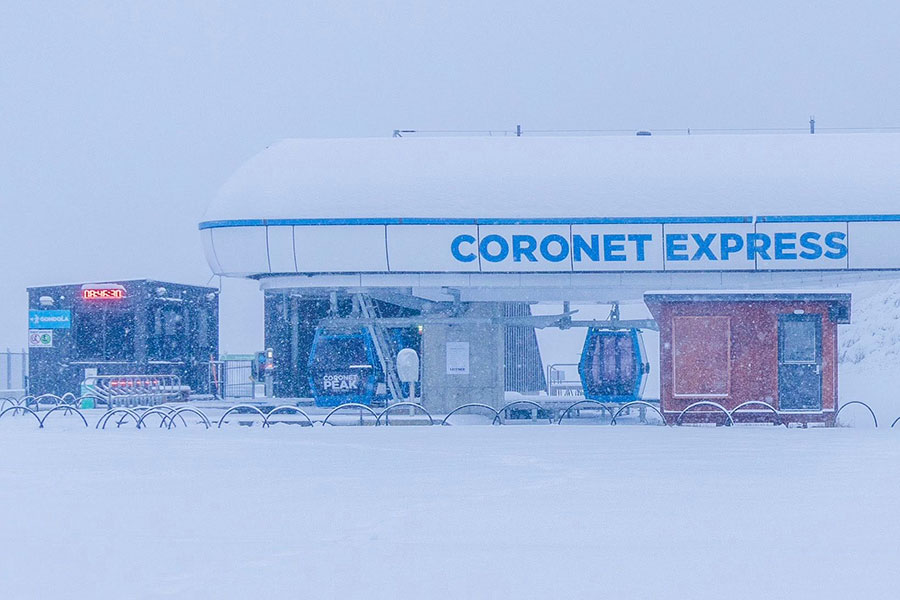
A little snow just arrived for Coronet Peak, and other ski areas in New Zealand
Southern hemisphere's 2026 ski season struggles with limited openings across Australia, New Zealand, Argentina and Chile. In the northern hemisphere, fewer than a dozen areas are now operating, with new summer ski seasons beginning at Sunshine near Banff and Tignes in France.
The Snow Headlines - June 25th
- Ski areas in the Andes begin opening but with very limited skiable terrain so far.
- Tignes opens for summer skiing making three French options now open.
- New Zealand gets some snowfall but not enough for most with more delayed openings.
- Canada's Sunshine near Banff opens for summer skiing for only the third time.
- Australian resorts battle to open any terrain as dry conditions continue.
- Sweden's Riksgränsen closes after summer solstice midnight sun ski session.
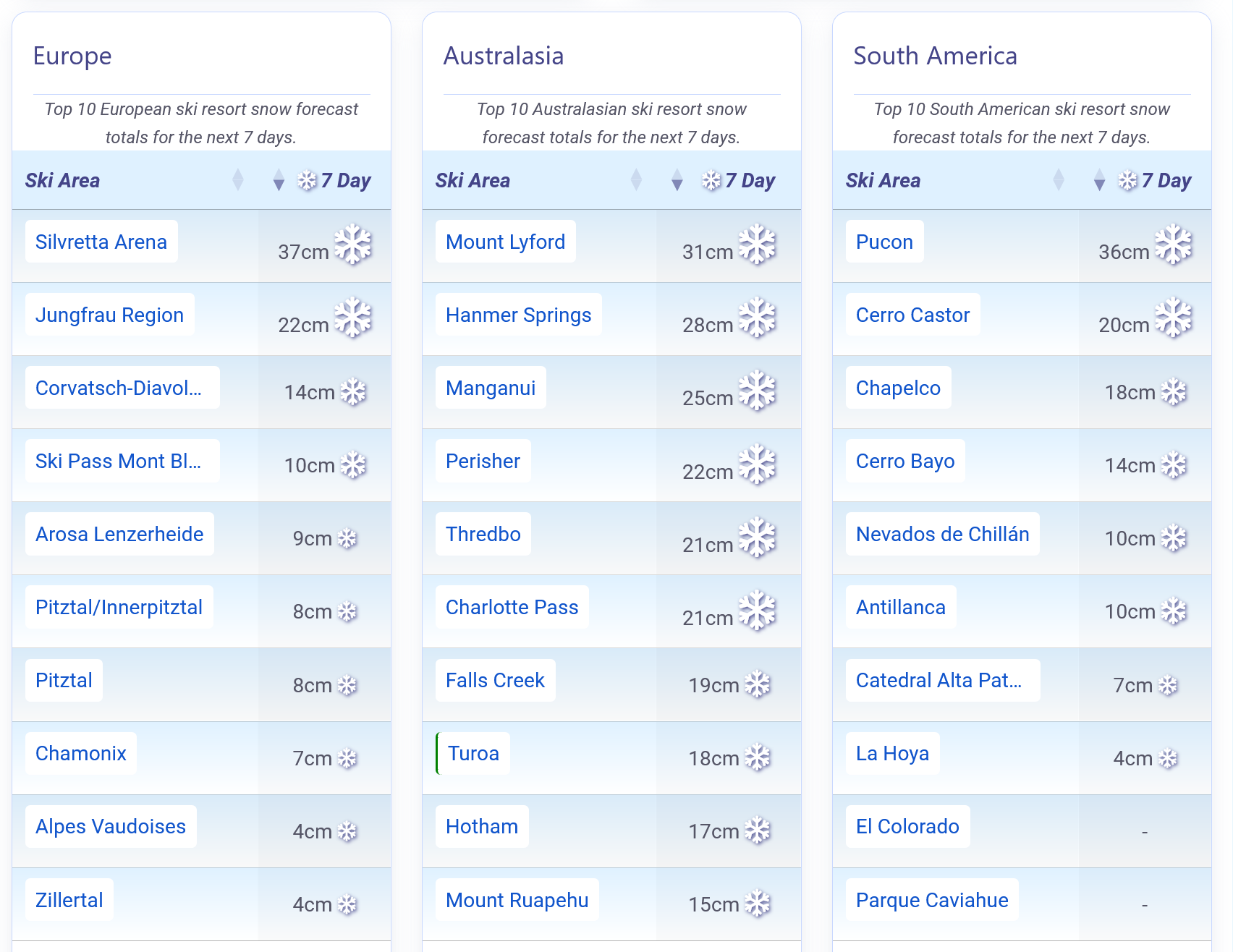
A little more snow forecast for New Zealand and South America.
Re-publication :- the J2Ski Snow Report Summary, being the text above this line, is free to re-publish, but must be clearly credited to www.J2ski.com with text including "J2Ski Snow Report" linked to this page - thank you.
World Overview
The southern hemisphere's 2026 ski season continues to falter, with several major regions still struggling to get underway. Expected openings in the Andes were pushed back at the last moment, although some have now opened limited terrain. Australian resorts have been dealing with persistent thawing, and New Zealand has delayed its season start for a second time. For now, Lesotho's Afriski remains the only southern hemisphere ski area operating without disruption.
In the northern hemisphere, the number of operational ski areas has slipped to fewer than a dozen, although there are two new options as of this week. Warm conditions have dominated Europe and North America, and Sweden's Riksgränsen wrapped up its 2026 season at the weekend. The two centres that have begun their summer operations are Sunshine near Banff (Canada's sole open ski area) and Tignes in the French Alps, bringing France to three summer ski centres now open.
Southern Hemisphere
Australia
Australia's season start has seen little improvement, with most resorts still dealing with the aftermath of last week's widespread closures as mild temperatures stripped much of the early cover. The past few days have been mostly sunny and dry, with overnight lows on higher slopes just cold enough for limited snowmaking, but daytime highs well above freezing have kept the thaw in motion.
Thredbo and Mount Buller have held on to short sections of terrain thanks to their all-weather snowmaking, though unofficial images show narrow, busy ribbons of snow.
Perisher, without all-weather systems, has managed only a small, thin run with the snow reported to be only 5 cm/2 inches deep.
Falls Creek, which reopened briefly before closing again, reported a light dusting and renewed snowmaking as temperatures dipped to -2.8°C. The resort says it will resume operations as soon as conditions allow.
Perisher has managed to maintain a small snow slope with a very thin base. 'The overnight chill was just what our snowmaking team have been waiting for,' said Emily Smith, Senior Manager Brand and Experience on Tuesday. 'A light dusting fell overnight and the snow guns have been firing since around 8pm and are still going strong. With consistently cold nights on the horizon, the team will make the most of every snowmaking opportunity and we're excited to open more terrain as soon as possible.'
New Zealand
New Zealand's ski fields endured the forecast blast of gale-force winds and heavy rain over the weekend, stripping back the limited upper-mountain cover created through recent snowmaking and light natural falls. Those conditions had already forced a second round of opening delays, but the pattern shifted on Monday as colder air returned, with fresh snowfall arriving mid-week.
Cardrona said on Sunday it aims to open limited beginner terrain this Friday, noting that warmer temperatures and rain 'delivered exactly what was forecast,' and that teams are now maximising every snowmaking window ahead of the planned start.
Several other areas, including Treble Cone, have postponed their intended opening dates, keeping the outlook uncertain.
A colder, more unsettled spell arrived on Thursday with resorts reporting up to 15 cm/6 inches of fresh snowfall by the end of the day. Upper-mountain temperatures fall to –6°C to –2°C/21°F to 28°F, with bases between –3°C and +2°C/27°F and 36°F. More snow is likely across the Southern Alps but it is not yet clear how significant the falls will be.
Argentina
Argentina's ski season has inched forward, with most resorts still waiting to open after a slow start, but the majority planning to do so from this coming weekend. As of now only Cerro Bayo is actually running ski lifts, offering very limited terrain.
Recent cold has helped, with 25–50 cm/10–20 inches of new snow across many slopes. A colder pattern has arrived, with upper-mountain temperatures of –8°C to –3°C/18°F to 27°F and bases near –4°C to +2°C/25°F to 36°F.
Light snow is expected over the next few days in Patagonia, favouring Catedral, Chapelco and Caviahue. Las Leñas stays mostly dry and cold but has ruled out opening until July now, while Cerro Castor sees periodic light snow. The weekend remains chilly and mostly dry.
Chile
Chile's 2026 season has slipped further behind schedule, with Portillo delaying its opening by a week despite reporting 45 cm/18 inches of new snow and good snowmaking temperatures earlier last week. Most major resorts followed suit, though Corralco confirmed a limited opening from Tuesday. Valle Nevado also opened last weekend on a thin 10–30 cm/4–12 inches base, offering only a few hundred metres of terrain.
Others, including Portillo, now aim for next weekend after another spell of low temperatures and light snowfall. El Colorado says it will open limited terrain this weekend, crediting round-the-clock preparation to deliver nearly 2 km/1 mile of skiable slopes.
A settled, mostly dry pattern dominates into the weekend, with upper-mountain temperatures of –6°C to –2°C/21°F to 28°F and little new snow expected across central and southern areas.
Southern Africa
Lesotho's Afriski seems to be the only area enjoying a fairly typical early winter, with mostly dry weather, summit temperatures from –7°C to +10°C/19°F to 50°F and the base between –5°C and +12°C/23°F and 54°F, albeit with slightly warmer daytime highs.
Sunshine has dominated and only light, occasional snowfall has been reported. Winds have been gusty sometimes up to 40–70 km/h/25–44 miles per hour helping keep surfaces firm.
From Thursday, colder, clearer conditions return, with –6°C to –2°C/21°F to 28°F up high, hard freezes, and only brief snow flurries expected.
Northern Hemisphere
We are now down to about a dozen areas open in the northern hemisphere, depending on what you include. In Europe there are 7 lift-served areas open, six of them glaciers in the Alps and only one remaining in Scandinavia.
In North America, the headline news this week is Sunshine Village near Banff opening for 16 days of summer skiing with 2 lifts, three terrain parks and 10 runs open - for only the third time in its long history and following its second-snowiest winter on record.
In the US, Timberline on Mount Hood, Copper Mountain's hike-to park and Beartooth Basin also continue to offer summer turns.
In France, Tignes opened at the weekend for its month-long summer season, joining Val d'Isère and Les 2 Alpes to complete the country's trio of summer ski options.
Austria's Hintertux remains the Northern Hemisphere's deepest base and offers the most terrain, with around 24 km/15 miles of slopes. Italy's Passo Stelvio (0/200 cm/0/79 inches) is also open, while the Matterhorn Glacier Paradise above Zermatt, also accessed from Cervinia, rounds out the Alpine list.
Weather across the Alps has turned notably warmer this week, with freezing levels hovering between 3,900 m and 4,400 m/12,795 feet and 14,436 feet. Sunshine has dominated, though occasional light showers have appeared, falling mostly as rain even on the glaciers. Overnight lows at 3,000 m/9,843 feet have stayed well above freezing, while valley temperatures have surged past +30°C/86°F.
In Scandinavia Galdhøpiggen continues as the region's final hold-out after Riksgränsen wrapped up its season over the Midsummer weekend, closing out its trademark spell of skiing under the midnight sun. With both meteorological and astronomical summer now underway, daylight is slowly shortening again and the long countdown to the 2026–27 season has begun. For some, that starts sooner than others: Switzerland's Saas-Fee reopens next month for its long summer-to-spring run.
A warm, settled pattern is expected to continue in the high Alps through the weekend, with freezing levels extremely high at 4,200–4,700 m/13,779–15,420 feet and upper-glacier temperatures often slightly above 0°C/32°F. Conditions remain mostly dry and bright, though isolated afternoon thunderstorms are possible in France and Switzerland. Scandinavia's Galdhøpiggen, by contrast, stays colder and more unsettled, with –6°C to –2°C/21°F to 28°F on the glacier, frequent cloud and occasional light snow through Friday. The weekend looks chilly, breezy at times and largely dry, with firm morning surfaces softening later.