

Messages posted by : J2SkiNews
|
Following the renaming of California's Squaw Valley to The Palisades and Vermont's Suicide Six to Saskadena Six (for sensitivity to mental health issues), two small ski areas in Michigan are to be renamed out of "sensitivity to Native American cultures".
Indianhead is to be renamed Jackson Creek Summit and Blackjack will become Black River Basin. The new names come from rivers that flow through each ski area. The two have been jointly marketed as Big Snow Resort but this name will also go and be replaced with Snowriver Mountain Resort, but that's not through cultural sensitivity but because there's some confusion with another company called Big Snow which, among other things, runs North America's only indoor snow centre in New Jersey. The name changes of the Michigan ski areas follows their purchase by Midwest Family Ski Resorts which also runs Lutsen Mountains in Minnesota and Granite Peak in Wisconsin.
"For us, it was in a location that enabled us to see a nice circle of resorts between Lutsen, Granite Peak, and Big Snow Resort property," said Greg Fisher, Midwest Family Ski Resort chief marketing officer. |
|
|
Snow King ski resort at Jackson in Wyoming is building an observatory at the top of its lifts.
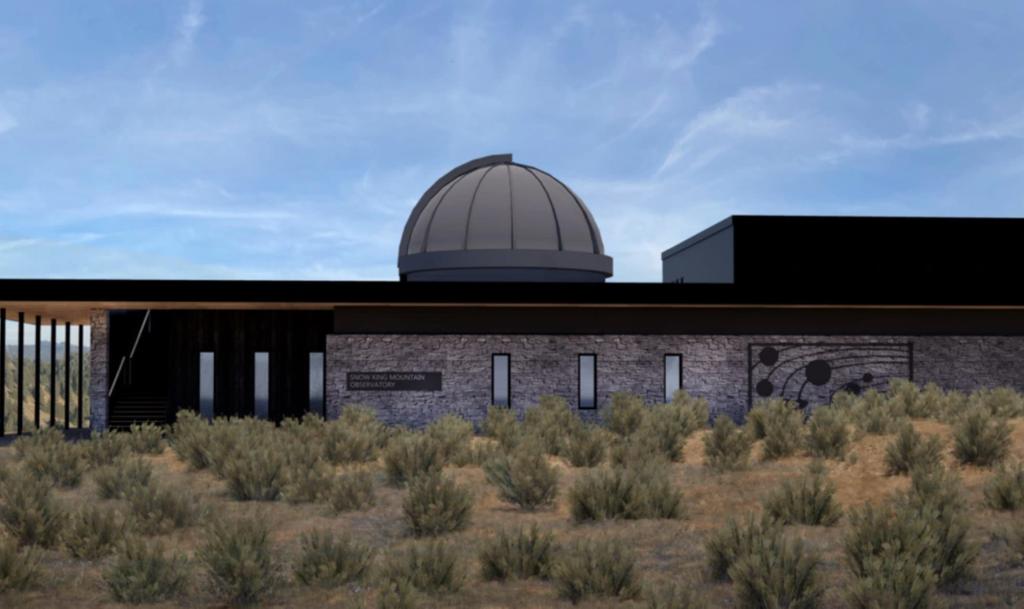
It's believed it will be the first observatory located on top of a ski resort in North America. The observatory will feature a seven metre (24-foot) AstroHaven dome along housing a one-metre PlaneWave telescope, one of the largest in the world. The eight-metre digital planetarium will have a capacity of 30 people and include a classroom/theatre space, galleries with interactive exhibits and event space. Construction of the new planetarium and observatory is well underway and the facility is expected to be completed by early autumn next year. It will be dedicated to public outreach. Although it's thought to be the first observatory built at the top of a ski lift in the US, other observatories exist at other ski areas, although in most cases the observatory and lift to it came first, then skiers realised they could use the observatory's access lift to make descents. That's the case for the famous off piste routes from the Pic du Midi observatory in the French Pyrenees. In the late 1960s two astronomical observatories were installed in the two towers of the Kulmhotel Gornergrat, (3,120 m /10,240 ft) up at the top of the Gornergrat rack railway above the Swiss resort of Zermatt. In the US there's also unofficial skiing and boarding, but no lifts, from the summit of Mauna Kea in Hawaii, one of the world's most important observatories. Snow King is located on the edge of the City of Jackson in Wyoming and was actually the first resort to open in the state, back in 1939. The world-famous ski resort of Jackson Hole is a separate, more recent creation, located about 10 miles from the city. The observatory and planetarium are the latest in a string of infrastructure improvements at Snow King over the past few years. A new gondola was installed ahead of last season, which also saw terrain added and a new triple chairlift. The resort also now operates the steepest Zip Line in all of North America which opened in May of this year |
|
|
Ski holiday companies are reporting that holidays over the coming New Year 22-23 will be "much cheaper" than usual due to a combination of factors.
The first is that the main holiday weekend of New Year's Eve and New Year's Day will fall on a weekend so for most holidays with Saturday or Sunday changeover days it means people will need to travel on New Year's Eve and New Year's Day themselves – which are the least popular days for travel. The second factor pushing down prices is that most schools will return on Wednesday, January 3rd, meaning parents would need to take their kids out of the school for three days, which is again, not popular.
Some operators are trying to get around the weekend changeover by offering shorter breaks getting back by the 3rd and/or offering travel away from the usual weekend timings.
|
|
|
A number of leading North American resorts have announced their target opening dates for the coming ski season, in many cases less than three months away.
In Colorado Breckenridge and Vail will open on November 11th and Keystone will aim to open in less than two month's time in "mid-October" – as soon as there's enough snow fallen or machine-made once cold enough. In California Mammoth Mountain are targeting November 11th and Heavenly a week later on the 18th. The largest ski area in the US, Park City in Utah, will also open on the 18th, all being well. Up in Canada Whistler Blackcomb, the continent's largest ski area, it's a fortnight later on November 24th. On the East Coast Stowe say they'll also open on November 18th. The opening dates have been announced as the first snowfall has been reported in the continental US with several light dustings in the past few days on high points in Colorado. Most recently on Pike's Peak on Sunday. They also come as the big lift pass schemes, the Alterra groups Ikon pass and Vail Resorts' Epic Pass, prepare for a price rise at the start of September as the season start nears. The National Ski Areas Association (NSAA), say that these passes, along with other multi-resort pass schemes, now represent more than 52% of all annual lift pass sales. North America's ski season usually begins in mid to late October with centres with high slopes in Colorado usually starting snowmaking in late September and doing battle to be the first to open. Some years though cold weather allows centres in New England or the Midwest to claim first spot by firing up their snowmaking early, and West Coast areas have also been first some years after unusual early heavy snowfalls. |
|
|
Australian ski areas were in celebratory mood on Tuesday after big snowfall accumulations were reported to start the day.
Thredbo reported the biggest accumulation so far with 28cm (11 inches) of powder. Mt Baw Baw said they'd had 25cm (10") of fresh snowfall so far and that it was still falling, the country's largest resort, Perisher, 15cm (6 inches) more. All other Aussie areas posted images of similar dumps, for most the second in six days meaning some areas have had more than half-a-metre (20") of snowfall in the past week. The snowfall is the latest in a bumper season for much of winter 2022 for Aussie ski resorts which have reported operating at capacity for much of the past three months, both in terms of skier numbers and terrain open, the latter thanks to a big snowfall to start the season in early June and regular snow top ups through the winter. The only blip was a warm, wet storm a fortnight ago, but there have now been several good snow dumps to repair the damage from that since. Several now report base depths of over 1.5 metres (5 feet) – a very healthy stat for Australian skiing. By contrast New Zealand's ski centres continue to report 'early springlike' warm conditions as they try to recover from a major warm, wet storm at the end of last week which impacted snow depths and has left a few smaller centres still closed. There's about a month of the 2022 ski season left in both countries although some resorts will close in about three weeks' time and other stay open a week or two into October. Usually, New Zealand's Mt Ruapehu is last in the southern hemisphere to close in late October or early November but unfortunately so far it has reported limited snowfall and media reports are now saying this has become their worst season in a decade so it is unclear if that will be the case this year. |
|
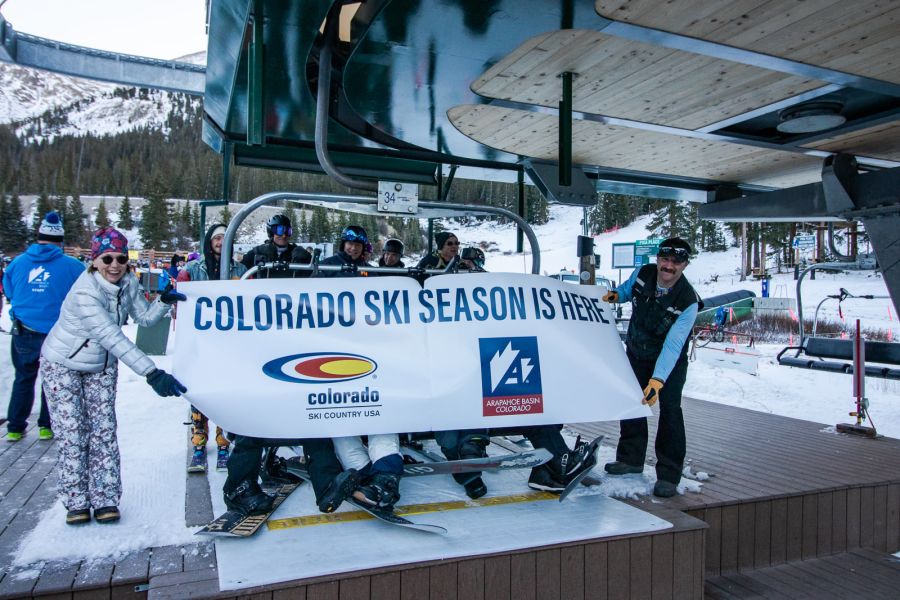
The first dusting of snow was spotted on some high peaks in Colorado earlier this week, instantly raising anticipation for the 22-23 ski season in North America. The only ski centre still operating outdoors on the continent, is Timberline with slopes high on Mt Hood in Oregon, but it says it will end its 10-month long 21-22 season this coming Sunday. That will leave the Big Snow indoor snow centre in New Jersey the only snow skiing possible in North America from Monday. However the start of the 22-23 season is likely to be only two months, perhaps less, away. High altitude ski areas like Arapahoe Basin (pictured top on 17th October last year), Loveland and Keystone start snowmaking in September if it is cold enough and can open in October. Loveland in Colorado have their annual 'start of snowmaking countdown clock' running on their site which currently has 42 days left on it meaning snowmaking is due to start at the end of September. The snowfall this week was reported dusting peaks near Alma in Colorado in the Mosquito Range and had thawed away by lunchtime, but it was still enough to raise anticipation levels. More fronts are expected to bring more early snowfalls over the next few weeks. Recent years have also seen centres open in October in the Midwest and New England thanks to snowmaking in early cold temperatures. Unusual early heavy snowfalls have also seen centres in California and Washington State open in October or even, briefly, in September. The first fresh snowfall since last spring had already been reported earlier this month on high peaks in Alaska. |
|
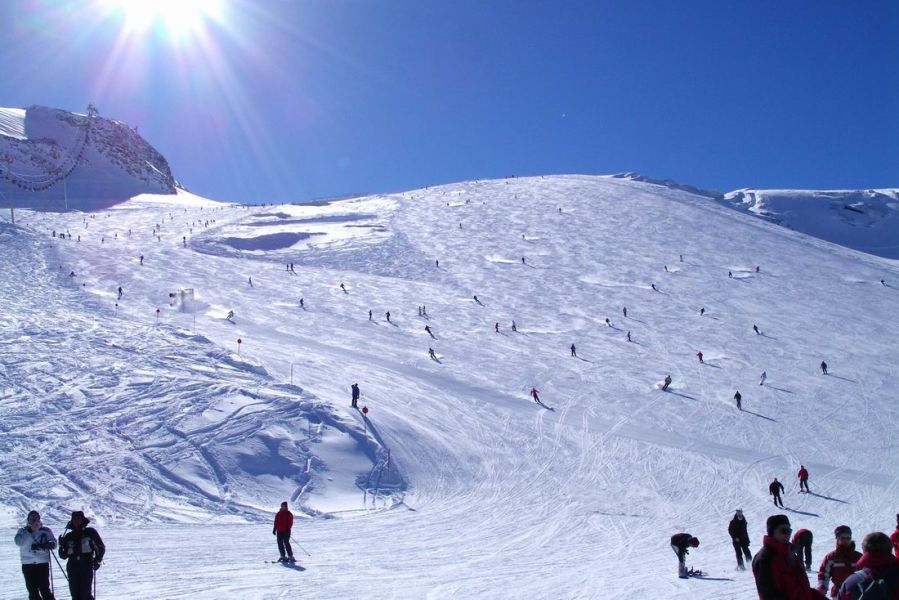
The early closure of Norway's Fonna summer ski area has left just a small strip of thin snow open to skiers and boarders in Europe at one remaining ski area still open, Hintertux in the Austrian Tirol (library pic). It's the lowest number since summer skiing began more than 50 years ago. The prolonged heatwave across Europe and most of the northern hemisphere, along with other impacts of climate change, has melted the snow cover from glacial ice at most summer ski areas, with much greater implications than just the loss of skiing and boarding in summer. Ski resorts expert Chris Schrahe believes that Hintertux is still open, despite not having the highest glacier slopes in the Alps, thanks to a rare snowmaking-on-a-glacier system it has installed. This covers the 6km of slopes it still reports open with the cover 15-25cm thick and 'extremely icy' according to its snow report. Hintertux is one of two glaciers that aim to open 365 days a year, weather permitting, the other, Zermatt, was forced to give up on that aspiration late last month. It's now one of a number of a growing number of ski areas that would like to be open now but can't and say they'll reopen as soon as conditions improve, others include Saas Fee, Italy's Passo Stelvio and Norway's Galdhopiggen glacier. But ski areas like Fonna and Les 2 Alpes that open in August when conditions are good have said their 2022 summer seasons are now over whatever happen. Fonna has though joined a number of resorts that are keeping limited terrain open for booked race teams for training. Saas Fee and Galdhopiggen are also doing this. Reasons given are that it's 'not safe' for recreational skiers but race teams on prescribed courses can still use what's left or that terrain remaining is just too limited and priority is given to booked teams for what's left. Next month around half-a-dozen glacier ski areas are due to start their 22-23 seasons but its unclear how many have snow left to do so on schedule if there's not a big change in conditions and the arrival of late summer/early autumn snowfalls at altitude – not unusual in the past and as recently as 2019 when some opened earlier than planned in response to metre-plus snowfall accumulations. It is currently raining above 3,000m on many glaciers with highs of +8C but Fridays/Saturday should see temperatures drop to around freezing on glaciers and the chance of snowfall. If Hintertux is able to stay open from next Monday it will be the only ski area open in the Northern Hemisphere as the last centre still open in North America, Timberline, says it will close at the end of the ski day on Sunday. Fonna had also targeted Sunday for closing but in the end announced suddenly it would close to the public on Wednesday due to "safety reasons." |
|
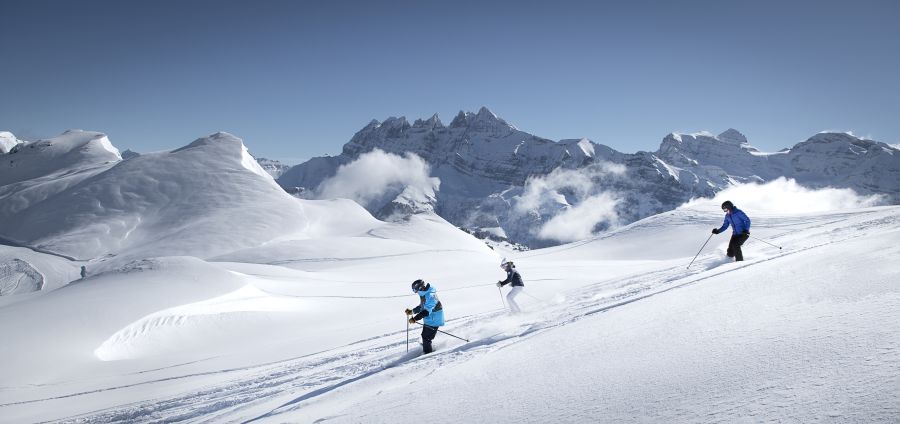
The Portes du Soleil, one of the world's largest ski regions, that straddles the French-Swiss border and encompasses the skiing above around a dozen resorts, has savings on offer to those prepared to book their lift pass months before they head to the mountains. Savings of 10 to 15% are offered, depending on the dates you travel, if you pre-book a lift pass by 30 September 2022 online. A 15% saving on a seven-day adult lift pass for the upcoming winter is priced from €280 / £236 under this deal, compared to the full €329 / £277 price without the discount. The higher 15% saving s offered on most dates but not during the French school holidays when the discount is still offered, but reduced to 10%. Located between Lake Geneva and Mont Blanc, The Portes du Soleil claims to be the world's oldest cross-border ski destination, covering the neighbouring Alpine regions of French Chablais and Swiss Valais. Famous resorts included on the pass include Avoriaz, Champéry, Les Gets, and Morzine and the huge ski area boasts 650 km of pistes and 196 lifts. The early-booking discounts on lift-passes only applies to internet purchases for all individual Portes du Soleil lift passes valid for at least five days consecutively and is not valid to purchase season passes or the family Pass Famille. https://en.portesdusoleil.com/ |
|