

Messages posted by : J2SkiNews
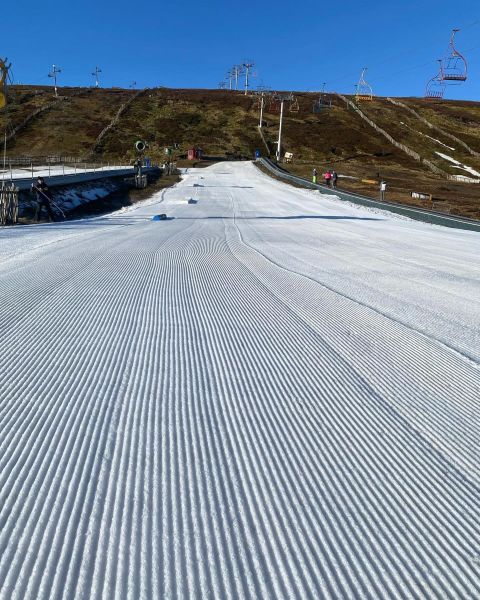
Scottish ski area The Lecht has set up a crowd funding page suggesting that without public donations they may not be able to continue operating. Scottish ski areas had another poor winter for snowfall and The Lecht was one of several that were only able to operate a small snow area that existed only thanks to a so-called "all-weather snowmaking" machine. This allowed it to operate a nursery slope and give beginner lessons. It reports it managed to deliver lessons to over 6,500 children this winter despite the limited terrain available. The Lecht (pictured above on March 1st this year) is aiming to raise £35,000 by asking past visitors who have loved The Lecht to contribute the value of a day's lift pass as a donation so the centre can open for next winter 2024-25.
There are four other commercial Scottish ski centres at Glenshee, Glencoe, Nevis Range and Cairngorm. Nevis range was hardly able to offer snowsports this winter and has largely transgressed to a year-round summer mountain destination, saying recently it will still offer snowsports whenever it can but hasn't made a profit from doing so for the past 15 seasons. The Lecht's neighbouring ski centre, Cairngorm Mountain has received tens of millions of pounds of public money over the past five years tied to its failed funicular railway.
|
|
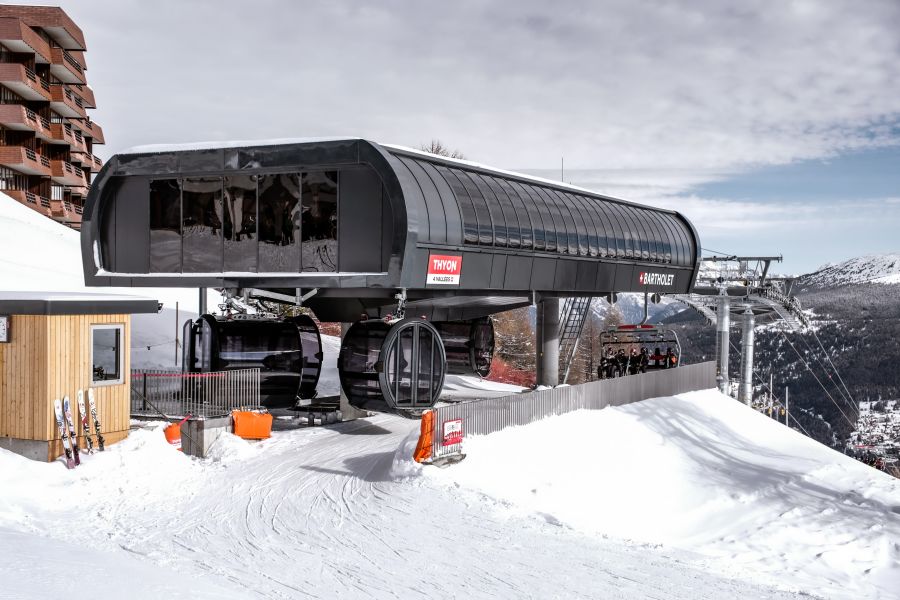
The new "Telemixte de la Matze" lift at Thyon ski resort at the eastern end of Switzerland's largest ski area, Les 4 Vallées, has transformed access to the region, the resort claims.
The new combination lift has replaced two drag lifts and dramatically speeds up access to Les 4 Vallées with its total of 410 km of slopes. Technologically, the new lift is based on the "Telemix" concept, which includes separate entry and exit areas for chair and gondola passengers. In Thyon, 14 six-seater chairs are followed by four gondolas. The choice was made for spacious 10-seater panoramic gondolas, designed by the Design Studio F. A. Porsche. With floor-to-ceiling glazing, they offer spectacular views of the Valaisan mountains and adapt easily to different uses thanks to foldable benches, integrated ski holders, and optional bike racks. Even with the hoodless 6-seater standard chairs, there's a "Porsche feeling". The new lift has coped well with peaks in business of 8,000 passages per hour, easing pressure on the other main lift into the 4 Valleys from the resort, the Trabanta quad, the previous main axis in the area. The disappearance of lift queues in the area, installation of the easy to use lift and a widening of the ski slopes has also made it particularly suitable for beginners and families. Pedestrians and guests with reduced mobility can also now reach the summit directly without shuttle buses. This opens up new winter opportunities such as tobogganing and creates new possibilities for the cable car company Télé-Thyon in terms of summer business, especially with offerings for mountain bikers and hikers. |
|
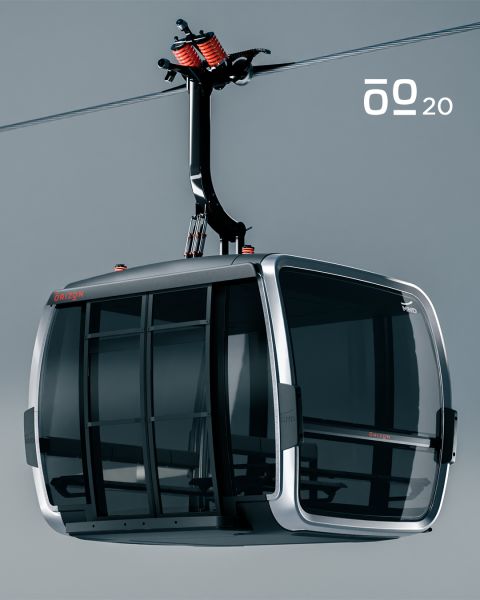
French lift manufacturer MND has unveiled a new model of gondola lift, ORIZON™, which it says will be able to double the capacity of existing lifts. MND's say they have invested 20 million Euros in creating its ORIZON™ lift, designing it to be able to carry a wide range of configurations, from 6-seater chairlifts with or without bubble to 10, 16 and 20-seat gondolas, and capacities of up to 8,000 people per hour and per direction at speeds of up to 7 metres per second. That's faster than the typical 6 metres per second of existing gondolas which usually have 2,000-4,000 hourly uplift capacities. MND say that special attention has been paid in ORIZON™'s design to optimising the installation's energy consumption, in particular by recovering and using the energy produced by the gravity transport system, the automatic eco-driving system to adapt to flows in real time, the recovery of heat to heat the buildings and the integration of solutions to produce renewable solar energy. MND is celebrating its 20th anniversary this winter and the company is rapidly expanding, with plans to add another 100 employees this year. |
|
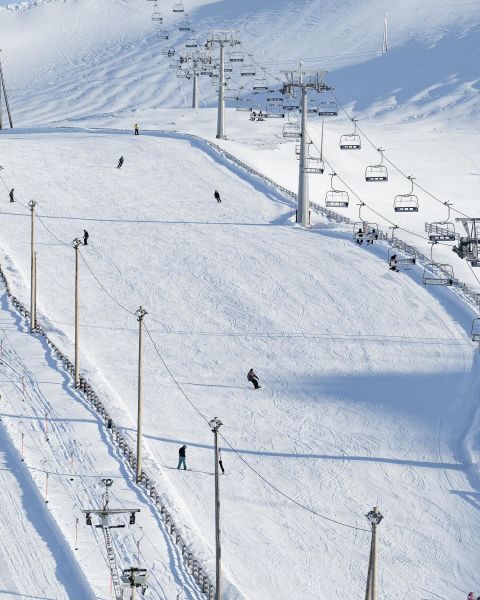
Iceland's leading ski area of Bláfjall has closed its 60th season with a record number of skier visits, hitting 100,000 for the first time, during its closing weekend. The resort's previous record of 84,600 was set 15 years ago in the winter of 2008-9. The resort's operators are putting the jump in skier numbers down, not to a particularly good winter for snowfall, but investment in snowmaking and improved lifts over the past few years.
|
|
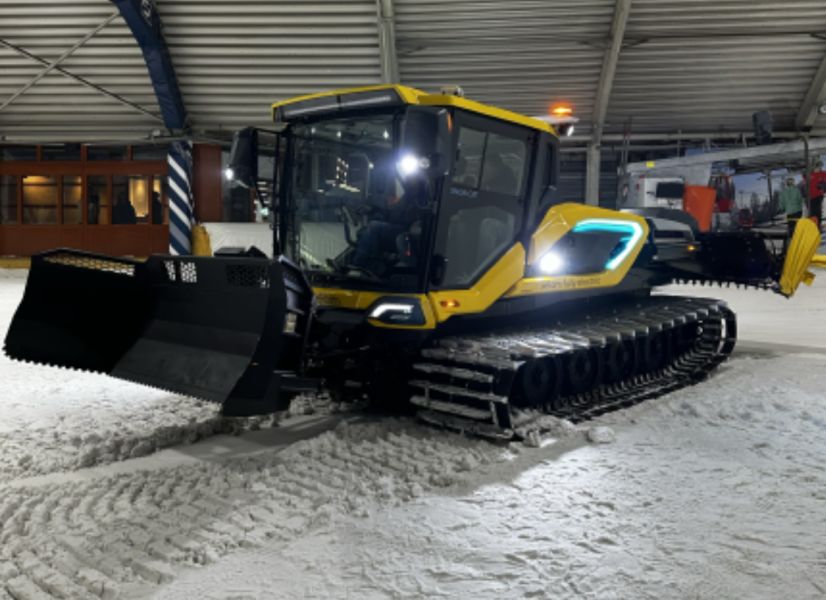
The all-terrain electric vehicle manufacturer Xelom has unveiled a new all-electric groomer at indoor snow centre SnowWorld Zoetermeer near Rotterdam in The Netherlands. The Italian company's Snow Cat electric groomer can run five hours on a single charge and generate 27,600 Nm (20,365 foot pounds) of torque, the company says. Making zero-emission all-electric groomers is a major challenge for ski resorts around the world who have converted power to lifts and snowmaking systems to green electricity through the grid, but have greater problems when it comes to grooming tractors. The major issue is creating a tractor powerful enough and with a long enough battery life to be viable in grooming slopes overnight. Companies like Prinoth are the market leaders in the technology with their Husky E-Motion. They also produce more powerful hybrid machines. The Xelom groomer, one of several Prinoth competitors, was produced in partnership with snowmaking manufacturer TechnoAlpin, who are based near to Xelom's location.
Its blade is about 4.5 metres wide and its tiller is roughly 5.2m wide when open and the groomer connects to a 150 kW fast-charging system for a charging time of approximately two hours. |
|
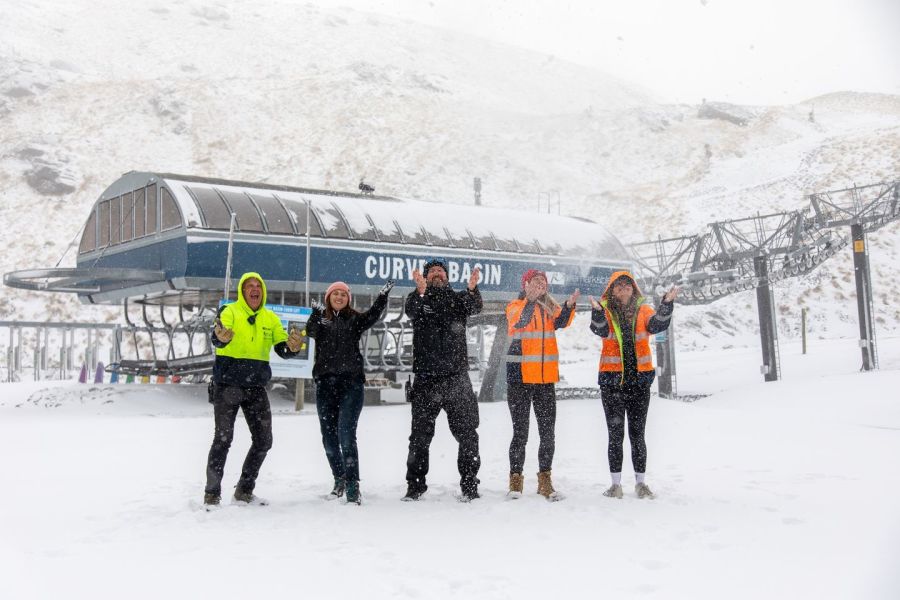
There's been fresh snowfall down to base level at ski areas in New Zealand and the Andes as the start of the southern hemisphere's 2024 season is now just five weeks away. Ski areas across New Zealand reported 5-15cm snowfalls, and mountains turned white in South america too with snowfall expected to continue there through the weekend with overnight temperatures as low as -10C expected on the highest ground. Staff celebrated the fresh snowfall at New Zealand's The Remarkables ski area earlier today (pictured above) and broke into an impromptu snowball fight. Afriski in Lesotho has announced the earliest planned southern hemisphere 2024 season start date of June 1st with the first ski areas opening in Australia, New Zealand and South America just over a week later. However pre-season snowfalls have led to late May openings of ski centres in these areas in past seasons. |
|
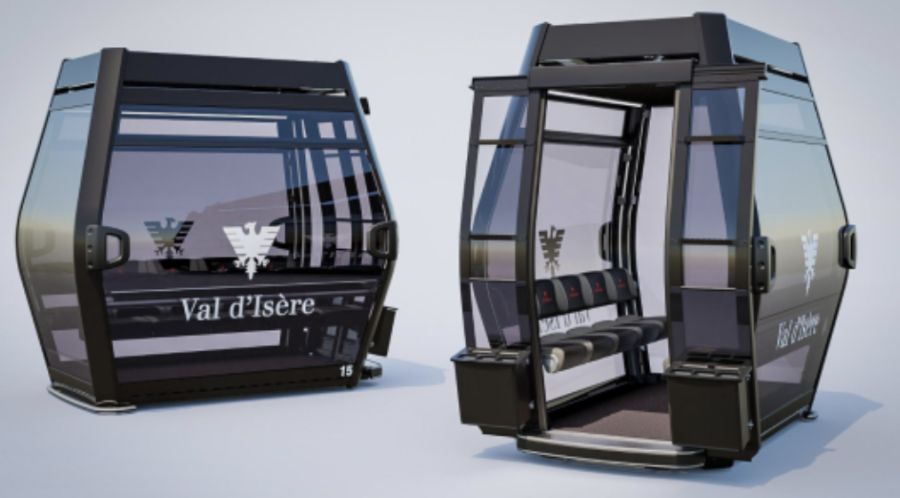
Val d'Isère's current Vallon gondola has made its final ascent after more than four decades of service. The lift at the Iseran Pass went into service in 1981 and has since carried more than 25 million passengers up to the Pissaillas glacier. The original lift was built by Italian firm Agudio, now part of Pomagalski lifts, and was seen as a huge step forward for the sector at the time. The new lift, due to be built over the next eight 8 months in time for next winter, will of course be more modern, faster and more comfortable with a reduced impact on the environment. It will use 30 less support towers. It will also increase capacity from to 3,000 skiers per hour on the route, more than double that of the 1,460 sph capacity of the previous lift. It will also replacing two drag lifts, and make the ascent in 8.2 minutes compared to 13 minutes for the old lift. Val d'Isère is one of the few ski areas still open in the French Alps and will be among the last to close for the 23-24 season in early May. It then plans to re-open some high slopes for a month of glacier skiing later this spring. |
|
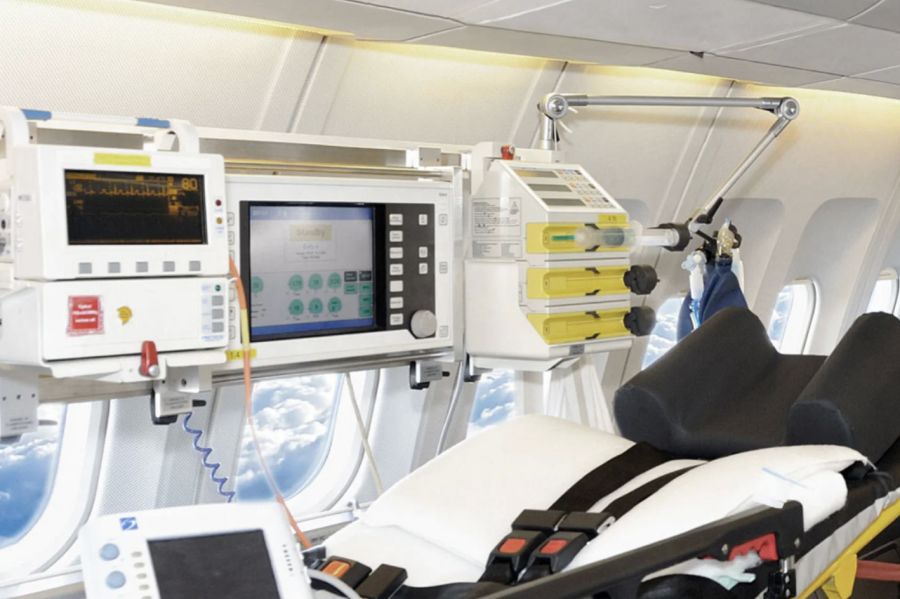
The Association of British Travel Agents (ABTA) is warning travellers that medical costs, particularly repatriation by air ambulance, have more than doubled in the last four years in some cases. As the costs were very high as it was, the organisation says that it makes taking travel insurance even more essential. "People requiring an air ambulance will now find that the cost of being flown safely home on a long haul flight will now cost more than twice the amounts charged in 2019," an ABTA spokesperson said, explaining that in instances where travellers have had a major accident and need to be flown home in an air ambulance, with the necessary high quality medical assistance, in 2019 an air ambulance from the European Union back to the United Kingdom cost between €15,000-20,000 but this rose in 2023 to between €25,000-30,000. Worldwide costs are even higher rising from €35,000-40,000 in 2019 to €75,000-85,000, last year, more than doubling. The General Health Insurance Card (GHIC), allows UK citizens access to state medical care in the EU and a handful of other destinations but not all of these services are provided free of charge and air ambulance costs are not covered by GHIC, nor is the UK government under any obligation to cover any medical costs. This means that if you don't have travel insurance, then you are liable to pay the full costs yourself, along with any other medical treatment. ABTA note it is also important to check that any activities you plan to do are covered by the policy and specialist insurance for activities such as winter sports is purchased.
|
|