

Messages posted by : J2SkiNews

Spring and summer 2013 looks set to go down as one of the best ever for snow conditions, certainly this century. There has not been a May – July in recent memory(meaning the past few decades) when resorts not known for their summer skiing and in some cases without glaciers, have re-opened with fresh powder conditions. In Chamonix lifts to the Grands Montets have re-opened for the summer season, but given the excellent snow conditions, people are still skiing and at the weekend the fresh powder was amazing, according to the tourist office's Claire Burnet. "There is a just a 15 minute walk back to Lognan when the snow runs out – well worth the effort…" says Claire. J2ski was also sent some enticing pictures of skiing at Cortina d'Ampezzo on fresh powder in the Italian Dolomites at the weekend – several are posted below. In Cervinia, which re-opened for summer skiing linked over the border to Zermatt last weekend, Warren Smith commented, "We kicked our Academy summer ski courses off this weekend to what can only be described as winter like conditions. Heavy snowfall throughout May and June has loaded Cervinia's Plateau Rosa glacier with several extra meters of new snow and given us the best conditions we've ever experienced for summer skiing since starting our program over 18 years ago." 
 |
|
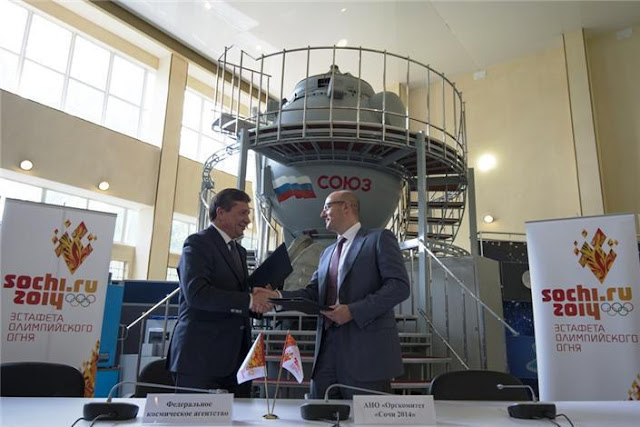
The Russian Olympic Federation has announced the route – and some of the highlights – of the Olympic Torch ahead of the Sochi Games as it makes a four month tour of the world's largest country, departing on October 7th and arriving in Sochi at the start of the Games on February 7th, 2014. Along the 65,000km route through more than 8 Russian provinces the torch is set to blast in to space via the International Space station (sadly, for health and safety reasons, the torch only, not the Olympic flame!) and make its first ever space walk outside the space station (It has been up in to space before ahead of the Atlanta and Sydney summer Games). "Nobody has done this before. The spacewalk by two Russian cosmonauts with the Sochi 2014 Olympic torch will be an historic moment in the history of the Olympic Torch Relay. I want to thank the Federal Space Agency for its support which will enable us to take the Sochi 2014 Olympic Torch Relay to the final frontier," said The President of the Sochi 2014 Organizing Committee, Dmitry Chernyshenko. It is also planned that the torch will make it to the bottom of Lake Baikal, the world's deepest at 1637m and travel to the north pole aboard the victory ice breaker. The Olympic Torch Relay, Russia's first since the Moscow summer games in 1980, back in the Soviet era, is sponsored by Coca-Cola which has worked with the Olympics since 1928 and now has a $3bn business in Russia. |
|

New state-of-the-art cable car cabins have been fitted to the Dachstein lift providing access to the near year-round snow sports at the Austrian ski area close to this year's World Alpine Skiing Championships venue - Schladming. The new lifts have been fitted at a good time because heavy June snow falls have left the snow 3 metres deep on the glacier and the ski area is currently reporting 'powder conditions in summer with the start of July only days away! The new lift ascends 1000 vertical metres to nearly 3000m above sea level at heights of up to 210 metres above the southern face of the Dachstein. A great deal of glass has been used in the lift's construction to provide superb views of the spectacular landscape all around. Video screens inside the cabin inform visitors about all the attractions on the Dachstein and provide entertainment during the journey. Travelling at up to 12m per second, the 5.5 minute journey is 15% faster than with the old cabins. Each can carry up to 50 people with a capacity of 550 people per hour. Novel features are reported to include a 'roof-top balcony' with space for ten people to provides a completely unique experience. The new gondola lift will be officially inaugurated in July, when another dramatic new feature the Dachstein suspension bridge will also be complete and open to visitors. |
|
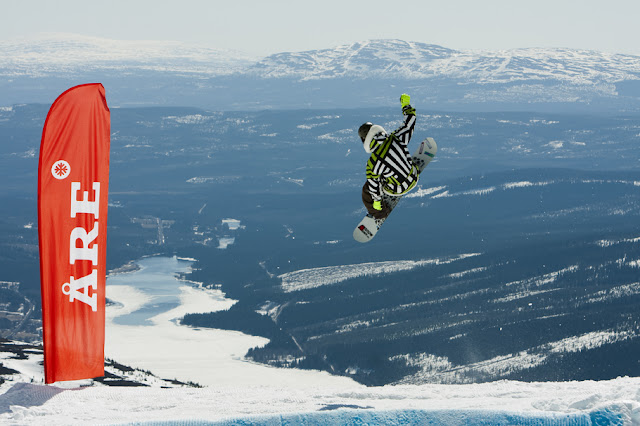
The leading Scandinavian resort of Åre in Sweden has announced one of its biggest ever lift investments this summer with the installation of three new high speed chairlifts, increasing uplift capacity at the resort by more than 5,000 people per hour and improve efficiency across the lift network. Two of the lifts replace older lifts but one is on an all new route and all are situated at strategically important bases intended to provide better access to skiing below the resort's tree line. Work on installing the three new lifts is just underway and they are scheduled to open this December 2013. The new lifts are, all four or six seaters, and the first, the Tegefyran chairlift, is a quad which will replace an old T-bar that currently exists in Tegefjäll and provide better access to terrain in the Duved sector. The 1.1km long lift has a vertical drop of 275 metres and a capacity of 2,400 people per hour, double that of the lift it replaces. The second new lift, the Fjällgårdsexpressen, is a six-seater chairlift that will quickly transport skiers from Fjällgården up to the Sadeln area, with a capacity of 2,400 people per hour. The lift is 1.2km long, ascends 270 vertical metres and is on an entirely new route. The Tottliften nearby will remain as it is at present. Finally the Sadelexpressen, another six-seater chairlift, will take guests from Högåsliften's valley station in Björnen to the top of Sadelliften, with a capacity of 2,800 people per hour. The 1.6km long lift ride 302vertical metres. The current Sadelliften will be dismantled to allow for more descents and to widen existing descents. Fjällgårdsexpressen and Sadelexpressen are important areas in the development of the Björnen area, and conveniently link together the family friendly Björnen sector with central Åre's lift network. |
|

Ski areas have opened on four continents this weekend as both the southern hemisphere winter 2013 gets underway and summer ski glacier areas open in the northern hemisphere. In Canada Whistler Blackcomb has re-opened for a five week run of glacier summer camps claiming the greatest concentration of terrain park facilities on the planet at present. In the Alps, Les 2 Alpes is the third and final French ski area to re-open for glacier skiing following Tignes last week and Val d'Isere the week before. It claims to offer the biggest summer glacier ski area in the northern hemisphere and again has major terrain park facilities. In the southern hemisphere most resorts in South America (Argentina and Chile) opened this weekend including world famous Portillo. In Australasia it was The Remarkables' turn to open in New Zealand (pictured) with great snow conditions. New Zealand has had great early season snowfall with 10 feet (3m) falling in places in the last week bringing excellent conditions but also a big job for avalanche patrol making slopes as safe as they can at resorts like Mt Hutt. Australian ski areas opened two weeks ago with little or no snow but have had some in the past week and with the help of machine made snow have each been able to open several runs and build bases to around 30cm. |
|

The scale of ski resort development at Sochi is becoming clear as some of the ski industry's top companies battle to complete construction in time for the Games next winter. Although there's no known clear central point for information on Sochi's ski areas, an attempt by J2ski.com to piece together what is known has revealed that there are four main Alpine skiing areas around the original resort village of Krasnaya Polyana. Two of these – Rosa Khutor and Laura (also known as Gazprom after its main investor, the state energy company) will host Alpine and Nordic events. The other two will not host events but the original Krasnaya Polyana ski area, which pre-dates the Olympic bidding process, has seen all new lifts installed, while a fourth area, Karusell, will house the media village. Although no budget has been announced, it appears that almost all of the 52 lifts will be operational across the four centres, all being well, this autumn as Olympic season begins, at a cost of several hundreds of millions of euros for the lifts alone. The 50+ lift installations will be the most formidable uplift arsenal ever assembled and include several giant gondolas- including the world's longest at 5.3km and the world's biggest capable of carrying cars as well as people. There will also be nine eight-seater gondolas, among the 20 high speed lifts, and five 'chondolas' combining eight seater gondola cabins and quad chairs on the same cable. Altogether the ski areas will offer around 200km of piste between them, the biggest lift-served vertical just under 1700m. What is not yet apparent is whether there is a realistic plan for the use of all these facilities after the Games, so far only Crystal organise ski holidays here from the UK and the four ski areas operate separate lift passes, although some reports say a joint lift pass will be available soon after the Games. In terms of their physical relationship to one another, three of the areas are due to be lift-linked, more or less, by next season with Rosa Khutor and Laura linked by giant gondolas to a transport hub in the main Alpine resort of Krasnaya, itself linked by rail and road connections to Sochi. The original Krasnaya ski area, now called Alpika, is reported to already be lift-linked to Rosa Khutor. The only area of the four not linked as yet is Karusell, reported to be around 10km from Krasnaya Polyana with no immediate plans for a lift link. |
|

The ski season has got underway in the southern hemisphere with the opening of Lesotho's Afriski ski centre this morning. Afriski is a small centre popular with skiers from just over the South African border in Johannesburg and although it can receive good natural snowfalls, relies on snow making for reliable season-long cover. That's the case this year with low temperatures allowing the snow maki8ng teams to get started with so far a short bursary slope created. The other southern Africa ski area, Tiffindell in South Africa itself, is hoping to open any day now, under new ownership after several years of closure. The centre received a big natural snowfall in late April (as shown in our picture above) but is now also relying on snowmaking, which was underway earlier this week. Africa is the only continent where you can ski in winter conditions in both the northern hemisphere's winter (in Algeria or Morocco) and the southern hemisphere's. Elsewhere in the southern hemisphere Coronet Peak in Queenstown will open in about 36 hours on Saturday morning and is reporting excellent conditions following regular snow falls. Most Australian ski areas will officially open on Saturday too, a few hours later as the start of June 8th spreads around the world, but most have little or no natural snowfall, although the biggest, Perisher, says it has created a small ski area using machine made snow. Most South American ski areas vin Argentina and Chile will open in a fortnight's time, good pre-season snow is being reported there across the region. |
|

(How the Stubai might look if the sun ever returns) The Kitzsteinhorn Glacier near Kaprun and Zell am See in Austria which was supposed to be open for the summer skiing this morning has delayed opening its slopes due to high avalanche danger. Like many glacier ski areas in the Alps it has received huge snow falls over the past 10 days. Although not open for snowsports, the Zugspitze above Garmisch in Germany has received 170cm of new snow in past ten days, most of it in last 3 days and it is reported to be still snowing heavily. The season total snow there was 435cm as of Sunday morning, a record depth for this 'winter.' (just updated to 480cm as of Monday morning, with 120cm (four feet) falling over the weekend. The Stubai has had 40cm of fresh snow in the past 24 hours and the Hintertux Glacier 20cm – both are able to open. Indeed not all newly-opened summer ski areas have had to delay. Passo Stelvio in Italy, which operates 20km of runs re-opened on Saturday for its five month spring to autumn run. Apart from a couple of intermediate trails still open on the Presena Glacier above Passo Tonale it's the only place to ski in Italy at present. |
|